Fatima El Mansouri as Morocco’s First Female PM: What It Means for Women’s Rights in 2026
Background: Morocco’s political system and gender landscape
Morocco operates under a constitutional monarchy where King Mohammed VI retains decisive authority over foreign policy, security and the judiciary, while an elected parliament handles most domestic legislation. Since the 2011 constitutional reforms, the country has seen a modest opening for civil society, but the king’s prerogatives still shape the limits of any reform, especially on socially sensitive issues like gender equality.
Women’s participation in public life has risen steadily over the past two decades. The 2002 quota law required that at least 10 % of parliamentary seats be held by women, a figure that grew to 20 % after the 2011 reforms. Nonetheless, women remain under‑represented in senior cabinet posts, and legal reforms on family law, inheritance and workplace discrimination still face push‑back from conservative religious bodies.
Morocco’s feminist movement, anchored by NGOs such as the Democratic Association of Moroccan Women (ADFM) and the Moroccan Association for Human Rights (AMDH), has long campaigned for deeper changes. Their successes—like the 2004 Mudawana reforms that raised the legal marriage age for girls—have been tempered by periodic backlash from traditionalist clerics who argue that rapid change threatens social cohesion.
Fatima El Mansouri’s rise: from mayor of Casablanca to prime minister
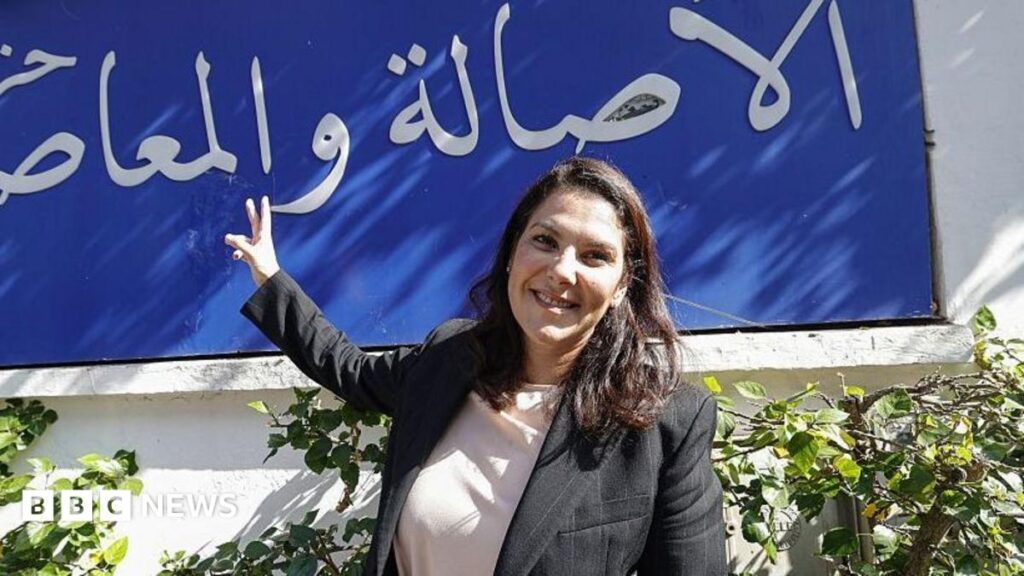
Fatima El Mansouri first entered the national spotlight as the mayor of Casablanca in 2015, becoming the first woman to lead Morocco’s largest city. Her tenure was marked by a mix of pragmatic urban projects—such as expanding public transport and improving waste management—and a vocal stance on gender‑based violence, which earned her both praise from activists and criticism from more conservative quarters.
In the 2022 parliamentary elections, El Mansouri’s party, the Reformist Democratic Party (PRD), secured 12 % of the vote, enough to become a kingmaker in coalition talks. Her reputation as a technocrat who could navigate both business interests and social issues made her an attractive candidate for the prime‑ministerial slot when the king announced a new government formation in early 2026.
When King Mohammed VI appointed El Mansouri as Morocco’s first female prime minister on 12 May 2026, the move was framed as a “historic milestone for gender parity.” Yet the appointment also signaled the monarch’s desire to showcase a modernizing image abroad while keeping the core levers of power firmly under royal control.
The three power centres: the king, religious establishment, and feminist movement
El Mansouri now finds herself balancing three formidable forces. The king, who retains the ultimate say on defence, foreign affairs and the judiciary, expects the prime minister to implement his vision without challenging the monarchy’s prerogatives. Sources close to the palace say the king’s endorsement is contingent on El Mansouri keeping religious sensitivities in check.
The Grand Mufti’s office and the influential Association of Islamic Scholars (AISI) have historically acted as gate‑keepers on legislation that touches on family law, education and public morality. In recent months, AISI leaders have issued statements warning that any “radical” gender reforms could undermine Morocco’s Islamic identity, a stance that could limit El Mansouri’s ability to push through progressive bills.
Meanwhile, feminist NGOs are urging the new prime minister to translate symbolic representation into concrete policy. They have drafted a “Women’s Empowerment Package” that includes stricter penalties for sexual harassment, mandatory gender‑sensitive training for civil servants, and a proposal to raise the parliamentary gender quota to 30 % by 2030. Their optimism is tempered by the reality that past reform attempts have been stalled by clerical opposition.
What her premiership could mean for women’s rights in Morocco and North Africa
If El Mansouri can negotiate a compromise with the king and the religious establishment, Morocco could become a benchmark for incremental gender reform in the Maghreb. Even modest steps—such as expanding maternity leave, improving access to childcare, and enforcing existing anti‑harassment laws—would have a ripple effect across Algeria, Tunisia and Mauritania, where women’s rights activists often look to Morocco for policy cues.
Economically, greater gender inclusion could boost Morocco’s productivity. The World Bank estimates that closing the gender gap in labour force participation could add roughly 1.5 % to the country’s GDP annually. For foreign investors, a government that signals stability and a commitment to inclusive growth is more attractive, potentially increasing the flow of capital into sectors where women are under‑represented, like tech and renewable energy.
For the Moroccan diaspora in Europe and North America, El Mansouri’s appointment is a source of pride and a rallying point. Diasporic NGOs have already begun fundraising for legal aid clinics that would support Moroccan women facing gender‑based violence, leveraging the prime minister’s platform to amplify their campaigns in host countries.
Regional ripple effects and diaspora reactions
North African media outlets are closely watching how El Mansouri navigates the delicate balance between reform and tradition. In Tunisia, where a coalition government is also wrestling with clerical pressure, feminist groups have cited Morocco’s new leadership as evidence that “political will can be harnessed without overturning cultural norms.”
In West Africa, where several countries are still under military rule or fragile civilian transitions, Morocco’s high‑profile appointment is being used by diplomatic circles to argue that constitutional monarchies can serve as “moderating forces” for progressive agendas. This narrative is especially resonant among business councils that seek stable partners for trade deals under the African Continental Free Trade Area (AfCFTA).
The Moroccan diaspora, estimated at over 1 million across France, Spain, Belgium and Canada, has responded with a surge of social‑media commentary. While many celebrate the symbolic breakthrough, others caution that real change will only materialise if the prime minister can protect civil‑society space from potential crackdowns, a concern echoed by diaspora‑based human‑rights monitors.
What lies ahead: policy agenda and political calculations
El Mansouri’s first 100 days will likely focus on building a coalition that satisfies the king’s security agenda while introducing “low‑risk” gender reforms. Analysts predict that the government will prioritize a national strategy on women’s economic empowerment, tying it to Morocco’s Vision 2030 development plan, which aims to reduce unemployment and diversify the economy.
The prime minister’s ability to pass legislation will depend on her relationship with the House of Representatives, where the PRD holds a modest bloc. To secure a majority, she will need to broker deals with the Justice and Development Party (PJD) and independent MPs, many of whom are wary of any overtly “Western‑styled” gender policies. Negotiations are expected to be intense, especially over the proposed amendment to the Mudawana family code.
Internationally, El Mansouri has signalled an openness to collaborate with the United Nations Women’s Empowerment Programme and the European Union’s Gender Equality Initiative. If these partnerships translate into funding for grassroots projects, they could create a feedback loop that strengthens civil‑society capacity and pressures the government to keep reform on the agenda.
Quick Answers
When did Fatima El Mansouri become Morocco's first female prime minister?
She was appointed on 12 May 2026 by King Mohammed VI.
What are the main obstacles to gender reform in Morocco?
Key obstacles include the king’s ultimate authority, opposition from conservative religious bodies, and limited parliamentary seats for reform‑leaning parties.
How could El Mansouri's government affect the Moroccan diaspora?
The diaspora may see increased support for women's rights initiatives, more investment opportunities, and a stronger voice in advocacy campaigns abroad.
Source: www.bbc.co.uk


💬 Comments 0