Flash Flood at Nepal-China Trade Crossing Leaves Over 100 Indians Missing – Impact on Himalayan Trade and Climate Risks in 2026
Background: A Remote Yet Strategic Trade Hub
The Lipulekh Pass, perched at roughly 5,200 metres above sea level, serves as one of the few legal overland routes linking India, Nepal and China. Since the 2020 trilateral agreement, the pass has seen a steady rise in freight traffic, especially for pharmaceuticals, textiles and perishable goods destined for the Chinese market via the Tibetan plateau. Its importance to India’s "Act East" policy and to Nepal’s customs revenue has turned the once‑obscure mountain pass into a vital artery for regional commerce.
The region’s geography makes it a natural bottleneck: steep valleys, narrow roads and a fragile ecosystem that is highly sensitive to monsoonal rains. Climate scientists have warned that warming temperatures are intensifying glacial melt, increasing the probability of sudden flash floods. Yet, infrastructure upgrades have lagged behind the surge in trade, leaving the crossing vulnerable to extreme weather events.
Local authorities in Darchula District, which administers the Nepalese side of the pass, have historically relied on seasonal patrols and rudimentary early‑warning systems. The Indian Border Security Force (BSF) maintains a small outpost nearby, while Chinese customs officials operate a checkpoint on the Tibetan side. Coordination among the three nations on disaster preparedness has been limited, a gap that became starkly evident when the floods struck.
The Disaster Unfolds: What Happened on September 1, 2026
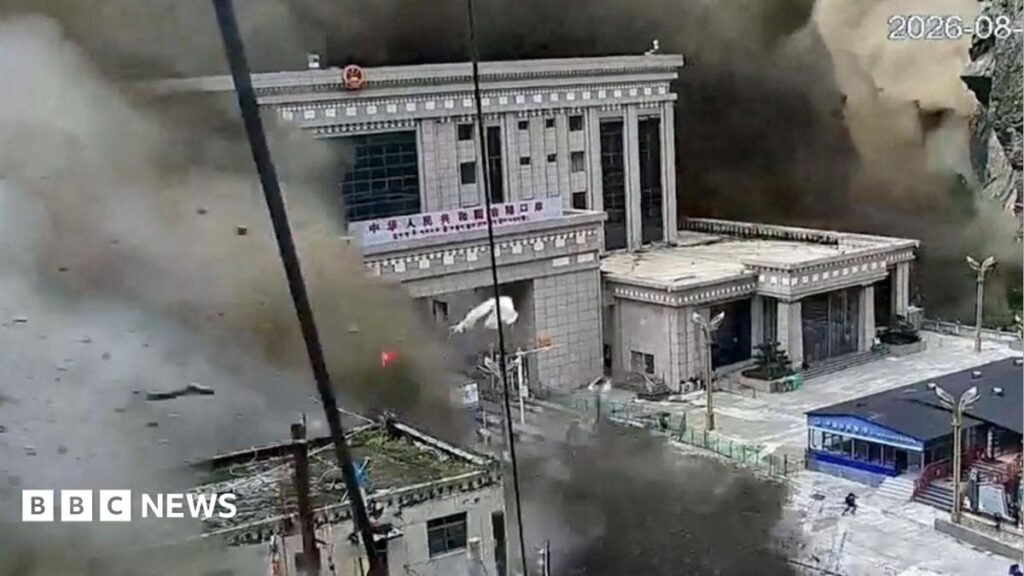
On the morning of September 1, a sudden deluge descended from the nearby glaciers after an unprecedented bout of heavy rain. According to Nepal’s Department of Hydrology, a mountain stream burst its banks, sweeping away a 2‑kilometre stretch of the highway that connects the Lipulekh Pass to the Indian town of Dharchula. The force of the water dislodged several large boulders, crushing vehicles and destroying the makeshift cargo shelters that line the road.
Rescue teams on the ground reported that at least 12 trucks, 8 buses and a handful of private jeeps were either swept into the torrent or stranded on the now‑inundated road. Among the victims were dozens of Indian traders and laborers who had travelled to the crossing to load goods for the Chinese market. By evening, officials confirmed that more than 100 Indian nationals were missing, with only a fraction accounted for in hospitals or temporary shelters.
The Nepalese army, Indian BSF and Chinese border police launched a joint search operation within hours, deploying helicopters, drones and mountain‑rescue units. However, the rugged terrain and continuing after‑shocks from secondary landslides hampered efforts. The Nepalese government declared a state of emergency in the district, while the Indian embassy in Kathmandu issued an advisory urging citizens to avoid the area until safety could be assured.
Immediate Human Impact: Lives, Livelihoods and Community Trauma
Families of the missing have been left in limbo, with many relying on makeshift community centres in Dharchula for food and information. Local NGOs report that the flood also destroyed several small shops and a market that serves both Nepali and Indian border communities, cutting off a crucial source of income for hundreds of households.
The Indian government has dispatched a disaster‑relief team to Nepal, offering medical supplies and temporary housing for affected nationals. Sources within the Ministry of External Affairs say that compensation claims are being prepared under the 1965 India‑Nepal Treaty of Friendship, which obliges both sides to provide assistance in cases of natural calamities. Meanwhile, the Chinese side has pledged logistical support, citing the need to keep the trade corridor functional for its own supply chains.
Psychological trauma is another silent fallout. Community health workers in Darchula note a surge in anxiety and post‑traumatic stress symptoms among residents who witnessed the flash flood. Experts warn that without timely counseling services, the mental‑health burden could linger for months, compounding the economic shock.
Wider Economic and Geopolitical Implications
The disruption threatens to stall a growing segment of India’s export pipeline to China that bypasses the congested sea route through the Indian Ocean. Analysts estimate that the Lipulekh corridor handles roughly $150 million worth of trade each year, a figure that could dip sharply if the road remains closed for an extended period. This loss reverberates beyond the border towns, affecting manufacturers in Kolkata, Ahmedabad and the broader supply‑chain network that depends on timely overland delivery.
For China, the flash flood underscores the fragility of its Belt and Road Initiative (BRI) projects in high‑altitude zones. The Himalayan segment of the BRI has been marketed as a catalyst for regional integration, yet the incident highlights the need for resilient infrastructure that can withstand climate‑induced hazards. Beijing’s recent pledge to invest $2 billion in climate‑proofing mountain roads may accelerate, but critics argue that the funding must be transparent and inclusive of local stakeholder input.
The event also brings climate change to the forefront of South Asian geopolitics. The Intergovernmental Panel on Climate Change (IPCC) warned earlier this year that glacial melt in the Himalayas could double the frequency of flash floods by 2030. If such predictions materialise, trade routes like Lipulekh could become unreliable, prompting nations to reconsider overland logistics in favour of maritime alternatives or to invest heavily in early‑warning systems and disaster‑risk reduction.
What Comes Next: Recovery, Policy Shifts and Regional Cooperation
In the short term, clearing the debris and rebuilding the highway will be the top priority. The Nepalese Ministry of Physical Infrastructure and Transport has earmarked $12 million for emergency repairs, while India’s Ministry of External Affairs is coordinating the repatriation of stranded citizens. Both countries have agreed to set up a joint task force that will monitor weather patterns and share real‑time data with Chinese counterparts, a move that could become a model for tri‑national disaster management.
Long‑term strategies are already being debated. Climate‑adaptation experts recommend installing automated river‑level sensors, constructing diversion channels and reinforcing road embankments with geo‑synthetic materials. Funding could be sourced from the Green Climate Fund, where both India and Nepal have active projects focused on Himalayan resilience.
For African traders and investors watching the South Asian logistics landscape, the incident serves as a cautionary tale about over‑reliance on single corridors that are vulnerable to climate shocks. Companies that source raw materials from the Indian subcontinent may need to diversify routes, potentially opening new opportunities for African ports that can serve as alternative trans‑shipment hubs. The ripple effect of a Himalayan flash flood, therefore, may extend far beyond the mountains, influencing global supply‑chain calculations and prompting a rethink of risk‑mitigation strategies worldwide.
Quick Answers
How many Indians are missing after the flash flood at the Nepal-China border?
More than 100 Indian nationals were reported missing following the flood on September 1, 2026.
Why is the Lipulekh Pass important for trade?
The pass is a key overland route linking India, Nepal and China, handling an estimated $150 million in annual trade.
What steps are being taken to prevent similar disasters?
India, Nepal and China have agreed to a joint task force for real‑time weather monitoring and are considering climate‑resilient infrastructure upgrades.
Source: www.bbc.co.uk




💬 Comments 0