Four Dead in Rapidly Spreading Fire at Canadian Military Base in Alberta, 2026 – What Went Wrong
Background: The base and its safety record
The incident unfolded at Canadian Forces Base (CFB) Edmonton’s training complex in Alberta, a sprawling site that houses ammunition depots, vehicle workshops and housing for service members. Built in the early 1990s, the installation has undergone several upgrades, but many of its original fire‑suppression systems remain tied to older standards that pre‑date recent Canadian building codes. Historically, the base has logged only a handful of minor fires, none of which resulted in fatalities, leading officials to consider its safety protocols adequate for routine operations.
In the past five years, the Canadian Department of National Defence (DND) has faced budget pressures that forced a postponement of some infrastructure projects, including the replacement of aging fire hydrant networks. Critics have warned that deferred maintenance could leave critical assets vulnerable, especially in remote or high‑risk zones where response times are already stretched.
The blaze: timeline and casualties
According to the official after‑action report released by the DND, the fire ignited at approximately 14:12 local time in a storage building that held fuel drums and spare parts. Witnesses say a spark from a welding operation may have triggered the initial flare. Within 30 to 60 seconds, the flames leapt across a concrete walkway and engulfed a nearby ammunition shed, effectively moving the fire a kilometre in less than a minute.
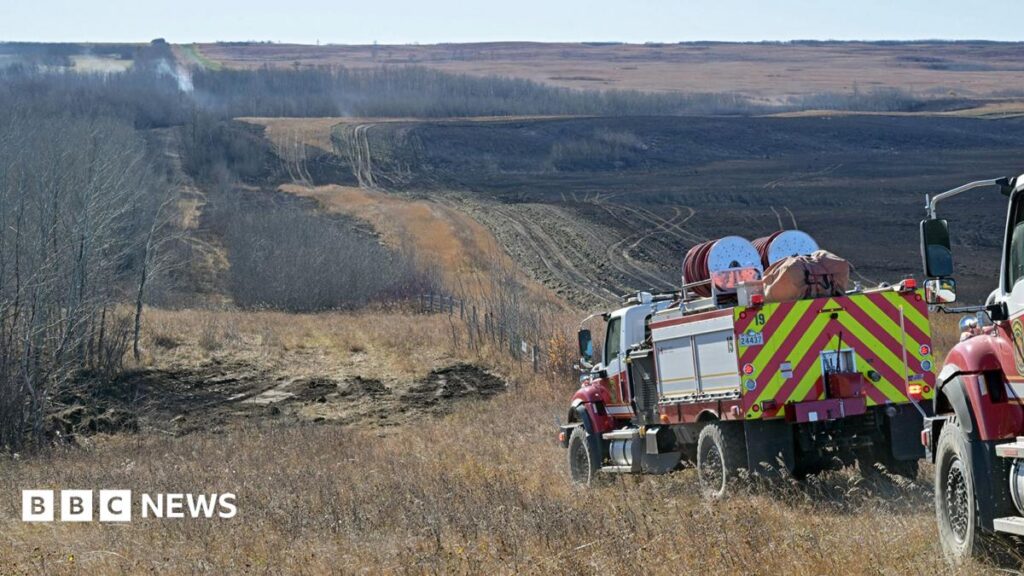
The rapid spread resulted in four service members losing their lives – all of them senior technicians who were on duty in the adjacent workshop. Dozens more were treated for smoke inhalation, burns or injuries sustained while trying to evacuate. Emergency crews from the local fire department and the base’s own fire‑rescue unit arrived within minutes, but the intensity of the blaze hampered their efforts, forcing them to focus on containment rather than rescue.
Why the speed of the fire matters: infrastructure, climate and doctrine
Fire experts say the speed at which the blaze moved is unusual for a military installation, where firebreaks and fire‑resistant materials are standard. A 2024 study by the Canadian Institute for Disaster Resilience linked the increased frequency of fast‑moving fires in western Canada to a combination of hotter, drier summers and the proliferation of combustible building materials used after the 2016 wildfires. The report warned that older facilities, especially those built before the 2010 fire‑code revision, are especially prone to rapid fire spread.
The incident also highlights a doctrinal gap in the DND’s emergency‑response training. While the armed forces conduct regular live‑fire exercises, the integration of fire‑suppression drills with civilian fire services remains limited. Sources within the base have suggested that joint training exercises with local fire departments were scheduled for later in the year, but the tragedy may accelerate those plans, prompting a review of how military and civilian responders coordinate during large‑scale incidents.
Repercussions for Canadian defence and overseas commitments
Canada’s military is heavily involved in peacekeeping and training missions across Africa, notably in the Sahel region where Canadian engineers help build and maintain forward operating bases for African Union forces. The loss of skilled technicians at CFB Edmonton could delay the rollout of new training modules that were slated for delivery to partner nations in 2027. Moreover, the DND’s procurement arm has been negotiating contracts with European firms to supply next‑generation fire‑suppression systems, a process that may now be scrutinised more closely by Parliament.
African defence ministries that rely on Canadian expertise may also feel the ripple effects. For instance, Nigeria’s Army Training and Doctrine Command has a standing agreement with Canada for joint workshops on logistics safety. If the DND reallocates resources to address domestic safety concerns, the frequency of these exchanges could be reduced, potentially slowing the adoption of best‑practice safety standards in African militaries that are already grappling with inadequate fire‑response infrastructure.
Reactions: families, officials and the diaspora
Families of the deceased received immediate support from the Military Family Resource Centre, but many have called for a transparent public inquiry. In a statement released on Thursday, the families’ spokesperson demanded that “the DND disclose every detail of the safety inspections that preceded the tragedy.” The call resonates strongly within Canada’s African diaspora, where a sizable community of former service members and veterans has expressed concern over the handling of the investigation.
Prime Minister Justin Trudeau, speaking at a press conference, pledged a full review of fire safety across all military installations and promised additional funding for modernising fire‑suppression equipment. Opposition leaders, meanwhile, have seized on the incident to criticize the government’s broader defence spending cuts, arguing that under‑investment in base infrastructure endangers both service personnel and the civilian communities that host them.
What’s next: investigations, reforms and lessons for African partners
A multi‑agency inquiry, chaired by former Supreme Court Justice Rosalie Abella, is set to begin in early November. Its mandate includes examining the cause of the ignition, the adequacy of existing fire‑prevention measures, and the coordination between military and municipal emergency services. Early indications suggest that the DND will fast‑track the replacement of outdated hydrant networks and will mandate the installation of automatic fire‑suppression systems in all ammunition storage facilities by 2028.
For African militaries that look to Canada for training and equipment, the incident serves as a cautionary tale about the importance of investing in fire safety as part of broader base modernisation. Experts from the African Centre for Defence and Security Studies have already begun drafting a briefing paper that will use the Canadian case to advocate for stricter fire‑code compliance in African defence establishments, especially those receiving foreign assistance.
Quick Answers
How many people died in the Canada military base fire?
Four service members were confirmed dead in the blaze.
What caused the fire to spread so quickly?
Investigators say a combination of combustible materials, outdated fire‑suppression systems and hot, dry weather allowed the fire to jump a kilometre in under a minute.
Will the incident affect Canadian training missions in Africa?
Potentially, as the DND may divert resources to upgrade safety infrastructure, which could delay some joint training programmes with African partners.
Source: www.bbc.co.uk




💬 Comments 0