Four workers killed in train collision at Shin‑Kanuma Station, Japan, August 2026
Background: Japan’s rail safety record and ongoing upgrades
Japan’s railway network is often held up as a global benchmark for punctuality, speed and safety, with the country logging fewer than ten passenger‑train fatalities a decade. That reputation rests on rigorous maintenance routines, automated signalling and a culture that treats railway work as a high‑risk profession demanding strict protocols.
In recent years the government has pushed for extensive line‑modernisation, especially on regional routes north of Tokyo that serve commuter towns and freight corridors. The upgrades involve installing new track sections, upgrading power supplies and retrofitting stations with platform screen doors, all of which require crews to work on active lines during off‑peak hours.
The push for faster, greener transport has also attracted foreign investment, with Japanese firms exporting signalling technology to Africa’s burgeoning rail projects. Consequently, any incident that shakes confidence in Japan’s safety standards reverberates beyond its borders, influencing how African partners evaluate Japanese equipment and expertise.
The incident: What happened at Shin‑Kanuma Station
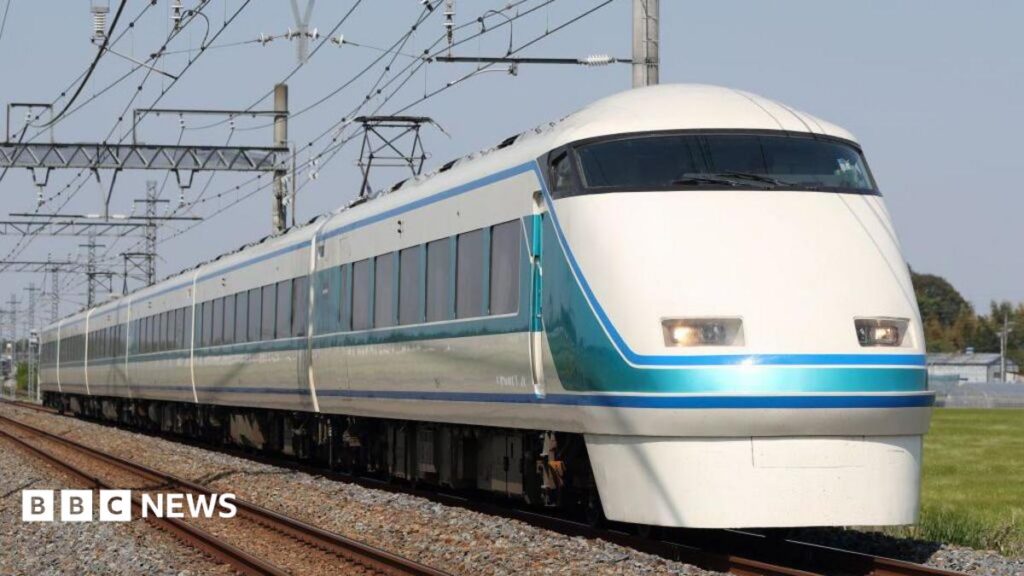
On the morning of 19 August 2026, a commuter train travelling northbound on the Tobu Nikko Line approached Shin‑Kanuma Station, a modest stop located about 70 kilometres from central Tokyo. While the train was decelerating for the scheduled stop, a team of four maintenance workers was positioned on the track to install a new signalling module.
According to the railway operator’s preliminary report, the workers were unaware that the train had not been fully halted, and the driver was unable to apply emergency brakes in time. The train struck the crew, causing fatal injuries to all four men. Emergency responders arrived within minutes, but the severity of the impact proved lethal.
The operator immediately suspended services on the line for several hours, rerouting passengers to alternate routes and launching an internal investigation. Police and the Transport Safety Board were also dispatched to collect evidence and interview witnesses.
Safety concerns and industry response
The accident has reignited a debate within Japan about the balance between efficiency and worker safety on active rail corridors. Labor unions representing railway workers have called for stricter “track‑occupancy” windows, demanding that any maintenance work be performed only after a full line shutdown or under a more robust “protective block” system.
Railway safety experts, citing data from the Transport Safety Board, note that while automated train‑control systems have reduced human error, they also create a false sense of security when manual overrides are limited. They argue that the incident underscores the need for real‑time worker‑presence detection technology, a solution already being trialled on some high‑speed lines.
Japanese manufacturers such as Hitachi Rail and Kawasaki Heavy Industries have pledged to accelerate the rollout of wearable safety devices that emit audible alerts when a train approaches. These devices, which have seen limited deployment in African rail projects under JICA‑funded pilots, could become a new export focus if the domestic market adopts them widely.
Why African readers should pay attention
Several African nations are in the middle of large‑scale rail modernisation programmes that rely heavily on Japanese technology, from Kenya’s Standard Gauge Railway to Nigeria’s Lagos‑Ibadan high‑speed corridor. The safety protocols embedded in the equipment and training packages are therefore directly relevant to African workers who will operate and maintain these lines.
If Japan tightens its safety standards in response to the Shin‑Kanuma crash, African partners may be required to adopt the same protocols, potentially raising project costs but also improving worker protection. Conversely, a failure to act could expose African crews to similar risks, especially on sections where trains run on shared tracks with construction crews.
Diaspora engineers and consultants working on African rail contracts often act as liaisons for Japanese firms. Their role will become even more critical in translating new safety mandates into local practice, ensuring that lessons learned in Japan are not lost in translation when projects shift to the continent.
What comes next: investigations, reforms and global implications
The Transport Safety Board has promised a comprehensive report within 90 days, expected to include recommendations on crew‑safety communication, signalling redundancy and the deployment of on‑site monitoring sensors. The findings will likely be shared with the Ministry of Land, Infrastructure, Transport and Tourism, which oversees national rail policy.
In the short term, the Tobu Railway company has announced a temporary suspension of all maintenance activities on the Nikko Line until new safety checks are completed. The operator also plans to provide compensation to the families of the victims, a move that aligns with Japanese corporate practice but also adds financial pressure to an already costly upgrade schedule.
Globally, the incident may prompt other rail‑heavy economies—such as China, India and several European nations—to revisit their own worker‑safety standards, especially where high‑speed or freight lines intersect with construction zones. For African governments, the episode serves as a reminder that importing technology must be accompanied by rigorous training and oversight to safeguard the people who keep the rails running.
Quick Answers
When did the train collision at Shin‑Kanuma Station occur?
The collision happened on 19 August 2026 in the early morning as a commuter train approached the station.
How many workers were killed in the Shin‑Kanuma accident?
Four maintenance workers lost their lives in the crash.
What impact could this accident have on African rail projects using Japanese technology?
It may lead to stricter safety protocols and the adoption of new worker‑monitoring devices on African rail lines that rely on Japanese equipment.
Source: www.bbc.co.uk




💬 Comments 0