French government labels 2026 student protests as riots, ignoring demands
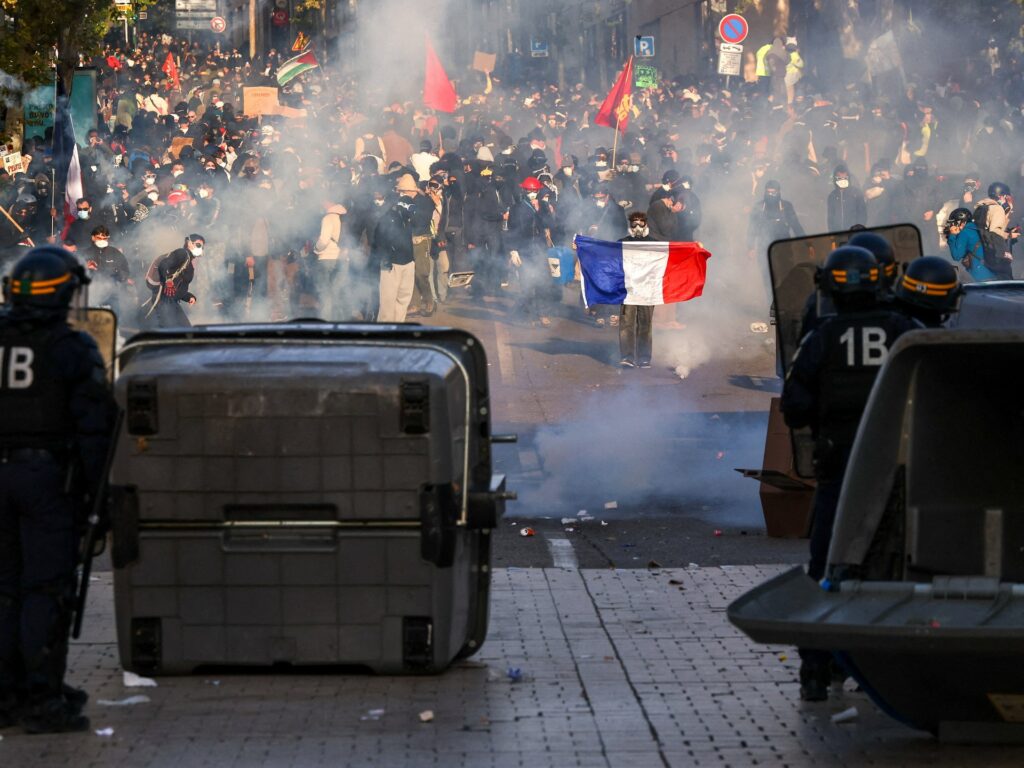
Background: Student unrest in France
In early October 2026, thousands of university and lycée students took to the streets of Paris, Lyon, Marseille and smaller towns to demand a reversal of the education reforms announced by Prime Minister Élisabeth Borne’s cabinet. The reforms, detailed in a decree released on September 28, would tighten funding allocations, increase tuition fees for non‑EU students and replace elected student councils with appointed representatives, sparking fears of reduced autonomy on campuses.
The protests were organized by a coalition of student unions, including the National Union of Students (UNEF) and the Association for the Defense of Student Rights (ADSR). According to Le Monde, the coalition’s manifesto called for a rollback of the fee increase, reinstatement of elected bodies, and a transparent audit of university budgets. Demonstrations began peacefully but escalated after police deployed tear‑gas in front of the Sorbonne on October 3.
The French government’s response was swift. Minister of Higher Education, Frédérique Vidal, labeled the gatherings “unlawful disturbances” in a televised interview, and the interior ministry announced a “zero‑tolerance” approach to any actions deemed to threaten public order. This rhetoric set the stage for the narrative that would dominate media coverage in the days that followed.
The ‘riots’ narrative and its political use
Within 24 hours of the first clashes, the official press briefings started describing the events as “riots” rather than “protests”. France‑Info reported that the interior ministry’s spokesperson, Gérard Collomb, used the term “riots” to justify the deployment of additional police units and the temporary suspension of public transport in affected zones. The shift in language is significant because French law permits harsher penalties for participants in riots compared with those involved in lawful demonstrations.
Political analysts argue that the narrative serves a dual purpose: it delegitimises the students’ grievances and provides legal cover for a heavy police presence. According to a commentary in Le Figaro, the government is attempting to frame the unrest as a security threat rather than a policy dispute, a tactic historically employed during the 2005 suburban riots and the 2018 “yellow vests” movement. By doing so, the administration can sidestep substantive dialogue while maintaining a veneer of order.
Human Rights Watch, in a brief released on October 7, warned that the “riots” label could be used to curtail freedom of assembly and to justify excessive force. The organization cited several incidents where police used batons and flash‑bang grenades on demonstrators who were not engaged in violent conduct, suggesting a pattern of disproportionate response.
Impact on African and diaspora students
African students, who make up roughly 12% of France’s international student body, are disproportionately affected by the proposed fee hikes and the crackdown on protests. A survey conducted by the African Students Association in Paris found that 68% of respondents feared being expelled or denied residence permits if they were identified as participants in the “riots”. The survey also highlighted that many African students rely on part‑time work, which is now jeopardised by the increased police patrols around university campuses.
The narrative also reverberates in the broader diaspora. Nigerian and Ghanaian families who have invested heavily in sending their children to French universities are now reconsidering their plans. According to a report by the West African Economic and Monetary Union (UEMOA), applications for French higher‑education scholarships from West African countries dropped by 15% in the month following the protests, reflecting heightened uncertainty about safety and policy stability.
Beyond immediate concerns, the situation could reshape migration patterns. If the French government continues to frame student activism as criminal, it may push African talent toward other European hubs such as Germany, the Netherlands or Belgium, where recent policy shifts have been more welcoming to African scholars. This potential brain‑drain would have long‑term implications for France’s research output and its cultural ties with the continent.
Why the narrative matters for Europe and beyond
The French case is emblematic of a broader European trend where governments conflate dissent with disorder to preserve political capital. In the past year, Spain, Italy and the United Kingdom have all faced criticism for labeling climate strikes, migrant rights rallies and labor walkouts as “riots” or “public disturbances”. This pattern raises questions about the health of democratic norms across the EU, especially as the bloc prepares for the 2027 parliamentary elections.
Economically, the unrest threatens the education sector’s contribution to France’s GDP. Universities account for roughly €14 billion annually, and prolonged disruptions could deter private investment in research labs and spin‑off startups. Moreover, the tourism industry, which benefits from student travel, may see a dip in short‑term bookings if foreign students avoid France during the academic year.
Internationally, the narrative could affect France’s soft power in Africa. France has long positioned itself as a cultural and educational partner on the continent through programmes like the “Campus France” scholarship network. A perception that French authorities are hostile to African students may erode this goodwill, giving competing nations such as China and the United Arab Emirates a chance to expand their scholarship footprints in Africa.
What could happen next: scenarios and stakes
If the government maintains the “riots” framing, the immediate outcome is likely to be a further escalation of police presence and a clampdown on campus gatherings. Legal experts warn that new ordinances could criminalise the possession of protest‑related materials, potentially leading to a wave of arrests that would overwhelm the courts and draw condemnation from the European Court of Human Rights.
Conversely, sustained pressure from student unions, supported by civil‑society groups and international watchdogs, could force a policy reversal. In similar episodes, such as the 2019 student walkouts against the “Bac” reform, the French parliament eventually amended the legislation after months of negotiations. A compromise might involve a phased implementation of fee changes, a reinstatement of elected student bodies, and an independent oversight commission.
A third, more ambiguous scenario involves a political reshuffle. Prime Minister Borne’s cabinet has already seen two ministerial resignations over the education reforms. If the unrest continues to dominate headlines, the President could replace the interior minister to signal a softer stance, thereby resetting the narrative from “riots” to “dialogue”. Such a move would aim to restore public confidence ahead of the upcoming municipal elections in 2027.
Quick Answers
What are the main demands of the French student protesters in 2026?
They want the tuition fee increase for non‑EU students scrapped, elected student councils restored, and a transparent audit of university budgets.
How might the French government’s ‘riots’ label affect African students in France?
The label could lead to harsher legal penalties, increased police scrutiny, and a drop in scholarship opportunities, prompting many African students to reconsider studying in France.
What precedent is there for governments labeling protests as riots?
France has used similar language during the 2005 suburban riots and the 2018 yellow‑vest movement, and other EU countries have recently adopted the term to delegitimize climate and migrant rights demonstrations.
Source: www.aljazeera.com




💬 Comments 0