Giorgia Meloni calls emergency meeting after violent clashes in Naples, 2026, 200+ detained
A volatile backdrop in Italian politics
Italy has been navigating a turbulent political landscape since the right‑wing coalition took power in 2022. Prime Minister Giorgia Meloni’s government has pursued a hard‑line stance on immigration, law‑and‑order, and fiscal reform, provoking both staunch support and fierce opposition. Recent months have seen a series of street protests over pension cuts, energy prices, and the treatment of undocumented migrants, setting the stage for heightened tensions.
The southern city of Naples, a historic gateway for migrants from Africa and the Middle East, has long been a flashpoint for social unrest. Local NGOs report that the city’s informal settlements house more than 30,000 undocumented residents, many of whom rely on precarious work in the informal economy. This demographic reality often collides with the national government’s crackdown policies, creating a tinderbox ready to ignite.
What sparked the two‑day riot and the police response
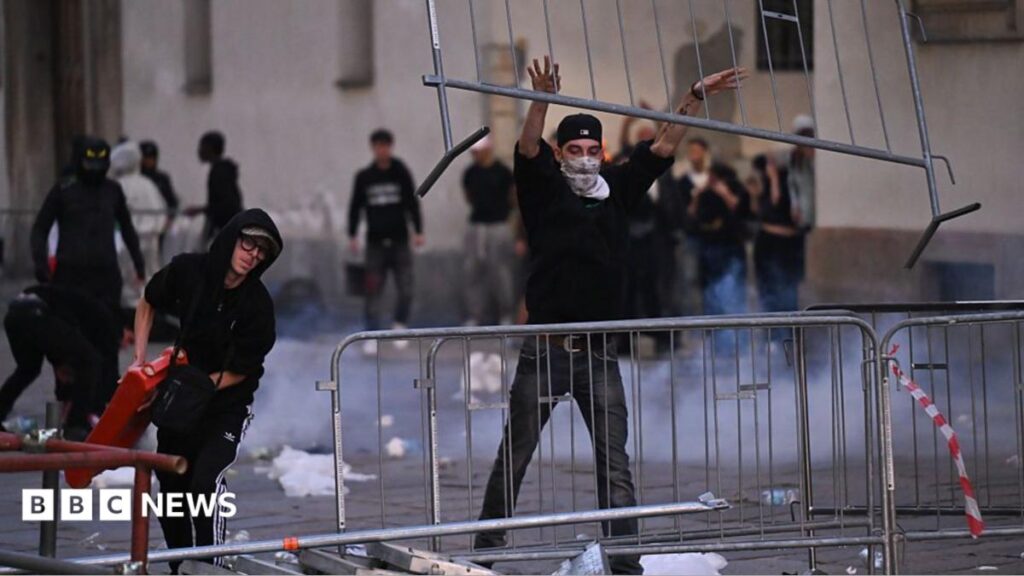
The unrest erupted late Friday after a police operation targeting a suspected drug gang in the Vesuvius district led to a confrontation with nearby residents. Witnesses say the operation escalated when officers used tear‑gas, prompting a crowd of roughly 1,500 people to block streets and hurl projectiles. By Saturday night, clashes had spread to the historic centre, with storefronts smashed and several vehicles set ablaze.
Italian media reported that more than 200 people were taken into custody over the weekend, a figure that includes both alleged rioters and a number of undocumented migrants swept up in the sweep. The Interior Ministry confirmed that additional reinforcements from the Carabinieri were deployed, and a curfew was imposed from 9 p.m. to 5 a.m. across the most affected neighbourhoods.
Why the riots matter for Africa and its diaspora
The majority of the detained migrants are believed to be from West African nations such as Nigeria, Ghana, and Senegal, according to sources at local NGOs. A sudden surge in arrests can have a chilling effect on the already fragile remittance flows that sustain families back home; the World Bank estimates that Italy accounts for roughly $4 billion of annual remittances to Sub‑Saharan Africa.
Beyond the economics, the episode underscores a broader pattern: European governments are increasingly linking public order measures to migration control. For African diaspora communities in Italy, the emergency meeting called by Meloni signals a possible tightening of immigration enforcement, which could lead to faster deportations and reduced legal pathways for work permits.
Political fallout and reactions on the ground
In Rome, Meloni convened an emergency cabinet meeting on Monday, urging a “zero‑tolerance” approach to street violence and pledging additional funding for police equipment. Opposition leader Enrico Letta warned that the government’s response risked “criminalising entire neighbourhoods” and called for a parliamentary inquiry into police conduct.
African community organisations, including the Nigerian Association of Italy, staged a peaceful demonstration outside the Ministry of the Interior, demanding that any security measures respect human rights and that detained migrants receive legal assistance. Their statement highlighted that many of those arrested had no prior criminal record, but were caught up in a broad sweep.
What could happen next – policy and migration trends
Analysts at the European Council on Foreign Relations suggest that Meloni’s emergency meeting may pave the way for stricter residency checks in southern ports, potentially accelerating the shift of migrant arrivals toward Greece and Spain. This could alter established smuggling routes that African migrants have used for years, pushing them into more dangerous sea crossings.
For African economies, any slowdown in the flow of workers to Italy could tighten labour shortages in sectors like agriculture and construction, where migrants traditionally fill gaps. Conversely, a crackdown could spur a short‑term surge in informal employment as undocumented workers seek to avoid detection, raising the risk of exploitation and further marginalisation.
Quick Answers
How many people were detained during the Naples riots in October 2026?
More than 200 individuals were taken into custody over the two‑day unrest, according to Italian media reports.
What impact could the riots have on African migrants in Italy?
The crackdown may lead to faster deportations, tighter residency checks, and a possible reduction in remittance flows that support families in West Africa.
What did Prime Minister Giorgia Meloni promise after the clashes?
She called for a zero‑tolerance stance on street violence and announced extra funding for police equipment during an emergency cabinet meeting.
Source: www.bbc.co.uk




💬 Comments 0