Governor Dapo Abiodun rescues President Buhari Estate, delivers 108 homes in Abeokuta 2026
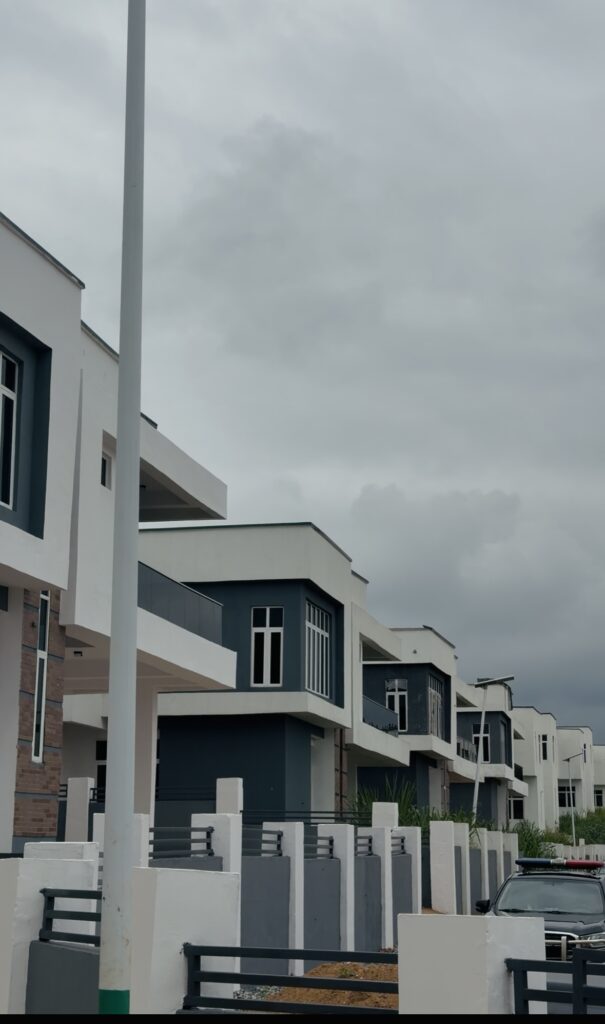
Background: A stalled flagship project
The President Muhammadu Buhari Estate was conceived in 2015 as a flagship housing scheme for civil servants and low‑to‑middle‑income families in Ogun State. Situated on the Abeokuta‑Sagamu Expressway, the 108‑unit complex was meant to showcase federal‑state collaboration and to ease the chronic housing deficit that still plagues Nigeria’s urban centres.
Construction ground to a halt after the 2019 general elections, when funding streams dried up and the new state administration inherited a partially built site riddled with unpaid contractor invoices. By early 2024, the unfinished structures faced legal threats of forfeiture for non‑payment of land rates and breach of contract, a fate that would have turned a symbol of promise into a derelict eyesore.
Ogun State’s housing backlog remains one of the highest in the country, with the National Bureau of Statistics estimating a shortfall of roughly 17 million units nationwide. The Buhari Estate’s fate therefore mattered not just for the prospective occupants but also as a barometer of how sub‑national governments could tackle the broader crisis.
The rescue: How Abiodun’s team turned the tide
Governor Dapo Abiodun’s administration launched a rapid audit in mid‑2025, confirming that the estate’s financial liabilities could be cleared through a combination of state budget reallocations and a modest loan from the Ogun State Housing Development Corporation. Sources say the loan carried a concessional interest rate, reflecting the project’s public‑interest status.
With the fiscal hurdle removed, the state engaged the original contractor, Bodele Construction, to resume works under a revised schedule. By December 2025, the contractor reported that all structural work, internal finishes, and basic utilities were completed, allowing the estate to move into the final hand‑over phase.
The commissioning ceremony, slated for Tuesday, will be led by First Lady Senator Oluremi Tinubu, signalling federal endorsement and reinforcing the political alliance between the governor and the ruling All Progressives Congress. The presence of the First Lady also underscores the symbolic weight the project carries for the Buhari‑Tinubu political axis.
Why the completion matters for Nigerians
Delivering 108 homes directly reduces the housing deficit for Abeokuta’s civil servants, many of whom have long waited for affordable, government‑backed accommodation. The units are priced below market rates, making homeownership attainable for families earning less than ₦200,000 a month, according to the state’s housing policy brief.
Beyond the immediate beneficiaries, the project revives a stalled construction site that had been a source of unemployment for local labourers. The resumed works created roughly 250 short‑term jobs and 30 permanent maintenance positions, injecting cash flow into the surrounding informal economy.
Politically, the rescue sends a message that state leaders can intervene when federal projects stall, a narrative that may resonate with voters ahead of the 2027 elections. It also demonstrates how political goodwill—here, the cooperation between Governor Abiodun and First Lady Tinubu—can translate into tangible infrastructure outcomes.
Connecting the dots: A wider trend of sub‑national revival
Nigeria has witnessed a surge of state‑led revivals of abandoned federal projects over the past decade. In Lagos, Governor Babajide Sanwo‑Olu re‑commissioned the Lekki‑Phase II housing estate after a three‑year pause, while in Kano, Governor Abdullahi Umar Ganduje fast‑tracked a university hostel that had been left incomplete for five years.
These interventions reflect a growing pattern where governors, motivated by both development imperatives and electoral calculus, mobilise state resources to finish projects that were abandoned due to funding gaps or bureaucratic inertia at the federal level. Analysts note that such moves can improve service delivery but also risk politicising public assets, especially when credit is claimed by the incumbent party.
For the Nigerian diaspora, the trend is significant because it signals a more predictable environment for real‑estate investment. Diaspora investors, who collectively hold billions in remittances, have expressed cautious optimism that state‑driven completions reduce the risk of stranded assets, a sentiment echoed in a recent poll by the Nigerian Diaspora Forum.
What comes next: Sustainability, scaling and political stakes
The immediate challenge is ensuring the estate remains well‑maintained after hand‑over. The Ogun State Housing Development Corporation has pledged to set up a resident‑association fund, financed by a modest monthly levy, to cover landscaping, security, and periodic repairs—a model that could be replicated in other state‑run estates.
Looking ahead, Governor Abiodun has hinted at a broader “Housing for All” roadmap, targeting an additional 5,000 units across the state by 2030. If the Buhari Estate can serve as a template, the roadmap will likely rely on mixed financing—state allocations, private‑sector equity, and diaspora bond issuances.
Finally, the political calculus cannot be ignored. With the 2027 general elections on the horizon, delivering tangible housing outcomes may bolster the APC’s narrative of development. Opposition parties, however, are already framing the rescue as a patronage exercise, warning that future projects could become bargaining chips rather than public goods. How the governor navigates this tension will shape both the state’s housing agenda and its electoral fortunes.
Quick Answers
How many homes were completed in the President Buhari Estate project?
The project delivered 108 residential units.
Who is slated to commission the newly finished Buhari Estate?
First Lady Senator Oluremi Tinubu will lead the commissioning ceremony.
Why was the Buhari Estate at risk of forfeiture before the rescue?
Unpaid land rates and unfinished construction left the estate vulnerable to legal forfeiture.
Source: dailypost.ng


💬 Comments 0