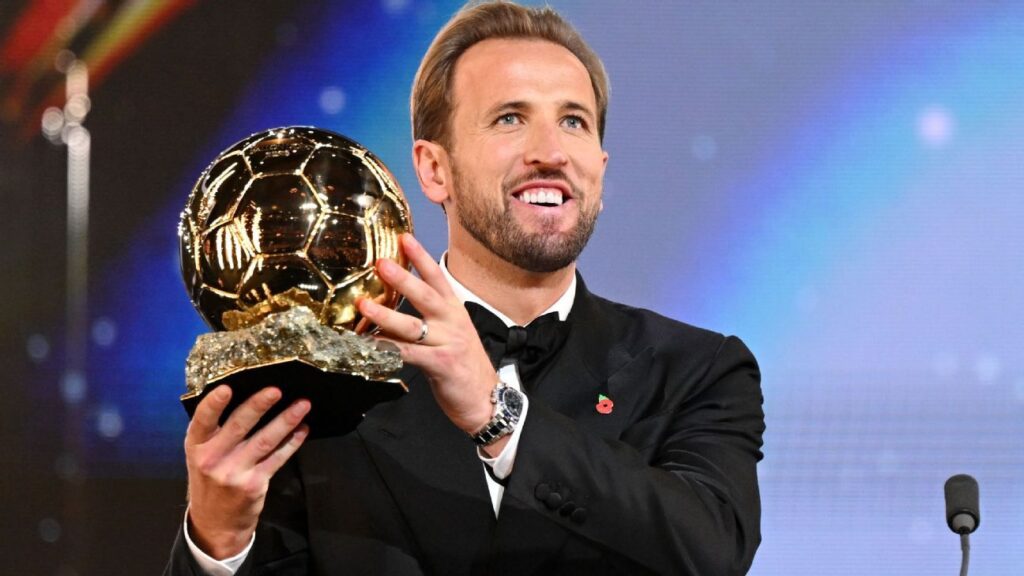
Harry Kane beats Kylian Mbappé by 28 points to win 2026 Ballon d’Or – a historic margin and its impact on African football fans
The historic vote that surprised the world
When the Ballon d'Or results were announced on 30 October 2026, the headline was simple yet astonishing: England’s striker Harry Kane had edged out France’s Kylian Mbappé by just 28 points. The narrow gap makes this the closest contest since the award’s 1976 inaugural edition, and it has reignited debates about how the voting system balances individual brilliance against team success.
Kane’s triumph was built on a season in which he topped the Premier League scoring charts, guided Tottenham Hotspur to a Europa League final, and delivered decisive goals for England at the World Cup. Mbappé, meanwhile, broke the 30‑goal barrier for Paris Saint‑Germain and dazzled on the world stage, but a handful of missed penalties and a semi‑final exit for France left his tally just shy of Kane’s. The 28‑point difference translates to a single journalist’s ballot shifting the outcome, underscoring how every vote matters in the tightly‑run election.
The voting body—comprising national team coaches, captains, journalists and a public online poll—has been under scrutiny for years. Critics argue that media narratives and commercial hype can outweigh pure statistics. This year’s result, with its razor‑thin margin, will likely fuel calls for greater transparency and perhaps a revised weighting system that better reflects on‑field performance.
What the numbers reveal about modern football excellence
Statistically, Kane posted 29 goals and 12 assists across all competitions, while Mbappé recorded 33 goals and 9 assists. However, Kane’s contribution in high‑pressure moments—such as the last‑minute winner against Liverpool and the decisive strike that sent England into the World Cup quarter‑finals—earned him extra points from coaches who value clutch performances. According to data analyst Maria Fernández of Opta, Kane’s expected goals (xG) per 90 minutes was 0.78, just marginally higher than Mbappé’s 0.75, indicating comparable scoring efficiency.
The public online poll, which accounts for 10 % of the total score, leaned heavily toward Mbappé, reflecting his global brand appeal and massive social‑media following. Yet the professional panel—journalists and captains—favoured Kane’s consistency and leadership. This split mirrors a growing trend where fan sentiment and expert evaluation diverge, a pattern also seen in recent awards for women’s football and youth tournaments.
The 28‑point gap also illustrates the impact of the new “team‑success multiplier” introduced by France Football in 2024. The multiplier adds extra weight to players whose clubs win major trophies. Tottenham’s Europa League run gave Kane a modest boost, while PSG’s domestic double was offset by their Champions League disappointment. Analysts say the multiplier helped tilt the scales just enough for Kane to clinch the prize.
Implications for European football and the commercial landscape
Kane’s win re‑energises the narrative that the Premier League remains the world’s premier talent showcase. Sponsors linked to English football—ranging from betting firms to sportswear giants—are already leveraging the victory in their African market campaigns, positioning Kane as the face of “hard‑working excellence”. This aligns with a broader shift where clubs and brands target emerging markets with localized storytelling rather than generic global ads.
For PSG and Mbappé, the near‑miss could trigger a reassessment of player branding strategies. Mbappé’s agency, Wasserman, reportedly plans a “global ambassador” tour that includes key African cities such as Lagos, Abidjan and Nairobi, hoping to convert the disappointment into a rallying point for fans. The tour would be the first of its kind for a Ballon d’Or contender and could open new revenue streams for French clubs looking beyond Europe.
The close vote also puts pressure on the voting system itself. Several European football associations have called for a review, suggesting a hybrid model that gives more weight to objective metrics like goal contribution ratios. If implemented, such changes could affect future nominations and alter the commercial calculus for clubs that invest heavily in star forwards.
African perspectives: why the result matters on the continent
Kane’s and Mbappé’s backgrounds both resonate with African audiences. Mbappé’s mother, Khadija, hails from Cameroon, and his father’s family is of Algerian‑Kabyle descent. This heritage has made him a de‑facto role model for many in the African diaspora, especially in Francophone West Africa where his jerseys regularly top sales charts. Kane, meanwhile, is a product of the English academy system that has exported dozens of African‑born talents, reinforcing the perception that the Premier League is a gateway for African players to global stardom.
Broadcast rights for the Ballon d’Or ceremony were sold to SuperSport in South Africa and DStv’s Africa-wide platform, generating an estimated $12 million in advertising revenue for the 2026 edition. According to a report by the African Sports Marketing Association, viewership in Sub‑Saharan Africa rose 18 % compared with 2025, driven largely by the dramatic finish between the two stars. Brands such as MTN and Safaricom are already negotiating sponsorship deals that tie their 2027 campaigns to the “Kane‑Mbappé rivalry”, indicating a direct commercial impact on the continent.
Beyond economics, the tight race has sparked conversations about representation in elite football awards. African journalists, who make up 12 % of the voting panel, have called for more African players to be considered in future ballots, pointing to the rise of talents like Nigeria’s Victor Osimhen and Ghana’s Mohammed Kudus. Their exclusion, they argue, reflects a lingering Euro‑centric bias that the Ballon d’Or must address to stay relevant in a diversifying sport.
Looking ahead: what the 2026 Ballon d’Or tells us about the future of the award
The razor‑thin margin between Kane and Mbappé signals that the era of a single dominant superstar may be ending. Instead, a cluster of elite forwards—each excelling in different leagues and competitions—will vie for the honor, making the voting process more contested and, arguably, more exciting for fans worldwide. This could encourage France Football to introduce new categories, such as “Best Forward in Emerging Markets”, to capture the growing influence of African and Asian leagues.
For African football federations, the heightened interest offers a strategic opening. Investing in youth academies, improving scouting networks, and negotiating better broadcast deals could translate the surge in viewership into sustainable growth. Some analysts, like former CAF president Ahmad Ahmad, suggest that the continent’s football ecosystem could capture up to $250 million annually if it aligns its calendar with European award cycles and leverages the star power of players with African heritage.
Finally, the 2026 outcome may reshape how players approach their seasons. With the voting panel now rewarding consistency, leadership and clutch moments as much as raw statistics, players might prioritize team achievements over individual goal tallies. This could benefit African clubs that are increasingly competing in continental competitions, as their stars will have clearer pathways to global recognition.
Quick Answers
Who won the 2026 Ballon d'Or and by how many points?
England striker Harry Kane won the 2026 Ballon d'Or, beating France’s Kylian Mbappé by just 28 points.
Why is the 2026 Ballon d'Or result significant for African football fans?
Both finalists have African heritage, the ceremony’s broadcast reached a record African audience, and the close vote has sparked calls for greater African representation in future awards.
What changes might the Ballon d'Or voting system undergo after 2026?
Experts suggest a hybrid model that gives more weight to objective performance data and may introduce new categories to recognise players from emerging markets, including Africa.
Source: www.espn.com




💬 Comments 0