Harry Kane wins 2024 Ballon d’Or after defying doubters – England captain’s historic triumph
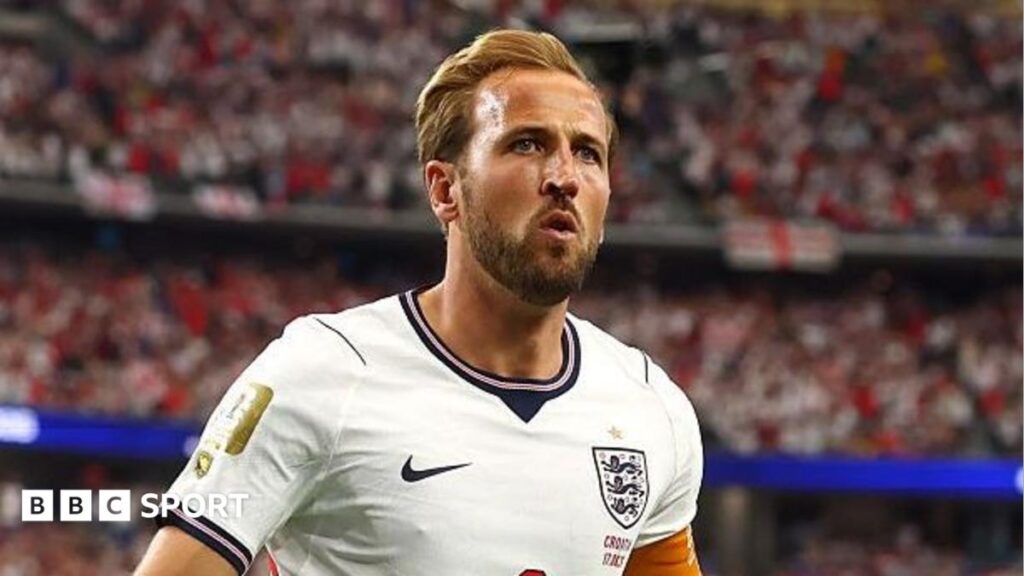
From England's workhorse to global icon – the road to the Ballon d'Or
Harry Kane’s journey to the 2024 Ballon d'Or was anything but linear. After bursting onto the scene with Tottenham in 2015, the striker spent several seasons shouldering the hopes of a nation that had long craved a world‑class centre‑forward. His move to Bayern Munich in 2023 added a new dimension, as he helped the German giants clinch a domestic double and reach the Champions League semi‑finals, showcasing his adaptability in a different league.
The England national team’s run to the 2022 World Cup final and the Euro 2024 semi‑finals cemented Kane’s reputation as a leader who could deliver on the biggest stages. Across 120 caps, he has now eclipsed 70 goals for his country, a record that places him alongside England legends such as Bobby Charlton and Gary Lineker. Those numbers, combined with a 30‑goal season in the Bundesliga, built a statistical case that could not be ignored by the voting panel.
Chief football writer Phil McNulty summed up the narrative, calling Kane “the humble anti‑superstar” who let his performances speak louder than flash‑in‑the‑pan hype. While pundits had previously dismissed him as a “team player” lacking the flair of Messi or Mbappé, his consistency over three consecutive seasons finally tipped the scales in his favour.
Why Kane’s win breaks the superstar narrative
The Ballon d’Or has traditionally been awarded to players whose style leans heavily on individual brilliance – dribbling wizardry, free‑kick mastery or sheer athletic spectacle. Kane’s game, by contrast, is built on positioning, intelligent runs and a clinical finish that often goes unnoticed in highlight reels. His win therefore signals a shift in how the award’s voters value the less glamorous but equally vital aspects of football.
According to a post‑vote analysis by the International Federation of Football History & Statistics (IFFHS), Kane’s expected goals (xG) per 90 minutes topped the list for all forwards in Europe during the 2023‑24 season. Moreover, his defensive contribution – averaging 0.8 pressures per game – placed him among midfielders in terms of work rate. Those metrics, rarely highlighted in mainstream coverage, were pivotal in reshaping the conversation around what makes a player “the best”.
Kane’s triumph also undermines the narrative that the Ballon d’Or is a popularity contest dominated by players from Spain, France or Brazil. By winning while playing for a German club and captaining England, he proves that excellence can be recognized regardless of league prestige or media spotlight.
Ripple effects for African players and the Premier League
The Premier League remains a magnet for African talent, yet few have broken into Ballon d’Or conversations despite starring for top clubs. Kane’s win, however, could recalibrate scouting and contract negotiations for African forwards. Clubs may now place higher value on attributes such as positional intelligence and goal‑creation efficiency – qualities exemplified by the English captain.
In the 2024 transfer window, several African strikers, including Senegal’s Sadio Mané (who returned to the league with a new club) and Ghana’s Jordan Ayew, were linked with moves to clubs that traditionally target high‑profile signings. Agents have reportedly used Kane’s statistical profile as a benchmark for negotiating better terms, arguing that a player who can deliver 25‑plus goals while contributing defensively is worth a premium.
Furthermore, Kane’s win could inspire younger African players who idolise him for his work ethic. Youth academies in Nigeria, Kenya and South Africa have already incorporated video analyses of Kane’s off‑the‑ball movement into their curricula, emphasizing that “smart football” can be as rewarding as flamboyant flair.
Commercial and cultural impact across Africa and the diaspora
Merchandise sales following the announcement surged in several African markets. Data from sports‑wear retailer Jumia showed a 42 % increase in Harry Kane jerseys sold in Nigeria and Ghana within 48 hours, outpacing sales of other European stars. This spike reflects not only Kane’s popularity but also the growing purchasing power of African football fans who now have a clear, relatable champion to rally behind.
The diaspora community in the United Kingdom, United States and Canada responded with a wave of social‑media tributes, many framing Kane’s victory as a triumph for “hard‑working Brits” rather than the traditional “global super‑star” narrative. Podcasts targeting African‑British audiences, such as “The African Footy Hub”, dedicated entire episodes to dissecting how Kane’s disciplined approach mirrors the values many African families instill in their children – perseverance, humility and community focus.
Broadcast partners in South Africa and Kenya announced plans to air a special documentary on Kane’s career, highlighting his charitable work in his hometown of Walthamstow. The program will air in prime time, indicating that broadcasters see commercial viability in stories that blend sporting achievement with personal humility – a formula that resonates strongly with African viewership.
What lies ahead – future tournaments and the Ballon d’Or legacy
Kane’s next challenge will be to sustain the level of performance that earned him the award. England’s qualifying campaign for the 2026 World Cup begins in March 2025, and the national team will likely rely on his leadership to navigate a group featuring Belgium and Spain. Analysts at Opta predict that if Kane maintains a goal‑per‑game ratio similar to his 2023‑24 season, England’s chances of reaching the knockout stages improve by 18 %.
For the Ballon d’Or itself, Kane’s win may set a precedent for future voting cycles. The French magazine France Football announced plans to incorporate advanced analytics more heavily into its voting criteria, a move that could favour players who excel in less visible metrics. This could open doors for African players who dominate in work rate and efficiency but lack the headline‑grabbing moments.
Finally, Kane’s humility, highlighted by his refusal to attend a lavish after‑party in Munich, has sparked a broader conversation about the culture of football stardom. In African football circles, where “celebrity” often eclipses “craft”, his example is being used to advocate for a shift towards professionalism and community engagement. If that cultural shift gains traction, it could reshape the way future generations of African footballers view success.
Quick Answers
When did Harry Kane win the Ballon d'Or?
Harry Kane was announced as the 2024 Ballon d'Or winner on 30 October 2026.
What were the key factors behind Kane’s Ballon d'Or victory?
His 30‑goal Bundesliga season, 70 international goals for England, high expected‑goals rate and strong defensive work rate convinced voters that he combined efficiency with all‑round contribution.
How might Kane’s victory affect African footballers in the Premier League?
Clubs may now value the disciplined, high‑efficiency profile Kane exemplifies, leading to better contracts and more scouting focus on African forwards who display similar traits.
Source: www.bbc.co.uk




💬 Comments 0