Israeli Airstrike Kills Hamas Internal Security Chief Naeem Abu Nahel in Gaza, Oct 2026
Background: The role of Hamas’ internal security chief in the Gaza war
Since the outbreak of the latest Israel‑Hamas war in October 2023, the internal security apparatus of Hamas has become a focal point for both sides. The internal security chief oversees intelligence gathering, counter‑espionage, and the enforcement of discipline among fighters, making the position a linchpin for Hamas’ ability to sustain its military operations under siege.
Naeem Abu Nahel, a veteran of the Palestinian militant scene, was appointed to the post in August 2026 after a reshuffle that saw several senior figures removed or arrested. His two‑month tenure coincided with a wave of Israeli precision strikes aimed at crippling the command chain of Hamas, a strategy Israel has refined since the 2006 conflict in Lebanon.
The Gaza Strip has been under a near‑total blockade for three years, with electricity, water and medical supplies rationed to a fraction of pre‑war levels. In this environment, the internal security chief also coordinates the distribution of scarce resources to combat units, linking battlefield effectiveness directly to civilian survival.
The strike that took Naeem Abu Nahel out of the fight
On Tuesday, Israeli jets conducted a tightly timed air raid on a building in the Al‑Rashid district of Gaza City, a neighbourhood long suspected of housing Hamas command centres. According to the Israeli Defence Forces (IDF), the target was identified through real‑time intelligence and was believed to be a hub for senior security officials.
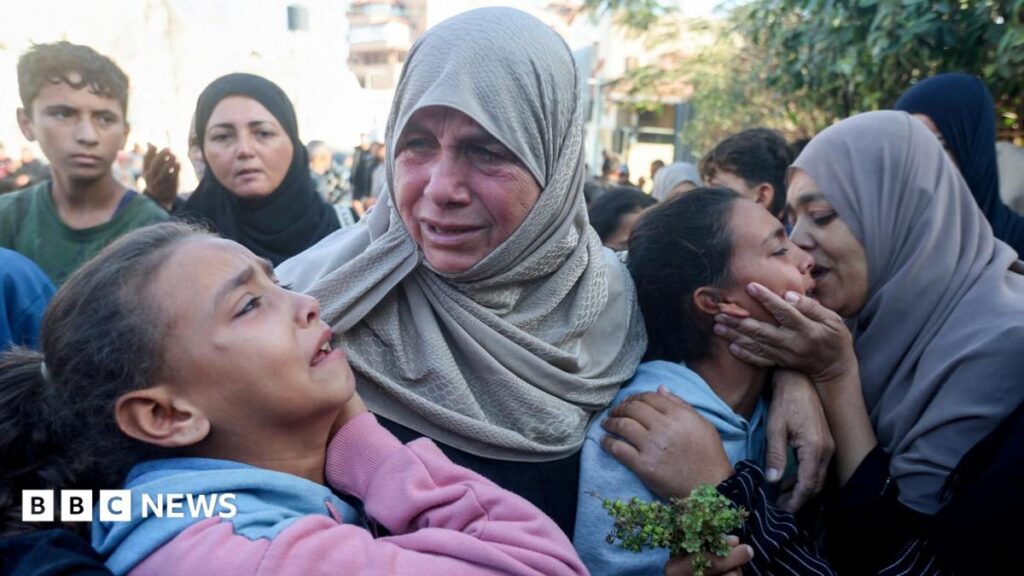
The strike resulted in the deaths of seven Palestinians, among them Abu Nahel, who was reportedly on the ground conducting a routine security briefing. Local health officials in Gaza confirmed the casualties but could not immediately verify the identities of all the victims, a common challenge in the chaos of ongoing bombardments.
The IDF released a short video clip showing the aftermath, emphasizing that the operation was part of a broader campaign to dismantle Hamas’ leadership hierarchy. Hamas, for its part, condemned the attack as a “war crime” and vowed retaliation, a pattern that has repeated throughout the conflict.
Why the killing matters: strategic and political implications
Removing a figure like Abu Nahel deals a symbolic blow to Hamas’ internal cohesion. Analysts at the Institute for Middle East Strategic Studies note that the loss of a security chief can create a temporary vacuum, potentially leading to infighting as rival factions vie for control of intelligence networks. This disruption may slow Hamas’ ability to coordinate rocket launches and underground tunnel operations, at least in the short term.
On the political front, the strike underscores Israel’s willingness to target high‑level officials despite international calls for restraint. By publicly naming Abu Nahel, Israel signals that no senior operative is beyond reach, a message aimed at deterring future escalations and pressuring Hamas to negotiate. However, critics argue that such targeted killings risk fueling further radicalisation among Hamas’ rank‑and‑file.
Humanitarian NGOs warn that the removal of a security chief could unintentionally worsen civilian suffering. Without a central figure to manage the flow of limited aid, distribution networks may become chaotic, increasing the risk of looting and uneven access. In past conflicts, the loss of security leadership has sometimes led to a spike in internal violence, complicating relief efforts.
African and diaspora angles: solidarity, aid, and diplomatic reactions
Across the African continent, the death of Abu Nahel has reverberated in pro‑Palestinian circles. In South Africa, the Economic Freedom Fighters (EFF) issued a statement calling the strike “another act of aggression against a people already under siege,” and urged the African Union to convene an emergency session on the Gaza crisis. Similar sentiments were echoed by Kenya’s Senate Committee on Foreign Affairs, which voted to draft a resolution condemning the killing.
The Palestinian diaspora in the United Kingdom, France and the United States has mobilised large‑scale protests, many organised by African‑born activists who see the Gaza plight as linked to broader anti‑colonial struggles. These groups have also launched fundraising drives to support Gaza‑based NGOs that rely heavily on African donors, particularly from Nigeria and Ghana, where charitable contributions to the Palestinian cause have risen by over 30 % since the war began, according to a 2026 report by the African Development Bank’s humanitarian desk.
On the diplomatic side, Egypt and Qatar – both key mediators in cease‑fire talks – have warned that the elimination of senior Hamas officials could destabilise the fragile negotiation process. Egypt’s Foreign Ministry, citing sources within the Ministry of Foreign Affairs, indicated that African Union members might be called upon to assist in humanitarian corridors, a role that could see African logistics firms and peace‑keeping units playing a larger part than before.
What could happen next: escalation, cease‑fire talks and humanitarian fallout
In the immediate aftermath, Hamas is expected to launch a series of retaliatory rockets aimed at southern Israel, a pattern observed after previous high‑profile Israeli strikes. Military analysts at the International Crisis Group warn that a rapid escalation could push the conflict beyond Gaza’s borders, drawing in Hezbollah from Lebanon and potentially destabilising the broader Levant region.
At the same time, back‑channel negotiations facilitated by Qatar, Egypt and, increasingly, the African Union’s Peace and Security Council are seeking to keep a cease‑fire on the table. The death of a senior security chief could be used by Israel as leverage, demanding a freeze on Hamas’ rocket production in exchange for limited humanitarian pauses. Whether Hamas will agree to such terms remains uncertain, especially given internal pressure to demonstrate resilience after the loss of Abu Nahel.
Humanitarian agencies are bracing for a surge in displacement as families flee areas targeted for further strikes. The United Nations Office for the Coordination of Humanitarian Affairs (OCHA) has warned that without a sustained cease‑fire, the number of people needing emergency aid could exceed 1.5 million by the end of 2026. African NGOs operating in Gaza, such as the Kenya‑based Humanitarian Aid for Gaza (HAG), have already requested additional funding from donor governments in Nairobi and Addis Ababa to expand food‑distribution points.
Quick Answers
Who was Naeem Abu Nahel?
Naeem Abu Nahel was Hamas’ internal security chief, responsible for intelligence, discipline and resource coordination within the Gaza Strip.
How might Abu Nahel’s death affect the Gaza conflict?
The killing could temporarily disrupt Hamas’ command structure, slow its operations, and trigger retaliatory attacks, while also complicating humanitarian aid distribution.
What is Africa’s response to the strike?
Several African nations and diaspora groups have condemned the strike, called for urgent cease‑fire talks, and pledged increased humanitarian support for Gaza.
Source: www.bbc.co.uk




💬 Comments 0