Hundreds Flee Devastated Russian‑occupied Oleshky via New Evacuation Corridor in 2026
Background: Oleshky’s strategic plight in the Ukraine war
Oleshky, a modest town of roughly 20,000 inhabitants on the Dnieper River, fell under Russian control during the early months of the 2022 invasion and has remained a frontline outpost ever since. Its proximity to the key city of Kherson makes it a logistical waypoint for supply convoys, while the river provides a natural barrier that both sides have tried to exploit. Over the past four years, the town’s infrastructure has been systematically stripped, leaving residents without reliable electricity, gas, or running water.
International observers have repeatedly flagged Oleshky as a micro‑cosm of the broader humanitarian crisis gripping occupied Ukrainian territories. The United Nations Office for the Coordination of Humanitarian Affairs (OCHA) has listed the town among the “high‑risk zones” where civilian casualties and displacement rates are soaring. Yet, because the front line has shifted only intermittently, aid deliveries have been sporadic and often caught in cross‑fire, compounding the town’s isolation.
For the diaspora, Oleshky’s situation resonates beyond Ukraine’s borders. African students and professionals who were studying or working in the region—particularly those from Nigeria, Ghana, and Kenya—have been forced to abandon their projects and return home, adding a layer of complexity to already strained scholarship and labor pipelines between Africa and Eastern Europe.
The evacuation corridor: how it was opened and who is using it
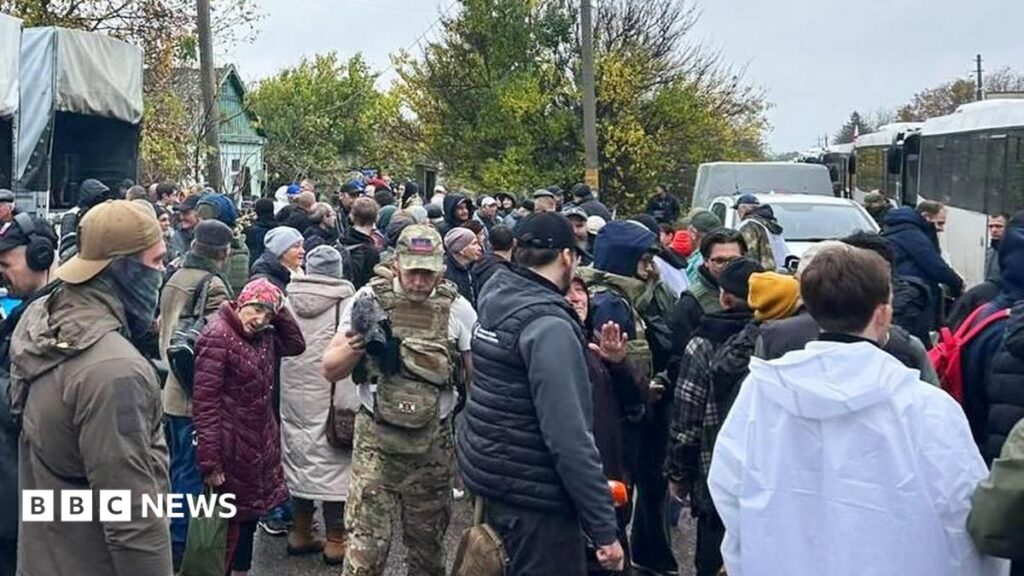
In late October 2026, Ukrainian forces, backed by a coalition of Western NGOs, negotiated a temporary humanitarian corridor through a narrow stretch of the Dnipro River bridge that links Oleshky to the Ukrainian‑held side of the river. The corridor was secured after a brief cease‑fire agreement brokered by the International Committee of the Red Cross (ICRC), which allowed armored vehicles to escort civilian convoys without being targeted by artillery.
The first wave of evacuees consisted mainly of elderly residents and families with young children, who were transported in trucks supplied by the Ukrainian Ministry of Defense and loaded onto river barges for the crossing. According to the ICRC, roughly 1,200 people left Oleshky in the first 48 hours, while local volunteers distributed food parcels and bottled water at the staging points.
Despite the corridor’s opening, a sizable minority—estimated at several hundred—chose to stay behind. Their reasons range from a deep attachment to their homes, fear of losing property, to the belief that the front line might shift again, allowing a return to normalcy. Some have also expressed distrust of the evacuation process, citing past incidents where promised aid failed to materialise.
Human cost: life without utilities and the decision to stay
Those who remain in Oleshky now endure a daily reality that borders on survival mode. With the municipal power grid sabotaged in 2024, residents rely on improvised diesel generators that run for only a few hours each night. The town’s water pipes have been punctured repeatedly, forcing families to collect rainwater or travel several kilometres to a makeshift well maintained by a local NGO.
Medical care is equally scarce. The town’s only clinic was reduced to a first‑aid station after its roof collapsed under artillery fire, leaving patients with chronic conditions—such as diabetes and hypertension—without proper medication. Local teachers have turned their classrooms into distribution hubs for basic supplies, while community elders act as informal coordinators for those who still wish to remain.
Psychologically, the trauma of constant shelling, the loss of neighbours, and the uncertainty of the future have taken a toll. Mental‑health professionals from the Ukrainian Red Cross report rising cases of anxiety and depression, especially among children who have never known a life without conflict. This human dimension, often absent from headline statistics, underscores why some residents cling to the town despite the hardships.
Regional and global implications: displacement, aid flows, and African connections
The exodus from Oleshky adds another layer to the already massive displacement crisis that Europe is grappling with. United Nations High Commissioner for Refugees (UNHCR) estimates that the latest wave will push the total number of Ukrainian internally displaced persons (IDPs) above 7 million, straining host‑country resources and prompting new policy debates about long‑term integration versus repatriation.
African nations, many of which host sizable Ukrainian diaspora communities, are watching the developments closely. Kenya and South Africa have recently announced additional humanitarian funding earmarked for Ukrainian NGOs operating in conflict zones, citing the need to support vulnerable populations that include African expatriates. Moreover, African NGOs such as Doctors Without Borders (Médecins Sans Frontières) Africa have deployed mobile clinics to nearby safe zones, highlighting a growing pan‑continental solidarity response.
Economically, the loss of Oleshky’s agricultural output—once a modest but steady supplier of wheat and sunflowers to regional markets—has ripple effects on food prices in neighboring Black Sea economies, including Romania and Bulgaria. Analysts warn that prolonged disruption could tighten supply chains, nudging global commodity prices upward at a time when many African countries are already battling inflation.
What’s next: reconstruction, legal status, and the road to return
International law experts stress that any post‑conflict reconstruction in Oleshky must respect the principles of restitution and compensation for war‑damaged property. The European Court of Human Rights has opened a preliminary examination of claims filed by Oleshky residents who allege unlawful seizure of homes by occupying forces, a step that could set precedents for other occupied towns.
Rebuilding efforts will likely hinge on the speed of de‑mining operations and the restoration of basic utilities. The World Bank has earmarked $150 million for infrastructure projects in liberated Ukrainian territories, with a portion designated for water and electricity networks in the Kherson region. However, funding disbursement is contingent on security guarantees, a factor that remains uncertain as Russian forces continue to launch artillery strikes from across the river.
For the displaced, the question of return is both practical and emotional. Humanitarian agencies are preparing “return‑to‑home” packages that include temporary housing vouchers and psychosocial support, but they warn that many families may opt to settle permanently elsewhere if rebuilding proves too slow. The coming months will therefore test not only Ukraine’s capacity to restore a war‑torn town but also the international community’s willingness to back a sustainable, rights‑based recovery.
Quick Answers
How many people have left Oleshky since the evacuation corridor opened?
Around 1,200 residents left Oleshky in the first 48 hours after the corridor was established, according to the International Committee of the Red Cross.
Why are some residents choosing to stay in Oleshky despite the lack of basic services?
Many stay because of attachment to their homes, fear of losing property, distrust of evacuation promises, and hope that the front line will shift back in their favour.
What does the new evacuation corridor mean for the wider Ukraine conflict?
It provides a temporary humanitarian lifeline for civilians, reduces immediate civilian casualties, and signals a rare cease‑fire cooperation that could influence future de‑escalation talks.
Source: www.bbc.co.uk




💬 Comments 0