Hungarian authorities uncover $20m in Orbán-era minister probe, 2026 anti‑corruption push
Hungary’s corruption legacy and the new anti‑corruption pledge
Since Viktor Orbán’s return to power in 2010, Hungary has been repeatedly criticised by the European Union and watchdogs for a permissive environment that allowed high‑level graft to flourish. State‑owned enterprises, public procurement contracts and EU‑funded projects were often cited as hotspots where political patronage turned into cash‑flow for ministers and their allies. The perception of entrenched corruption eroded investor confidence and complicated Budapest’s negotiations over the EU’s multi‑annual financial framework.
In April 2026, Péter Magyar, the new prime minister who campaigned on a promise of “clean politics”, dismissed Orbán’s government and immediately set up a special anti‑corruption task force. Magyar’s platform hinged on restoring Hungary’s credibility with Brussels and attracting foreign capital that had fled after years of opacity. The task force was given sweeping powers to audit past administrations, seize illicit assets and cooperate with international investigators.
The announcement was met with cautious optimism in Western capitals but also skepticism from those who feared the move could be politically selective. Analysts noted that real change would depend on whether the investigation could reach the inner circle of Orbán’s former cabinet, or whether it would stop at low‑level officials to create a symbolic victory.
The $20 million find: what investigators uncovered
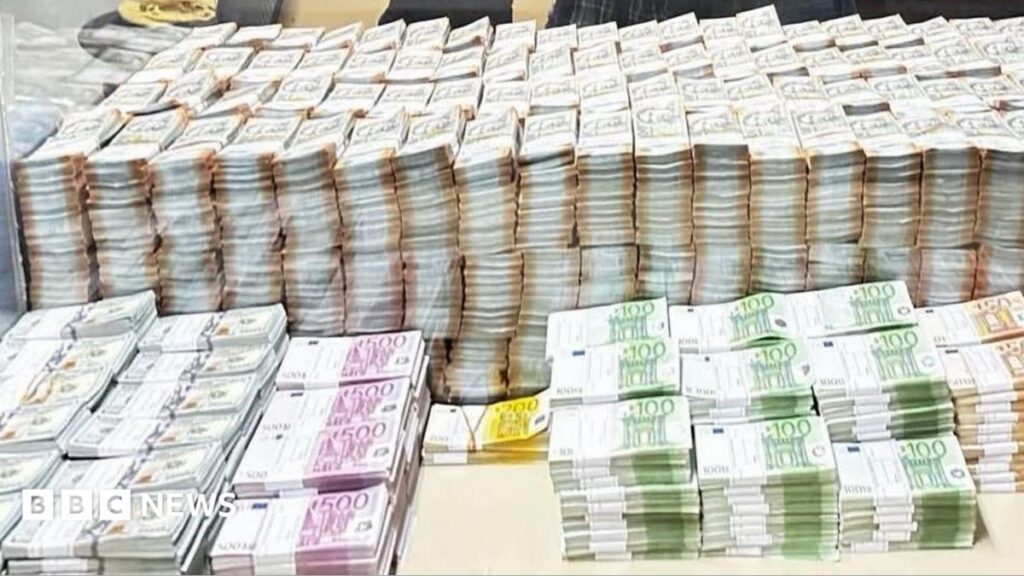
In early November, Hungarian prosecutors disclosed that they had frozen and seized roughly $20 million in cash, offshore accounts and luxury assets linked to former minister László Varga, who served as the Minister of Infrastructure during the Orbán era. The money was traced to a network of shell companies registered in Cyprus and the British Virgin Islands, allegedly used to funnel EU structural‑fund payments into private hands.
According to the prosecution’s brief, the assets were hidden in a series of real‑estate holdings in Budapest’s upscale districts, high‑end watches, and a private yacht registered under a false name. The investigation also uncovered a parallel bank‑transfer trail that moved funds into accounts owned by Varga’s relatives in Romania and Serbia, raising concerns about cross‑border money‑laundering mechanisms that could involve other regional actors.
While the $20 million figure is modest compared with the billions allegedly misappropriated during Orbán’s decade‑long rule, officials say it serves as a “proof of concept” for the new task force. The case is expected to be tried in a special anti‑corruption court that Magyar’s administration created last month to bypass what critics called a “politically compromised” regular judiciary.
Why the case matters beyond Budapest – implications for Europe and Africa
Hungary is a major conduit for EU development aid to Central and Eastern Europe, and its reputation directly influences the EU’s willingness to allocate funds to partner regions, including Africa. A credible anti‑corruption drive could reassure Brussels that Hungarian officials will properly manage the next EU‑Africa partnership program, which is slated to channel €12 billion into climate, health and digital infrastructure projects across Sub‑Saharan Africa between 2027 and 2032.
Conversely, if the probe is seen as a political stunt, it could fuel doubts in Brussels about Hungary’s capacity to safeguard EU money. Such doubts have already prompted the European Commission to delay the disbursement of a €1.5 billion fund earmarked for renewable‑energy projects in Kenya and Ghana, pending a review of Hungary’s internal controls. African NGOs and private firms that rely on EU grants may therefore experience funding gaps if the Hungarian case drags on without clear outcomes.
The diaspora angle is also significant. Over 300,000 Hungarians live in Africa, many as entrepreneurs, teachers or aid workers. Their businesses often depend on stable EU‑Hungary trade relations. A credible crackdown on corruption could improve the perception of Hungary as a reliable trading partner, encouraging more diaspora investment in sectors like agribusiness and fintech that are booming across Nigeria, Kenya and South Africa.
Political reactions: domestic stakes and international scrutiny
Domestically, opposition leader Zsófia Farkas hailed the seizure as “the first real dent in the empire of graft built by Orbán”. She warned, however, that without systemic reforms—such as independent judiciary appointments and whistle‑blower protections—the case would remain isolated. The ruling coalition, still led by former Orbán loyalists in parliament, dismissed the investigation as “politically motivated” and called for a parliamentary inquiry into the task force’s authority.
Internationally, the European Anti‑Corruption Network (EACN) issued a statement calling the development “a positive step but not an end‑point”. It urged Hungarian authorities to grant full access to EU anti‑money‑laundering databases, a request that the Hungarian finance ministry said it would consider after “a thorough security assessment”. Meanwhile, the United Nations Office on Drugs and Crime (UNODC) offered technical assistance to improve cross‑border tracking of illicit flows, a move welcomed by African anti‑corruption agencies that have long complained about opaque European money routes.
In the African context, the African Development Bank (AfDB) noted that “transparent governance in donor countries is as crucial as accountability in recipient states”. AfDB’s spokesperson said the bank would monitor the Hungarian case closely before finalising a joint €500 million financing package for a solar‑power corridor linking Morocco, Tunisia and Egypt.
What’s next: possible scenarios for Hungary and African partners
If the trial of László Varga leads to convictions and the recovery of assets, Hungary could leverage the outcome to negotiate a faster release of the pending €1.5 billion EU‑Africa climate fund. This would likely accelerate renewable‑energy projects in East Africa, where investors have already signalled interest in Hungarian‑backed green‑bond issuances. Moreover, a clean‑record could attract Hungarian venture‑capital firms looking to tap into Africa’s burgeoning tech ecosystems, especially in Lagos and Nairobi.
Should the case stall or be perceived as a selective purge, Brussels may tighten conditionalities on future Hungarian contributions to the EU‑Africa partnership. That could force Budapest to allocate more of its own budget to meet EU standards, potentially diverting resources away from domestic priorities such as healthcare and education—a move that could provoke public backlash and affect the government’s mid‑term approval ratings.
For African NGOs and diaspora entrepreneurs, the immediate takeaway is to monitor the procedural developments closely. Transparency portals such as the EU’s Transparency Register and Hungary’s newly launched “Public Funds Tracker” will provide real‑time data on how funds flow from Europe to Africa. Stakeholders are advised to incorporate anti‑money‑laundering clauses into contracts and to diversify funding sources to hedge against possible delays caused by political turbulence in donor countries.
Quick Answers
What was the amount seized in the Hungarian anti‑corruption probe?
Investigators froze about $20 million in cash, offshore accounts and luxury assets linked to former minister László Varga.
How could Hungary’s corruption case affect EU funding to Africa?
If the case raises doubts about Hungary’s governance, the EU may delay or tighten conditions on the €1.5 billion climate fund slated for Kenya and Ghana.
What does the probe mean for Hungarian diaspora investors in Africa?
A credible anti‑corruption outcome could improve Hungary’s reputation, encouraging more diaspora investment in African sectors such as agribusiness and fintech.
Source: www.bbc.co.uk




💬 Comments 0