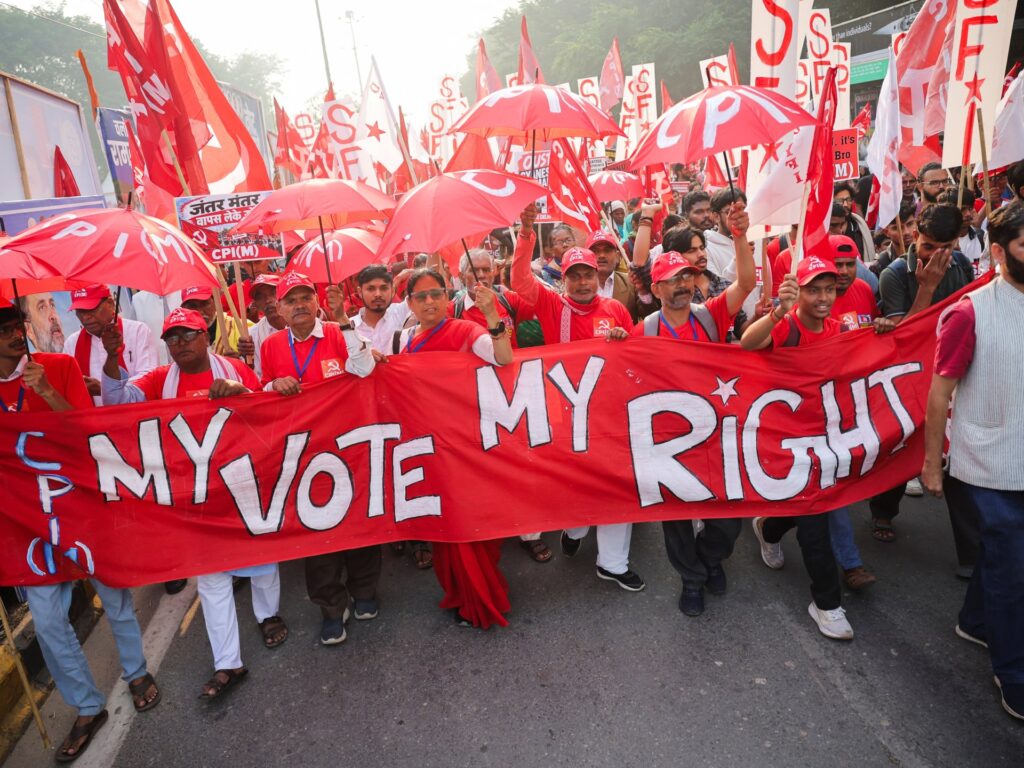
India opposition rally in New Delhi protests Election Chief Sushil Chandra over voter roll changes, 2026
Background: The Election Commission’s role and recent controversies
India’s Election Commission (EC) is a constitutionally mandated body tasked with ensuring free and fair elections across the world’s largest democracy. Its authority covers everything from voter registration to the enforcement of the Model Code of Conduct, and its decisions have historically been treated as sacrosanct by political parties and the public alike.
In the months leading up to the 2026 general election, the EC announced a series of revisions to the electoral rolls, citing the need to remove duplicate entries and update outdated information. While the technical rationale appeared sound, opposition leaders quickly argued that the timing and methodology of the purge disproportionately targeted regions where the ruling Bharatiya Janata Party (BJP) faces stiff competition.
The head of the commission, Sushil Chandra, has been a career bureaucrat with a reputation for strict adherence to procedure. However, critics claim his tenure has coincided with a growing perception that the EC is increasingly aligned with the executive branch, a concern echoed by scholars who warn that such alignment can erode the credibility of any electoral outcome.
What unfolded on the streets of New Delhi
On October 30, 2026, a crowd estimated at 15,000 to 20,000 people gathered outside the EC headquarters in Delhi’s central district. The demonstrators, a mix of opposition party workers, civil‑society activists, and ordinary citizens, chanted slogans demanding that Chandra resign immediately.
Organisers, led by the Indian National Congress and the Aam Aadmi Party, framed the protest as a defence of the franchise. They argued that the roll‑cleaning exercise, which removed over 3 million names, risked disenfranchising voters in swing states such as Uttar Pradesh and Bihar, where the opposition enjoys a stronger foothold.
Police reported a largely peaceful march, though a few isolated scuffles broke out when a small group of pro‑BJP supporters attempted to counter‑protest. No major injuries were recorded, and the EC’s spokesperson later released a statement urging all parties to respect the democratic process while the commission reviews the complaints.
Why the rally matters for India’s democratic health
The protest highlights a growing tension between India’s institutional independence and the political capital of Prime Minister Narendra Modi, who is seeking a third consecutive term. If the EC’s actions are perceived as favouring the ruling party, the legitimacy of the 2026 election could be called into question both domestically and abroad.
International observers, including the Commonwealth Election Observation Mission, have noted that perceived bias in electoral administration can depress voter turnout and fuel post‑election unrest. In India’s case, a loss of confidence could also affect foreign investment, as stability is a key factor for multinational firms eyeing the country’s expanding market.
For the opposition, the rally is a strategic move to force the issue onto the national agenda before the election calendar tightens. By spotlighting the roll‑purge, they hope to secure a judicial review that could delay the finalisation of voter lists, thereby buying time to mobilise their base.
Reactions from the ruling party, civil society, and the diaspora
The BJP dismissed the protest as a “political stunt” orchestrated by rival parties, according to statements from senior minister Rajnath Singh. The government’s narrative emphasises that the roll‑cleaning was a routine exercise to prevent electoral fraud, a claim supported by data showing a decline in duplicate entries since the last major purge in 2019.
Human‑rights NGOs such as the Centre for Democracy and Development have issued a joint communiqué urging the EC to adopt a more transparent methodology, including third‑party audits and public dashboards that track deletions in real time. Their demand reflects a broader civil‑society push for data‑driven accountability in Indian governance.
The Indian diaspora, particularly in the United Kingdom, Canada, and the United States, has taken to social media platforms to voice concerns. A poll conducted by the diaspora‑focused portal DesiPulse indicated that 62% of overseas Indian voters fear that the roll changes could affect their ability to vote by proxy or postal ballot, a sentiment that could influence diaspora‑centric campaign strategies.
What could happen next: legal battles, reforms, and regional parallels
Legal experts predict that the opposition will file a petition with the Supreme Court, seeking a stay on the final roll publication. If granted, the court could order a temporary suspension of the updated lists, forcing the EC to re‑examine the criteria used for deletions. Such a move would set a precedent for future electoral roll reviews across Indian states.
Within the next few weeks, the EC is expected to release a detailed report explaining the technical parameters of the purge. Transparency advocates argue that a publicly accessible audit trail could defuse some of the political heat, while others warn that even a well‑documented process may not satisfy parties that view the commission as already compromised.
The situation also mirrors trends seen in several African nations where electoral commissions have faced accusations of partisanship. In Kenya’s 2022 elections, for example, the Independent Electoral and Boundaries Commission was criticised for voter‑list adjustments that appeared to benefit the incumbent coalition. Observers note that India’s unfolding drama could serve as a cautionary tale for emerging democracies grappling with similar institutional pressures.
Quick Answers
Why are opposition parties demanding the resignation of Election Chief Sushil Chandra?
They allege that the recent voter‑roll cleanup disproportionately removed opposition‑leaning voters, threatening the fairness of the upcoming 2026 election.
What legal options does the Indian opposition have against the voter‑roll changes?
The opposition can petition the Supreme Court for a stay on the finalised rolls and request a judicial review of the EC’s methodology.
How could the protest affect Indian diaspora voting?
Diaspora voters worry that the roll changes may disrupt proxy and postal voting options, potentially reducing their participation in the 2026 election.
Source: www.aljazeera.com




💬 Comments 0