India’s Cockroach Janta Party Calls for Election Chief Gyanesh Kumar’s Resignation in 2026
Background: A new breed of protest in Indian politics
The Cockroach Janta Party (CJP) emerged in early 2025 as a loosely organised, youth‑driven collective that uses satire, street art and viral memes to highlight perceived corruption and bureaucratic inertia. Its name, a tongue‑in‑cheek reference to the insect’s resilience, signals the group’s belief that ordinary citizens can survive and thrive despite systemic neglect. Within a year, the CJP built a digital following of over three million across platforms such as X, Instagram and regional video apps, turning online chatter into on‑the‑ground rallies in Delhi, Mumbai and several tier‑two cities.
The party’s rise coincides with a broader wave of dissent against India’s election machinery. Critics have long accused the Election Commission of India (ECI) of being overly politicised, especially after the 2024 general election, where allegations of voter‑list manipulation and uneven enforcement of the Model Code of Conduct surfaced. Gyanesh Kumar, appointed chief election commissioner in 2023, has been a focal point of these debates, with opposition parties accusing him of favouring the ruling coalition in the allocation of polling dates and the handling of campaign finance disclosures.
The Cockroach Janta Party’s move: From memes to a formal demand
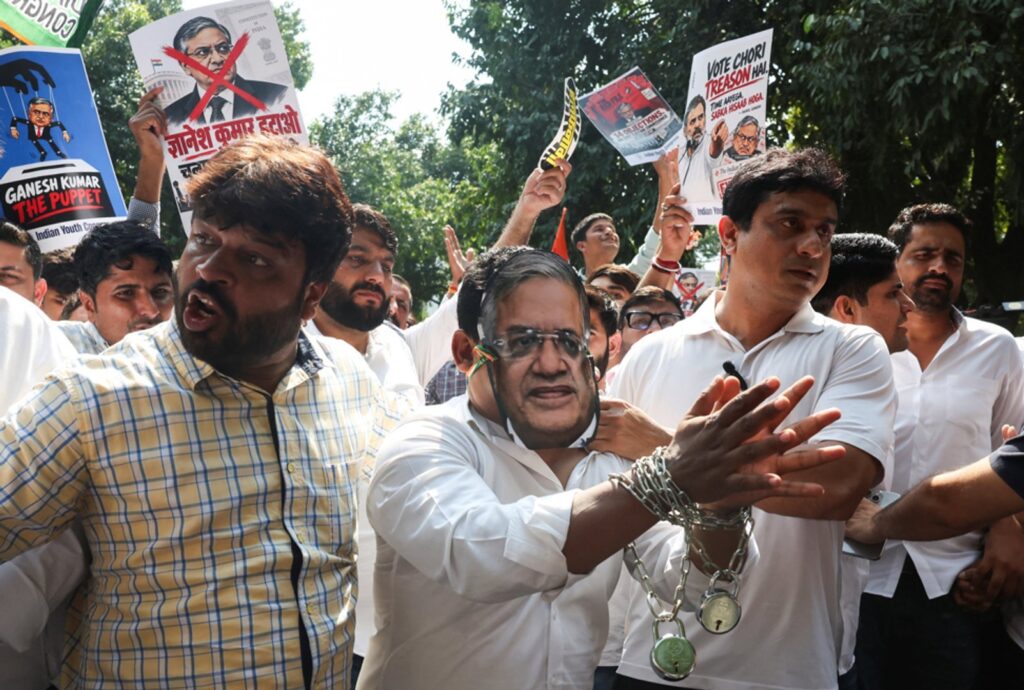
On 22 September 2026, the CJP released a video manifesto that called for Kumar’s immediate resignation, citing “a pattern of opaque decision‑making that threatens the credibility of India’s democratic process.” The manifesto was accompanied by a coordinated street protest in New Delhi’s Connaught Place, where participants brandished placards depicting Kumar as a cockroach trapped under a ballot box. The protest was largely peaceful, but police reported a handful of arrests for alleged violations of the Model Code of Conduct, a move that the CJP labelled “political intimidation.”
The demand aligns the CJP with mainstream opposition parties, notably the Indian National Congress and the Aam Aadmi Party, which have also issued statements urging Kumar to step down. While the CJP lacks formal parliamentary representation, its ability to mobilise young voters and generate media buzz has forced established parties to acknowledge the group’s grievances. According to a senior Congress source, the opposition sees the CJP’s activism as a “useful pressure valve” that can broaden their anti‑incumbent narrative ahead of the 2027 state elections.
Why it matters for Indian democracy
The push to remove an election chief is unprecedented in post‑independence India. Historically, the ECI has been insulated from direct political attacks, a design meant to safeguard free and fair elections. If Kumar were to resign under public pressure, it could set a new precedent where civil society and youth movements directly influence the tenure of constitutional functionaries, reshaping the balance between accountability and independence.
Experts warn that the episode could also exacerbate public cynicism toward democratic institutions. Dr. Ananya Rao, a political scientist at Jawaharlal Nehru University, notes that “the perception that the election commission is a partisan body erodes voter confidence, which in turn depresses turnout and fuels radical alternatives.” The CJP’s demand, therefore, is not merely a call for one individual’s ouster but a litmus test for how resilient India’s democratic architecture is when faced with coordinated, digitally‑savvy dissent.
Ripple effects for Africa, the diaspora and emerging markets
India’s electoral credibility matters far beyond its borders, especially for African economies that rely on Indian investment in sectors such as pharmaceuticals, information technology and renewable energy. According to a 2025 report by the African Development Bank, Indian firms accounted for 12% of foreign direct investment in sub‑Saharan Africa, a figure that has been rising steadily. Any perception of democratic backsliding could prompt African policymakers to reassess risk exposure, potentially slowing the pipeline of joint ventures and technology transfers.
The Indian diaspora in Africa—estimated at over 1.2 million people, many of whom are entrepreneurs in Kenya, South Africa and Nigeria—has also been watching the developments closely. Community leaders in Nairobi’s Little India district have organised discussion circles to gauge how the controversy might affect bilateral trade missions scheduled for early 2027. A senior member of the Kenya‑India Business Council told local media that “political stability in New Delhi is a key factor in our confidence to invest in high‑tech collaborations.”
What comes next: Legal battles, political calculations and the role of youth activism
The immediate next step is likely a legal challenge. Opposition parties have hinted at filing a petition in the Supreme Court to compel Kumar’s resignation on grounds of “gross misconduct,” a move that would force the judiciary to weigh the independence of the election commission against public demand for accountability. The CJP has pledged to support any legal avenue, stating that “the fight for transparent elections belongs to every citizen, not just to those with parliamentary seats.”
Beyond the courtroom, the episode may reshape campaign strategies for the 2027 state polls. Parties are expected to court the CJP’s youthful base by adopting more digital outreach and pledging reforms to the electoral roll. If the movement sustains its momentum, it could also inspire similar youth‑led watchdog groups in other democracies, echoing the rise of climate‑focused voting blocs in Europe and Africa. For now, the fate of Gyanesh Kumar serves as a barometer for how much power ordinary citizens can wield over India’s most critical democratic institution.
Quick Answers
Who is Gyanesh Kumar and why is he under pressure?
Gyanesh Kumar is India's chief election commissioner, appointed in 2023, and is facing calls to resign over allegations of partisan decision‑making during the 2024 general election.
What is the Cockroach Janta Party?
The Cockroach Janta Party is a youth‑led, satirical political collective that gained prominence in 2025 by using memes and street protests to demand greater transparency in Indian politics.
How could this Indian political dispute affect African investors?
India’s electoral credibility influences foreign‑direct investment; instability could make African governments and businesses wary of new Indian partnerships, especially in tech and renewable sectors.
Source: www.aljazeera.com




💬 Comments 0