India’s education crisis hits home: 47‑year‑old mother wins barefoot 3km race for school books in 2026
Background: a widening education funding gap in India
India’s public education system has long struggled with chronic under‑funding, especially in rural districts where school infrastructure is sparse and textbooks are often sold rather than supplied. The 2025 National Sample Survey indicated that more than 30% of households in low‑income regions could not afford basic learning materials for their children, forcing many to rely on private tuition or go without school altogether.
The problem is compounded by demographic pressure: the country adds roughly 25 million school‑age children each year, stretching already thin resources. While the government pledged to increase per‑pupil spending to 2,500 rupees in its 2024 budget, many states have fallen short, leaving families to shoulder the cost of textbooks, uniforms, and transport.
Gender adds another layer of vulnerability. Girls in particular face higher dropout rates in poorer communities, as families prioritize boys’ education when money is scarce. This context helps explain why a mother’s desperate sprint for a modest cash prize can become a national flashpoint.
The barefoot race: a mother’s desperate sprint for her daughter’s future
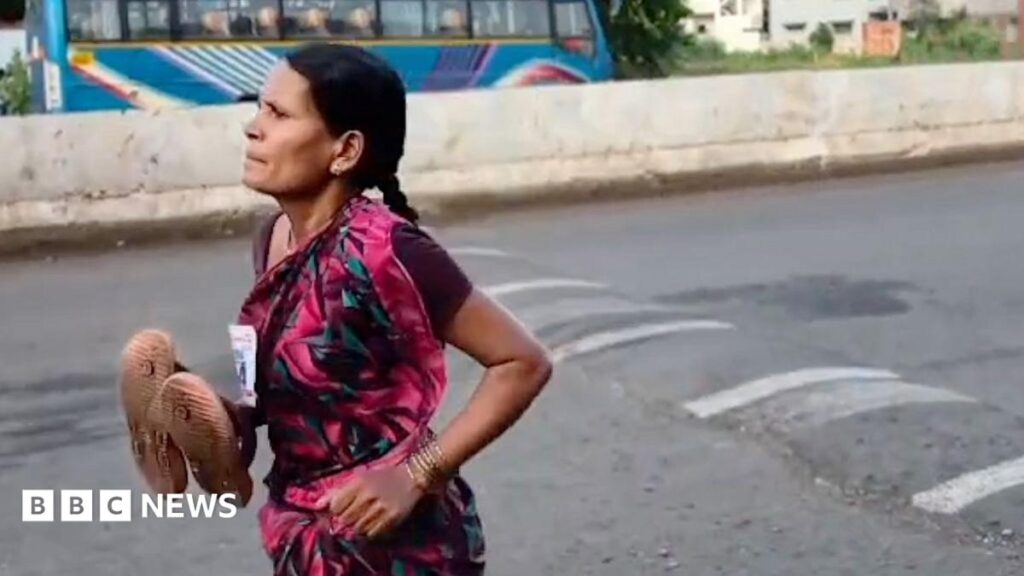
In early September 2026, 47‑year‑old Sita Devi (name changed for privacy) entered a 3‑kilometre charity race in a small town in Uttar Pradesh, barefoot and without any sponsorship. She said she ran hoping the prize money would buy the textbooks her 12‑year‑old daughter needed for the upcoming board exams.
She crossed the finish line first, beating dozens of competitors who wore shoes and ran in organised clubs. According to local media reports, the prize was a modest sum of a few thousand rupees – enough to purchase a set of standard‑issue textbooks but far from covering the full cost of a year’s schooling.
The image of a barefoot mother sprinting through dust‑laden streets went viral on social platforms, sparking a flood of comments that ranged from admiration for her determination to outrage over a system that forces parents into such extremes. The race quickly became a symbol of the larger education crisis, as people across India and the diaspora shared the story with the hashtag #BooksNotBarriers.
Why this story matters beyond India’s borders
The narrative mirrors challenges faced across many African nations where public education funding is similarly inadequate. In Nigeria, for example, a 2024 UNICEF report found that over 20% of households could not afford school supplies, leading to a rise in informal tutoring markets that profit from the same scarcity that drove Sita Devi to race.
Diaspora communities in the United Kingdom, United States, and Canada have taken note, organising fund‑raising drives for Sita’s daughter and using the moment to highlight how education inequities affect migrant families who send remittances back home. The story has also been cited in policy round‑tables discussing how diaspora remittances could be channelled into community‑based education funds.
On a broader scale, the episode underscores a global pattern: as economies grow, the cost of basic education often outpaces public investment, pushing families into precarious coping strategies. Whether it’s a barefoot runner in India or a child labourer in Kenya, the underlying issue is the same – a systemic failure to guarantee free, quality education for every child.
Policy and societal implications: what the race reveals about systemic gaps
First, the incident highlights the inadequacy of current scholarship and textbook distribution schemes. While several states have introduced “free textbook” policies, implementation gaps mean that many families still have to purchase supplementary material, especially for higher‑grade subjects that change annually.
Second, the media frenzy has put pressure on local officials to address the immediate need. In the weeks following the race, the district education officer announced a one‑time grant of 10,000 rupees for families of children in need, but critics argue that ad‑hoc cash handouts are a band‑aid rather than a sustainable solution.
Third, the story has revived debate over gendered expectations in low‑income households. Sita’s willingness to run barefoot reflects both her personal resolve and the cultural expectation that mothers shoulder the burden of children’s education, even at the cost of their own health and dignity.
What could change: pathways forward for India and similar contexts
Long‑term reform must start with guaranteed textbook provision. The 2026 amendment to the Right to Education Act proposes that every state allocate a fixed percentage of its education budget to free learning material, but effective monitoring mechanisms are still missing. Civil‑society groups are calling for a digital ledger that tracks textbook distribution to each school, reducing leakage.
Second, expanding community‑based financing models could alleviate immediate pressures. In Kenya, “education cooperatives” allow parents to pool resources and receive low‑interest loans for school fees. A similar model, adapted to India’s micro‑finance landscape, could give families like Sita’s a reliable safety net without resorting to public races for cash.
Finally, the diaspora’s role could become more structured. Platforms that connect overseas Indian professionals with grassroots education projects are already emerging, but they need transparent governance to ensure funds reach the intended beneficiaries. If such mechanisms scale, they could turn viral moments like Sita’s race into lasting investments rather than fleeting sympathy.
Quick Answers
How much prize money did Sita Devi win in the barefoot race?
The race awarded a modest prize of a few thousand Indian rupees, reportedly enough to buy a set of standard school textbooks.
What does the barefoot race reveal about India’s education crisis?
It shows that many families cannot afford basic learning materials, forcing parents to take extraordinary measures—like racing barefoot—for a chance at a small cash prize.
Is the education funding challenge similar in African countries?
Yes; nations such as Nigeria and Kenya also face gaps between public spending and the cost of textbooks, leading families to rely on informal financing or community support.
Source: www.bbc.co.uk



💬 Comments 0