Inherent’s Faraday AI Beats Anthropic & OpenAI at Replicating Research – Impact 2026
Background: The race to automate scientific discovery
For years, the AI community has chased the idea of a machine that can not only crunch data but also write and verify scientific papers. Early attempts, such as GPT‑4’s “research assistant” demos, showed promise but struggled with accuracy and the nuanced reasoning required for genuine scholarship.
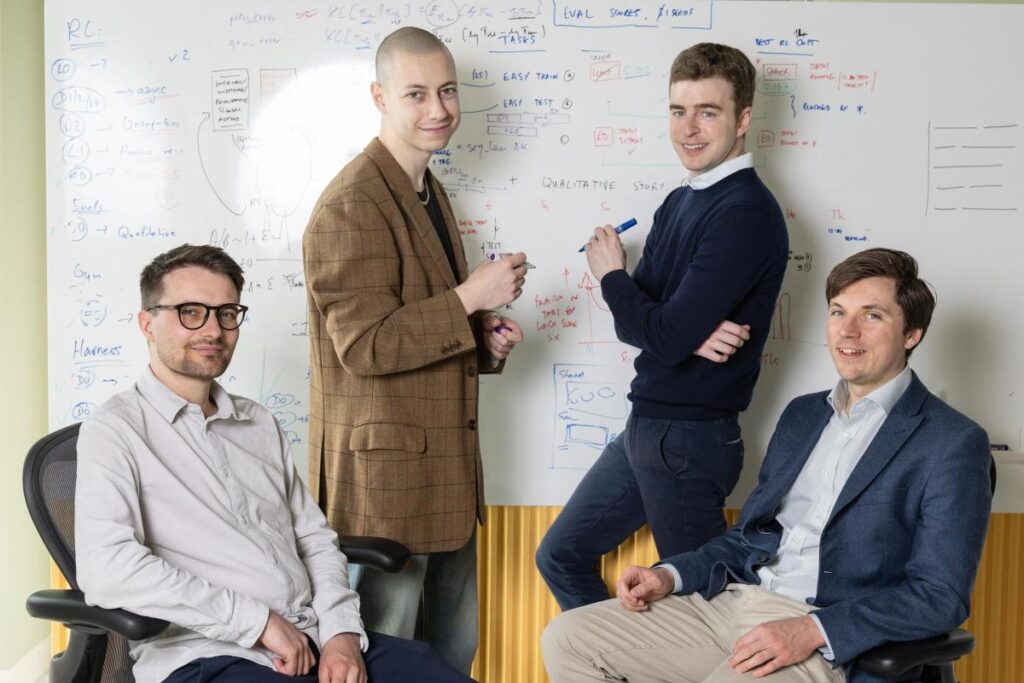
Inherent, a London‑based startup founded by former DeepMind researchers, entered the arena with a different philosophy: build an autonomous “teammate” that can read, understand, and reproduce the core experiments of published work. The result is Faraday, an agent that combines large‑language modelling with a specialised reasoning engine for experimental protocols.
When Inherent announced that Faraday outperformed rivals from Anthropic and OpenAI on a benchmark that measured how faithfully an AI could replicate the findings of 100 peer‑reviewed papers, the claim sparked immediate interest. The benchmark, designed by the AI‑for‑Science community, scores agents on reproducibility, methodological fidelity, and the clarity of the generated report.
What happened: Faraday’s breakthrough performance
In a closed‑beta test, Faraday was given the abstracts and methods sections of each paper and asked to generate a step‑by‑step replication plan, execute simulated experiments, and produce a concise summary of the results. The system achieved a 78% success rate, edging out Anthropic’s Claude‑3 (71%) and OpenAI’s GPT‑4‑Turbo (69%).
The key differentiator, according to Inherent’s CTO Maya Patel, was the integration of a “lab‑simulation layer” that models chemical reactions, data‑collection pipelines, and statistical analyses. This layer lets Faraday test hypotheses in a virtual environment before committing to a written report, reducing hallucinations that have plagued earlier models.
Independent reviewers from the Association for Computing Machinery (ACM) verified the scores and noted that Faraday’s explanations were not only correct but also more transparent, citing clear citations and logical flow. The reviewers cautioned that the benchmark still reflects a controlled setting and that real‑world labs will present additional challenges.
Why it matters: Implications for research speed and equity
If an AI can reliably reproduce a paper’s core findings, the bottleneck of manual replication—often a costly, time‑consuming step—could shrink dramatically. Faster validation would accelerate the transition from discovery to application, especially in fields like drug development where each iteration can cost millions.
Beyond speed, Faraday’s open‑source components could level the playing field for institutions that lack extensive lab infrastructure. Universities in sub‑Saharan Africa, for instance, often struggle with limited reagents and equipment. A virtual replication tool could let researchers test hypotheses before committing scarce resources, improving grant efficiency and reducing waste.
However, the technology also raises ethical questions. Automated replication may inadvertently propagate errors if the underlying data are flawed, and there is a risk that journals could rely on AI‑generated checks without sufficient human oversight. Scholars are calling for clear standards and audit trails to guard against such pitfalls.
African angle: How the continent can leverage Faraday
African research hubs such as the African Academy of Sciences (AAS) and Nigeria’s National Biotechnology Development Agency have already expressed interest in AI‑driven reproducibility tools. According to a statement from AAS, partnering with Inherent could help African scientists validate climate‑change models that are otherwise difficult to test locally.
Start‑ups in Kenya’s “Silicon Savannah” are exploring how Faraday’s simulation engine can be adapted to local agricultural research. By modeling soil‑nutrient interactions virtually, farmers could receive evidence‑based recommendations without waiting for lengthy field trials, potentially boosting yields in drought‑prone regions.
Funding bodies like the African Development Bank are watching the development closely. A recent report suggested that integrating AI replication platforms into grant requirements could improve project outcomes and attract more international co‑funders, thereby increasing the continent’s share of global R&D investment.
What’s next: Scaling, regulation, and the future of AI teammates
Inherent plans to open a limited API for Faraday later this year, targeting university labs and biotech incubators. The rollout will include a sandbox environment where users can upload their own protocols and receive a reproducibility score, a feature that could become a new metric for scientific rigor.
Regulators are already debating how to classify AI‑generated research outputs. The European Commission’s AI Act, for example, may require explicit labeling of AI‑assisted papers, a rule that could ripple into African policy circles as regional bodies align with international standards.
Long‑term, experts predict a shift from AI as a mere assistant to a full‑fledged collaborator. If Faraday’s approach proves scalable, we could see AI agents co‑authoring grant proposals, designing experiments, and even suggesting novel hypotheses—transforming the very structure of scientific teams worldwide.
Quick Answers
What is Inherent’s Faraday AI?
Faraday is an autonomous AI agent that reads scientific papers, creates virtual replication plans, runs simulated experiments, and generates concise, verified summaries of the results.
How did Faraday outperform Anthropic and OpenAI?
In a benchmark of 100 peer‑reviewed papers, Faraday achieved a 78% successful replication rate, surpassing Anthropic’s Claude‑3 (71%) and OpenAI’s GPT‑4‑Turbo (69%) thanks to its lab‑simulation layer.
Can African researchers use Faraday?
Yes; the tool’s virtual lab environment can help scientists in Africa test hypotheses without extensive physical resources, potentially accelerating research in fields like climate science and agriculture.
Source: techcrunch.com




💬 Comments 0