Israel 2026 election close vote leaves no clear winner, coalition talks begin
Background: Israel’s fragmented political landscape
Since the early 2000s Israel’s parliamentary system has become increasingly splintered, with no single party able to command an outright majority for more than a handful of elections. The rise of niche parties representing religious, nationalist, and minority interests has turned coalition‑building into a marathon rather than a sprint.
The last three elections saw a revolving door of short‑lived governments, each dependent on fragile alliances that could collapse at the drop of a hat. Prime Minister Benjamin Netanyahu’s Likud party, once the dominant force, now competes with a cluster of right‑wing and religious parties, while the centrist Yesh Atid and the left‑leaning Labor‑Meretz bloc struggle to stay relevant.
Against this backdrop, the 2026 election was billed as a test of whether Israel’s electorate would finally coalesce around a clear mandate or continue the pattern of fragmented results that force endless negotiations in the Knesset.
The 2026 vote: No clear majority
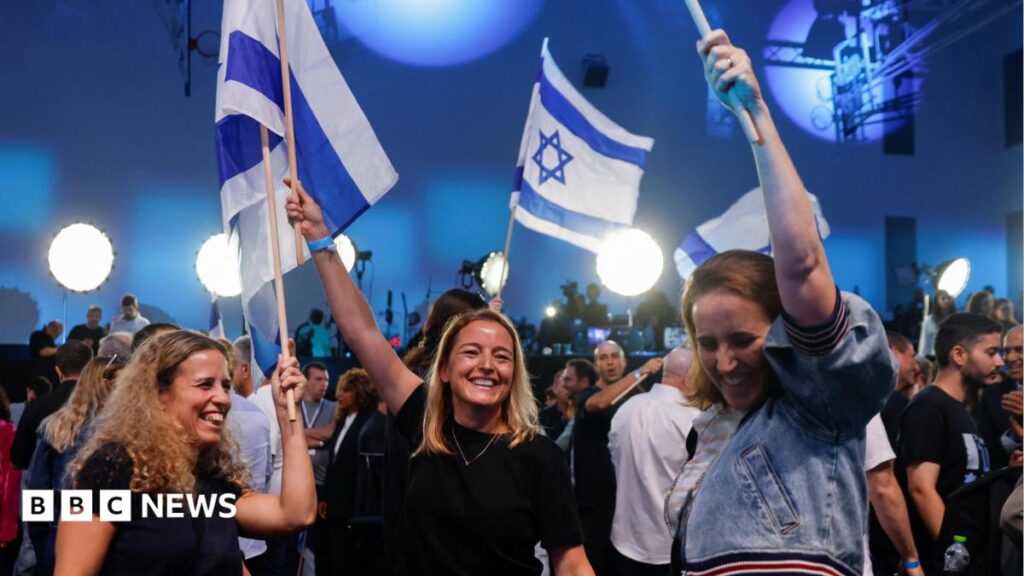
Polls closed on Saturday night, and the official count released early Sunday showed Likud at 28.3 % of the vote, just short of the 30 % threshold many analysts consider a comfortable starting point for coalition talks. Close allies of Netanyahu – Religious Zionist Party and Otzma Yehudit – together added another 12 %, while the centrist bloc led by Yesh Atid secured 19 % and the left‑wing coalition hovered around 11 %. Smaller Arab‑Israeli parties together captured roughly 8 % of the vote.
Because Israel’s 120‑seat parliament uses a proportional representation system, the fragmented vote translates into a Knesset where no party holds more than 35 seats. The threshold for entering the Knesset is 3.25 %, meaning even the tiniest parties can become king‑makers if larger blocs need their support to reach the 61‑seat majority required to form a government.
The immediate consequence is a stalemate. The president of Israel, a largely ceremonial figure, is now tasked with consulting party leaders to identify a candidate who can command a majority. Historically, this process can take weeks or even months, as seen after the 2022 election when coalition talks dragged on for 35 days.
Why the stalemate matters for Africa and the wider region
Israel’s foreign policy has increasingly intersected with African interests, from technology partnerships to security cooperation. A prolonged government formation period could delay or dilute ongoing projects, such as the solar‑energy venture in Kenya’s Turkana County that relies on Israeli firms for photovoltaic panels and training.
Security cooperation is another key area. Israel supplies drones, surveillance gear, and cyber‑defence expertise to several African states, including Ethiopia, Nigeria, and the Sahel nations battling insurgencies. A caretaker government typically maintains the status quo, but any shift in coalition composition – especially if hard‑line religious parties gain more sway – could reshape the tone of these partnerships.
Trade ties are also at stake. Israel’s high‑tech exports to South Africa and the growing agri‑tech collaboration with Ghana are negotiated at the ministerial level. Uncertainty in Jerusalem can stall budget approvals for joint research programs, potentially slowing the pipeline of innovations that African startups rely on.
Reactions from the Israeli diaspora and African communities
The Israeli diaspora in the United States, Europe, and South Africa reacted with a mixture of anxiety and optimism. Community leaders in Johannesburg warned that any government leaning heavily toward settlement expansion could attract backlash from African nations that support a two‑state solution.
Conversely, pro‑business groups in Lagos highlighted that Israel’s tech ecosystem remains a valuable partner regardless of which coalition emerges. They called for a “business‑first” approach, urging Israeli negotiators to keep trade agreements and joint‑venture pipelines moving.
Human‑rights NGOs across the continent, such as Amnesty International’s African office, seized on the deadlock to press for clearer commitments on settlement activity and the treatment of Palestinians, arguing that a new Israeli administration could either reinforce or reverse recent policy trends.
What could a coalition look like and what’s next?
Analysts outline three plausible scenarios. The first – a right‑leaning bloc – would see Likud joining forces with the Religious Zionist Party, Otzma Yehudit, and perhaps the centrist Blue and White party, reaching just over the 61‑seat mark. Such a coalition would likely pursue a hard‑line stance on settlements and maintain a strong security posture toward Iran and Gaza.
The second scenario envisions a centrist‑left coalition, with Yesh Atid, Labor‑Meretz, and a handful of Arab‑Israeli parties forming a progressive government. Though numerically tighter, this alignment could prioritize diplomatic outreach, revive peace‑process talks, and keep security cooperation with African states steady but less politicised.
A third, more complex option is a “grand coalition” that pulls together elements from both sides to avoid a prolonged deadlock. This would require significant concessions, especially on contentious issues like judicial reform and settlement policy, and could lead to a fragile but functional administration.
In the coming days, the president will meet with party leaders to assign a “prime‑minister‑designate.” That individual will then have 28 days to assemble a coalition, according to Israeli law. If they fail, a new election could be called, pushing the timeline into 2027 and further destabilising regional diplomatic rhythms.
Quick Answers
When did Israel’s 2026 election take place?
The election was held on Saturday, October 26, 2026, with polls closing at 10 p.m. local time.
What were the main parties and their vote shares?
Likud received about 28.3 %, Yesh Atid 19 %, a right‑wing bloc of Religious Zionist and Otzma Yehudit parties added roughly 12 %, the left‑wing coalition secured around 11 %, and Arab‑Israeli parties together earned about 8 %.
What coalition possibilities could shape Israel’s foreign policy toward Africa?
A right‑leaning coalition may prioritize security ties and settlement expansion, while a centrist‑left alliance could focus on diplomatic engagement and maintain existing trade and tech partnerships with African nations.
Source: www.bbc.co.uk




💬 Comments 0