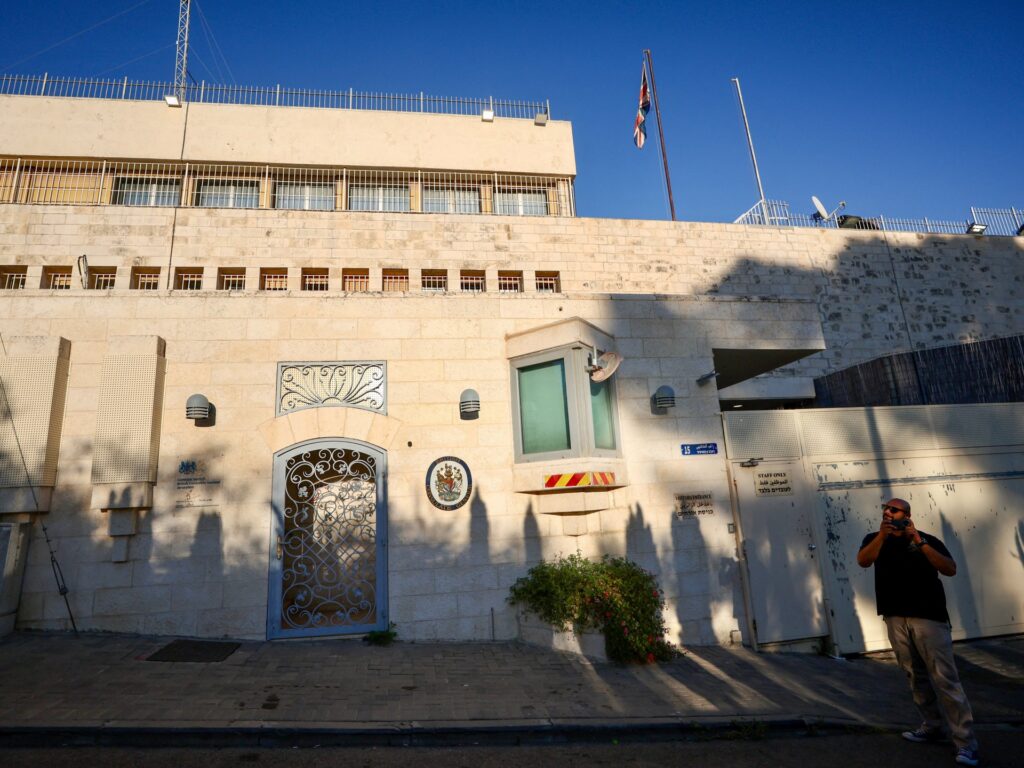
Israel orders UK East Jerusalem consulate to close within 30 days after UK sanctions settlements, 2026
Background: UK sanctions on Israeli settlements
In early September 2026 the United Kingdom announced a new sanctions package targeting Israeli entities involved in the expansion of settlements deemed illegal under international law. The move followed a parliamentary debate where Labour and Green MPs pressed the government to align its foreign policy with the UN Security Council resolutions on the occupied Palestinian territories. The sanctions freeze assets, ban travel for senior officials and prohibit UK firms from supplying construction equipment to settlement projects.
The decision marked the first time a major Western power has imposed direct economic penalties on settlement activity since the United States rolled back its own sanctions in 2022. British officials framed the policy as a moral imperative and a signal to the European Union, which has been divided over how to address the Israeli‑Palestinian conflict. The sanctions were expected to provoke a diplomatic backlash from Jerusalem.
What Israel did: ordering the consulate’s closure
Within days of the UK announcement, Israel’s Ministry of Foreign Affairs issued an official notice demanding that the United Kingdom shut its consular office in East Jerusalem within 30 days. The consulate, opened in 2019, had been the first Western diplomatic mission to operate inside the contested city and was seen as a symbolic endorsement of Israeli sovereignty over the area.
In a statement released on September 8, Israeli Foreign Minister Eli Cohen called the UK sanctions "a direct attack on Israel’s legitimate security interests" and said the consulate would lose its diplomatic status if the UK refused to comply. The notice also warned that any continued British presence could be deemed a violation of Israel’s foreign‑policy prerogatives, potentially leading to reciprocal measures.
Why the standoff matters for Africa and the diaspora
African nations have historically balanced their relations with Israel against solidarity with the Palestinian cause. Countries such as South Africa, Kenya and Ghana have supported UN resolutions condemning settlement expansion, while also maintaining trade ties and security cooperation with Israel. The UK’s sanctions could shift this calculus, prompting African governments to reassess how they navigate the Israeli‑Palestinian issue in multilateral forums like the African Union.
For the African diaspora in the UK, the diplomatic row is already reverberating through community organisations. Groups such as the British African Palestinian Solidarity Network have called for boycotts of Israeli products and urged African‑British politicians to back the sanctions. The potential closure of the consulate may also affect African students and businesspeople who rely on the office for visa services and trade facilitation, creating a practical hurdle that could influence perceptions of Israel among the diaspora.
Economic and diplomatic ripple effects
The sanctions and the consulate closure are likely to impact several sectors where Israel and African economies intersect. Israeli technology firms, especially those in agricultural tech and water management, have long partnered with African ministries to improve food security. If the diplomatic chill extends to trade, African countries could see delays in joint projects, or might turn to alternative partners such as China or Turkey for similar solutions.
On the diplomatic front, the episode could embolden other Western capitals to adopt tougher stances on settlements. The European Union, which has been debating a unified sanctions regime, may use the UK‑Israel clash as a precedent. Meanwhile, Israel may seek to deepen ties with African states that are less likely to follow the UK’s lead, offering incentives such as investment in renewable energy and defence cooperation.
What comes next: possible scenarios and next steps
If the UK complies and shuts the East Jerusalem consulate, Israel could respond by scaling back its diplomatic staff in London, limiting cultural exchanges, or imposing travel restrictions on British citizens linked to settlement enterprises. Analysts at the African Center for Strategic Studies warn that a tit‑for‑tat escalation could spill over into multilateral arenas, affecting Africa’s collective voting patterns at the UN.
Conversely, diplomatic negotiations could produce a compromise. Some observers suggest that Israel might keep the consulate open but downgrade its status, allowing it to function as a trade office rather than a full diplomatic mission. Such a move would preserve essential services for African entrepreneurs while signalling a willingness to de‑escalate. The next few weeks will likely see intense back‑channel talks involving the UK Foreign Office, the Israeli embassy in London, and African diplomatic missions that have a stake in the outcome.
Quick Answers
Why did Israel order the UK consulate in East Jerusalem to close?
Israel said the UK sanctions on settlements threatened its security interests and demanded the consulate close within 30 days as a diplomatic response.
How could the UK‑Israel dispute affect African countries?
African states may reassess their stance on Israel‑Palestine in light of the UK’s sanctions, and trade projects with Israeli tech firms could face delays or be redirected to other partners.
What are the possible outcomes for the UK consulate in East Jerusalem?
The consulate could be shut, downgraded to a trade office, or remain open under reduced diplomatic status depending on negotiations between Israel and the UK.
Source: www.aljazeera.com



💬 Comments 0