Jojo the Gorilla’s Search for a Companion Highlights Africa’s Ongoing Fight Against Poaching in 2026
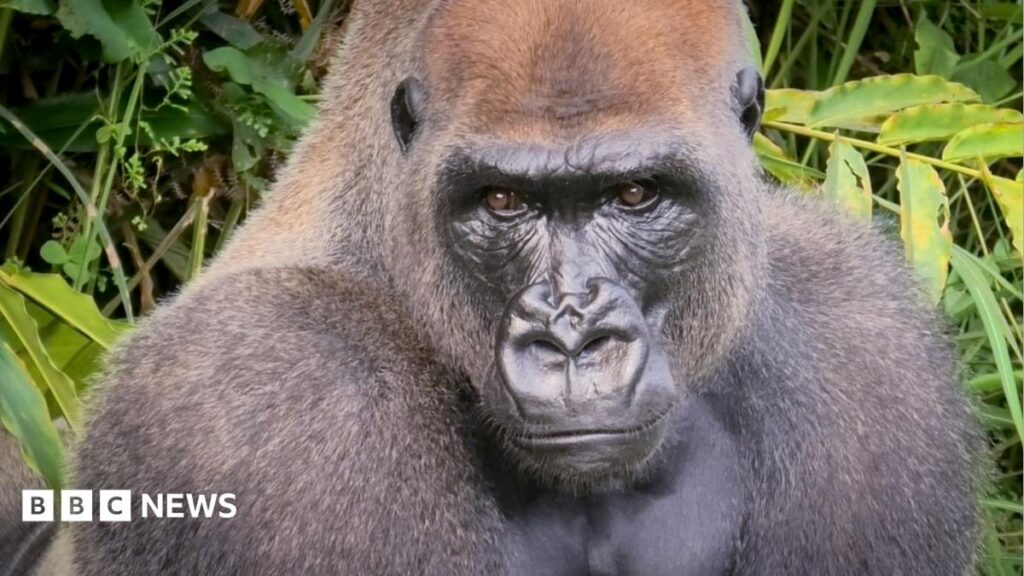
A tragic beginning and a lonely adulthood
Jojo was snatched from the dense rain‑forests of western Rwanda when he was barely a few months old, a victim of the same illegal wildlife trade that has decimated mountain gorilla numbers over the past two decades. He was smuggled across the border and, after a brief stint in a black‑market holding pen, was sold to a European wildlife park where he has spent the last 30 years in isolation.
Because he was taken as an infant, Jojo missed the critical period of social learning that wild gorillas undergo with their mothers and troop members. Veterinarians and primatologists note that without these early interactions, gorillas often develop abnormal behaviours, ranging from self‑injury to chronic stress. Jojo’s keepers have observed him pacing the enclosure, playing with objects repeatedly, and showing little interest in the enrichment devices designed for his species.
Why finding a friend is harder than it sounds
On the surface, pairing Jojo with another male or a female gorilla might seem like a straightforward solution. In reality, the genetics, health status, and behavioural compatibility of any prospective companion must be meticulously vetted. A 2023 study by the European Association of Zoos and Aquaria warned that introducing a new gorilla to a long‑isolated individual can trigger aggression or exacerbate existing health issues, especially when the animal has never learned the subtle hierarchies that govern gorilla societies.
Moreover, the pool of suitable candidates is dwindling. Many captive gorillas are already part of breeding programmes aimed at preserving genetic diversity for potential re‑wilding projects in Africa. Relocating any of them to Jojo’s enclosure would disrupt those plans, and the logistical costs of moving a large, mature primate across continents are steep. The park’s director, Dr. Lena Möller, told local media that “the welfare of both animals comes first; we cannot gamble with a single mis‑match that could end in injury or loss of life.”
Jojo’s story as a mirror of Africa’s poaching crisis
Jojo’s capture is not an isolated incident. TRAFFIC reported that in 2025, illegal trade in great apes increased by 12 % across Central and East Africa, driven by demand for exotic pets and the lucrative black market for body parts. The same routes that moved Jojo to Europe now ferry ivory, pangolin scales and pangolin meat to Asian markets. Each confiscated animal like Jojo represents a missed opportunity for African ecosystems that rely on apex herbivores to disperse seeds and maintain forest health.
The ripple effect reaches far beyond the individual animal. When a juvenile gorilla is taken, the remaining troop loses a future breeder, potentially reducing the group’s growth rate by up to 15 % according to a 2024 University of Nairobi modelling paper. In the long run, these losses compound, threatening the viability of already fragmented populations in the Virunga and Bwindi ranges.
Funding, policy and the African response
Western zoos often justify keeping confiscated animals by citing education and conservation funding. However, critics argue that the money generated rarely flows back to the source countries. A 2022 audit of the European Wildlife Conservation Fund showed that less than 5 % of revenues from high‑profile animals were earmarked for African anti‑poaching units. This has led to growing frustration among African NGOs, who say the continent bears the ecological cost while seeing limited financial return.
In response, the African Union’s Inter‑African Bureau for Animal Resources launched the “Repatriate and Reintegrate” initiative in early 2026, aiming to bring rescued great apes back to accredited sanctuaries in Rwanda, Uganda and the Democratic Republic of Congo. The programme seeks to pair rescued individuals with local rehabilitation projects, thereby turning a tragedy into a conservation asset. Jojo’s keepers have expressed tentative interest in collaborating, but the logistical and health challenges of moving a 30‑year‑old gorilla remain formidable.
What lies ahead for Jojo and for future rescues
The most realistic short‑term solution may be a “social enrichment” programme that introduces Jojo to a carefully selected group of younger, non‑breeding gorillas in a neighboring enclosure, using glass partitions and timed feeding sessions to gauge reactions. Such an approach has shown promise in a 2021 pilot at the Dutch Apenheul primate centre, where a solitary orangutan formed a calm bond with a juvenile without direct contact.
Longer‑term, Jojo’s case could become a catalyst for policy change. Conservationists hope that the heightened media attention will pressure European institutions to allocate a higher percentage of their conservation budgets to African anti‑poaching patrols and to support the AU’s repatriation scheme. For the diaspora, Jojo’s plight resonates as a reminder that the fight against wildlife crime is a trans‑national effort, linking families in Kigali, Nairobi and London through a shared responsibility to protect Africa’s iconic species.
Quick Answers
Why is it difficult to find a companion for Jojo the gorilla?
Jojo was taken as an infant and missed normal social learning, so any new partner must match his health, genetics and behaviour, and moving a mature gorilla across borders is costly and risky.
How does Jojo’s story relate to poaching in Africa?
Jojo’s capture reflects the broader surge in illegal ape trade that threatens wild populations, reduces genetic diversity, and undermines forest ecosystems across Central and East Africa.
What steps are being taken to help gorillas like Jojo?
Zoos are exploring social‑enrichment programs, while the African Union’s “Repatriate and Reintegrate” initiative aims to return rescued apes to accredited African sanctuaries for eventual re‑wilding.
Source: www.bbc.co.uk




💬 Comments 0