Joshua Wong sentenced to 10 years in Hong Kong prison 2026 – what it means for global protest movements
Background: Hong Kong’s protest era and the rise of Joshua Wong
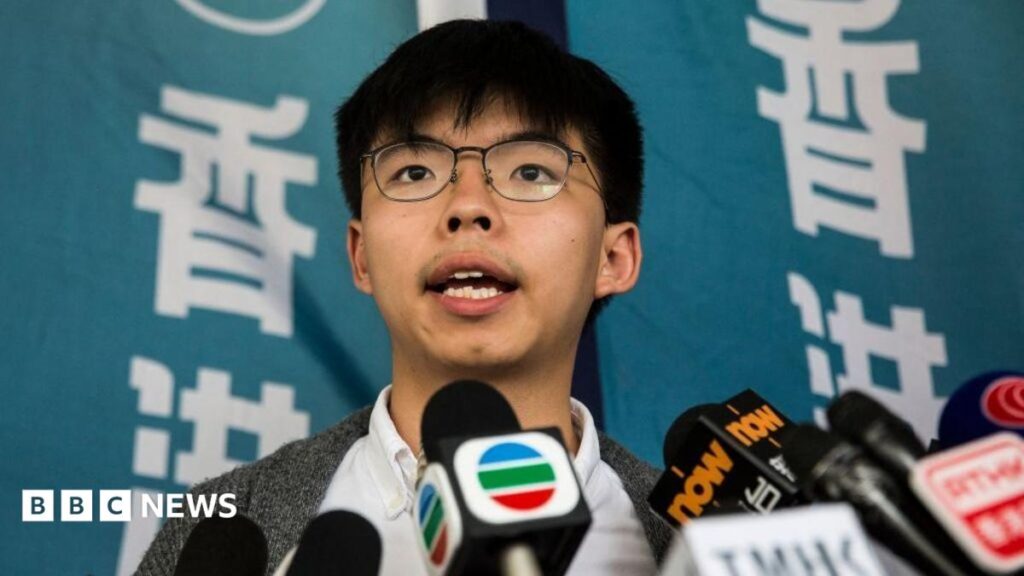
The 2014 Umbrella Movement first thrust a teenage activist named Joshua Wong into the spotlight, and he became a symbol of a generation demanding universal suffrage. Over the next two years he co‑founded the student group Demosistō, which campaigned for Hong Kong’s right to self‑determination and organized mass marches that drew millions of participants.
In 2020 Beijing imposed the national security law (NSL) on Hong Kong, criminalising secession, subversion, terrorism and collusion with foreign forces. The law gave authorities sweeping powers to arrest, detain and prosecute anyone deemed a threat to state security, and it effectively ended the city’s high‑court independence that had been a hallmark of its “one country, two systems” promise.
Wong was arrested repeatedly under the NSL, most notably in 2021 when he was charged with inciting secession for his role in the 2019 protests. He served a brief prison term before being released on bail, only to be re‑detained in early 2024 as part of a broader crackdown on pro‑democracy leaders.
The trial and the 10‑year sentence
The trial, which began in March 2026 at Hong Kong’s High Court, was conducted largely behind closed doors, a practice the NSL permits for “national security” cases. Prosecutors argued that Wong’s speeches, social‑media posts and participation in rallies constituted “subversive activity” aimed at undermining China’s sovereignty.
Wong’s defense team, led by veteran lawyer Albert Ho, contended that his actions were protected under the Basic Law’s guarantee of freedom of expression. Ho told the court that the sentence “exceeds any reasonable proportion to the alleged offence” and warned it would “intimidate an entire generation of activists”.
On 2 November 2026 the judge handed down a 10‑year prison term, the harshest sentence ever imposed on a Hong Kong protester under the NSL. The ruling also ordered the forfeiture of Wong’s assets and barred him from any political activity for the duration of his imprisonment.
Why the sentencing matters beyond Hong Kong
Wong’s case is now being read as a bellwether for how authoritarian regimes are tightening the noose on dissent worldwide. The sentence signals that Beijing is willing to use the NSL not only to silence local critics but also to set a precedent for other jurisdictions where China has strategic interests.
In Africa, several governments have deepened economic ties with China through infrastructure loans and Belt‑and‑Road projects. Observers in Kenya, Ethiopia and Zambia note that the Hong Kong crackdown may embolden those regimes to adopt similar legal tools to curb opposition, especially when Chinese investment is at stake. A policy analyst at the African Centre for the Study of China warned that “the Hong Kong example is a playbook that could be exported to any country that values foreign capital over civil liberties”.
Human‑rights NGOs across the continent, such as Amnesty International’s Africa office, have already issued statements linking the Hong Kong sentencing to a rise in anti‑democracy legislation in Kenya’s Digital Security Act and Uganda’s Anti‑Terrorism Act. While those laws are not directly modeled on the NSL, they share the same logic of criminalising speech deemed hostile to the state.
Diaspora reactions: Hong Kong and African communities speak out
The Hong Kong diaspora in London, Toronto and Sydney erupted with protests the day after the verdict, holding candle vigils and chanting “Free Joshua”. Community groups used the moment to raise funds for Wong’s legal appeals and to highlight the broader erosion of freedoms in the city.
African diaspora organisations, particularly those based in the UK and the US, joined the rallies, drawing parallels between Wong’s plight and the struggles of activists in Nigeria’s #EndSARS movement and South Africa’s recent land‑reform protests. In a joint statement, the African Diaspora Network in the UK said the sentencing “underscores the global threat to youth‑led movements that challenge entrenched power structures”.
Social‑media campaigns with hashtags like #FreeWong and #SolidarityWithAfrica trended on Twitter and X, showing a growing awareness that the fight for democratic space is a shared, trans‑national concern. Some African artists even released protest songs referencing Wong, illustrating how cultural production can bridge geographic divides.
What’s next: legal appeals, international pressure and the future of Hong Kong activism
Wong’s legal team has filed an appeal to the Court of Final Appeal, arguing that the NSL’s vague definitions violate both Hong Kong’s Basic Law and international human‑rights covenants. According to a source close to the defense, the appeal will also request a review of the asset‑forfeiture order, which they claim is “politically motivated”.
The United States, the United Kingdom and the European Union have issued statements condemning the sentence and calling for Wong’s immediate release. The U.S. State Department announced plans to review Hong Kong’s special trade status, a move that could have ripple effects on Chinese trade relations with African nations that rely on Hong Kong as a financial hub.
For activists inside Hong Kong, the verdict is a stark reminder that open dissent now carries a life‑sentence risk. Yet many younger protesters say the sentence will not deter them; instead, they plan to shift tactics toward underground organising, digital security training, and international advocacy. In Africa, the case is already being used in university curricula on civil‑rights law, suggesting that Wong’s story may become a reference point for future generations of activists across the continent.
Quick Answers
Why was Joshua Wong sentenced to 10 years in prison?
He was convicted under Hong Kong’s national security law for allegedly inciting secession through speeches, social‑media posts and protest participation.
How could Wong’s sentencing affect African countries?
The harsh sentence sets a precedent that may encourage African governments with close Chinese ties to adopt similar security laws to curb dissent.
What are the next steps for Joshua Wong’s legal case?
His lawyers have appealed to Hong Kong’s Court of Final Appeal, seeking to overturn the conviction and the asset‑forfeiture order.
Source: www.bbc.co.uk


💬 Comments 0