Kim Jong Un’s 50‑metre pool boat spotted near his Wonsan summer retreat in 2026
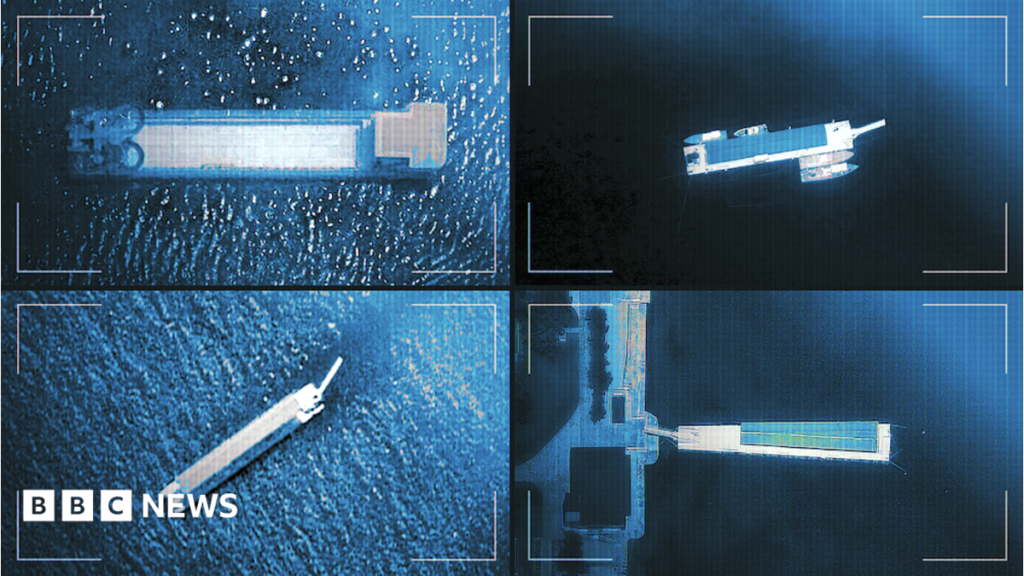
A floating palace: the boat’s features and location
High‑resolution satellite photos released this week reveal a massive vessel moored on the East Sea close to the North Korean leader’s seaside compound in Wonsan. The ship, estimated at 150 metres long, carries a 50‑metre long swimming pool, multiple water slides, a helipad and a series of glass‑enclosed lounges that look more like a cruise‑ship casino than a military craft. Observers note that the pool’s dimensions dwarf those of most public swimming facilities in the country, underscoring the extraordinary scale of the project.
The boat appears to be anchored within a restricted maritime zone that is routinely patrolled by North Korean security forces. Its proximity to the so‑called “Rising Sun” resort – the private summer enclave where Kim Jong Un is known to host foreign delegations – suggests it is intended for personal leisure rather than commercial use. Analysts point out that the vessel’s design, with sleek lines and a low profile, resembles a luxury yacht built for the ultra‑rich, rather than a typical state‑owned ship.
While the exact builder remains unconfirmed, experts speculate that the hull may have been fabricated in China and fitted with high‑end interiors in a European shipyard before being delivered under a veil of secrecy. The presence of a helipad also hints at the possibility of rapid transport for the leader’s inner circle, allowing them to hop on and off the vessel without using the heavily monitored land routes that lead to the retreat.
How the image surfaced and why it matters
The photographs were first shared by a Korean‑based open‑source intelligence group that tracks North Korean infrastructure using commercial satellite data. Within hours, the images were amplified by Western media outlets, prompting a flurry of commentary about the leader’s opulent lifestyle. The timing is notable: the images were captured in early August, just weeks before the traditional holiday period when Kim is expected to entertain senior officials and foreign guests at his Wonsan resort.
Beyond the sensational visual, the discovery raises questions about how North Korea finances such extravagance while its economy is crippled by decades of sanctions. Analysts argue that the boat’s construction likely involved a complex web of offshore companies, shell corporations and barter arrangements that help the regime sidestep financial restrictions. The fact that the vessel can be observed from publicly available satellite imagery also highlights the growing vulnerability of secret projects in the age of commercial space‑based surveillance.
For policymakers, the image provides a tangible data point that could be used to tighten enforcement of United Nations sanctions. By mapping the boat’s movements and identifying its ports of call, investigators can trace the flow of luxury goods and services that are otherwise prohibited. The visual evidence also fuels domestic criticism in South Korea and Japan, where public opinion is increasingly skeptical of any diplomatic overtures that appear to reward a regime that flaunts such excess.
North Korea’s luxury spending under sanctions
Since the early 2000s, the North Korean elite has cultivated a reputation for conspicuous consumption, from private jet fleets to lavish banquets. However, the scale of the new floating palace marks a qualitative leap that signals both confidence and desperation. According to a 2024 report by the United Nations Panel of Experts, the regime has increasingly turned to illicit maritime activities – including ship‑to‑ship transfers of oil and sanctioned commodities – to fund its luxury purchases.
The boat’s existence suggests that the leadership is channeling a portion of these illicit revenues into personal comfort rather than military modernization. This shift could reflect an internal power calculus: by rewarding close allies with high‑profile perks, Kim consolidates loyalty within a shrinking pool of trusted officials. At the same time, the visible extravagance may be intended as a propaganda tool, projecting an image of invincibility to both domestic audiences and potential foreign partners.
Critics warn that such spending could provoke a backlash from the international community, prompting stricter asset‑freezing measures and more aggressive maritime inspections. Yet the regime’s history of evading sanctions – often by exploiting gaps in global supply chains – suggests that the boat may simply be another node in a resilient, if opaque, network of luxury procurement.
Implications for African interests and the broader geopolitical game
While the story appears far removed from the African continent, it touches on several dynamics that affect African economies and diplomatic calculations. First, the same maritime routes used to ferry luxury goods to North Korea also serve as conduits for illicit oil and mineral shipments that pass through African ports such as Lagos, Dar es Salaam and Port Said. Strengthening surveillance of these corridors could benefit African customs agencies seeking to curb smuggling that undermines revenue collection.
Second, several African states maintain modest trade ties with Pyongyang, ranging from agricultural exchanges to limited mining cooperation. The revelation of a high‑value luxury asset financed through sanctions‑busting channels may pressure these countries to reassess the political risk of continued engagement. In particular, nations that depend on Chinese shipbuilding contracts – many of which also supply North Korea – could face secondary sanctions if they are deemed complicit in enabling the regime’s extravagance.
Finally, the episode underscores the growing competition between China and the United States for influence in Africa. China’s role in constructing the boat’s hull illustrates how Beijing’s industrial capacity can be leveraged to sidestep Western controls, a pattern that African leaders watch closely as they negotiate infrastructure deals. The visibility of such projects may push African governments to demand greater transparency from Chinese partners, lest they become inadvertent facilitators of prohibited activities.
What could come next: monitoring, sanctions, and diplomatic fallout
In the short term, the United Nations sanctions committee is likely to request a detailed investigation into the vessel’s ownership structure. Satellite analysts will continue to track its movements, looking for patterns that could reveal ports of origin, maintenance stops or cargo exchanges. If the boat is found to have docked in jurisdictions that are signatories to the sanctions regime, those states may be compelled to freeze related assets or launch legal proceedings against the shell companies involved.
Diplomatically, the image could become a bargaining chip in upcoming talks on the Korean Peninsula. South Korea’s President Yoon Suk‑yeol has signaled a willingness to engage in dialogue, but the visual proof of Kim’s personal excess may harden public opinion against any concessions that appear to reward the regime. Conversely, the United States may use the incident to justify a tougher stance on North Korea’s illicit maritime network, potentially expanding the scope of maritime interdiction operations in the Indo‑Pacific.
For African observers, the episode serves as a reminder that even the most remote displays of wealth can ripple across global supply chains. Governments, civil‑society groups and private firms will need to sharpen due‑diligence protocols, especially when dealing with shipbuilders, financiers or logistics firms that operate in the gray zones between legitimate trade and sanctions evasion. In an increasingly interconnected world, a luxury pool on a North Korean yacht can become a catalyst for policy change thousands of kilometres away.
Quick Answers
What is the size of the pool on Kim Jong Un's luxury boat?
The pool stretches about 50 metres in length, making it larger than most public swimming facilities in North Korea.
Where is the boat located relative to Kim Jong Un's summer retreat?
The vessel is anchored near the Wonsan seaside resort, the leader’s preferred summer retreat on North Korea’s East Sea coast.
How might the boat affect sanctions enforcement on North Korea?
Its discovery provides concrete evidence of luxury spending funded by illicit revenue, prompting tighter UN sanctions monitoring and possible asset‑freezing actions.
Source: www.bbc.co.uk




💬 Comments 0