Kyiv warehouse strike kills 30, halts grain exports, threatens Africa’s security
Background: Ukraine’s war and the grain lifeline
Since Russia’s full‑scale invasion in February 2022, Ukraine’s agricultural output has become a strategic bargaining chip. The country supplies roughly 20 % of the world’s wheat, and its Black Sea ports handle the bulk of grain bound for the Middle East and Africa.
Repeated attacks on transport hubs, ports and storage facilities have already forced the United Nations and the World Food Programme to warn of a looming food crisis on the continent. In 2023, grain shipments fell by 15 % after a series of missile strikes, pushing staple prices higher in nations already grappling with climate‑driven shortages.
Kyiv’s central warehouse district, located near the Dnipro River, stores not only military supplies but also large stockpiles of grain destined for export. Its proximity to the capital makes it a high‑value target for strikes aimed at disrupting both logistics and morale.
The attack and immediate aftermath
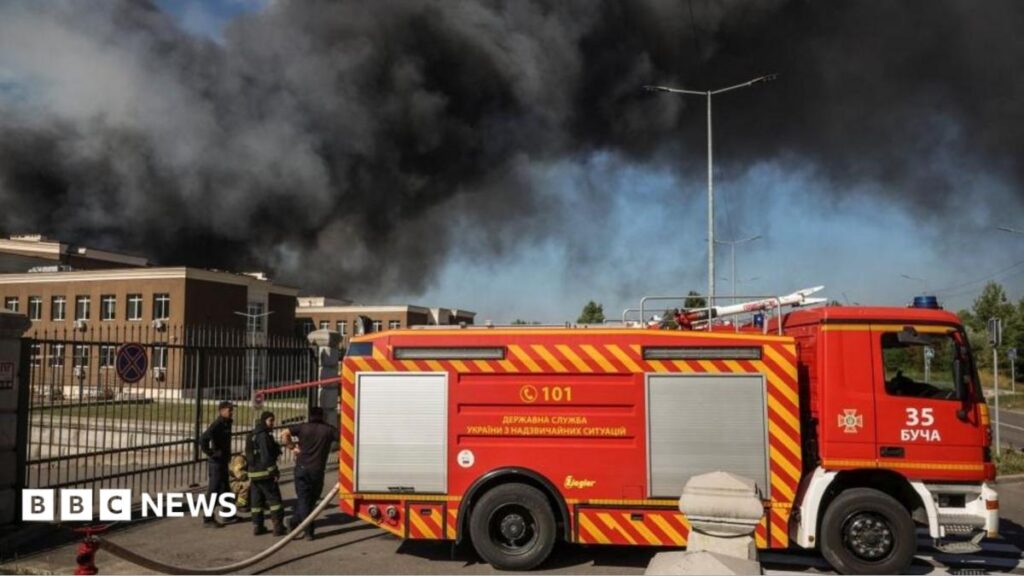
In the early hours of August 30, 2026, a Russian‑launched missile hit a multi‑storey warehouse complex on Kirov Street. Ukrainian emergency services confirmed that more than 30 civilians were killed and dozens more injured, many of them workers loading grain bags for shipment.
The blast triggered secondary explosions in adjacent silos, causing a cloud of flour dust to ignite and spread fire across the site. Authorities ordered the evacuation of nearby residential blocks and closed the surrounding road network to prevent further casualties.
The strike also damaged a rail spur that links the warehouse to the main freight line heading to the Black Sea ports of Odesa and Chornomorsk. Preliminary assessments suggest that at least 150,000 tonnes of grain could be delayed, according to officials at Ukraine’s Ministry of Agrarian Policy.
Why it matters for Africa and global food security
Africa imports roughly 40 % of its wheat from Ukraine, with countries such as Egypt, Nigeria, and Kenya among the biggest buyers. A disruption of even a few hundred thousand tonnes translates into higher import bills and tighter supply chains for millions of consumers.
The Food and Agriculture Organization warned in a June 2026 report that any sustained reduction in Ukrainian grain flows could push global wheat prices above $1.50 per kilogram, a level that would strain national budgets already stretched by drought and conflict in the Sahel.
Beyond price spikes, the strike raises concerns about the reliability of alternative routes. Overland corridors through Russia or the Black Sea are already congested, and many African governments have expressed frustration at the lack of a coordinated contingency plan from the United Nations.
Reactions: From Kyiv to African capitals
Ukrainian President Volodymyr Zelensky condemned the attack as a “war crime against humanity,” calling for an urgent UN Security Council meeting. He also pledged to accelerate the reconstruction of damaged grain infrastructure with assistance from the European Investment Bank.
In Abuja, Nigeria’s Ministry of Trade announced that it would temporarily increase tariffs on imported wheat to protect local millers, while simultaneously seeking emergency grain aid from the African Union’s Food Resilience Initiative.
Egyptian President Abdel Fattah al‑Sisi, speaking at a press conference in Cairo, urged “all parties to respect humanitarian corridors” and urged the International Maritime Organization to fast‑track alternative export routes through Mediterranean ports.
What comes next: Mitigation and long‑term outlook
Short‑term, Ukraine is expected to reroute grain through the inland port of Dnipro, using river barges that can bypass the damaged rail line. The European Union has pledged €200 million in emergency funding to refurbish storage facilities and restore export capacity within three months.
Long‑term, African policymakers are calling for a diversification of grain sources. Initiatives such as the “Great Green Wall” cereal project in the Sahel and increased investment in domestic wheat breeding programs are gaining traction as part of a broader strategy to reduce dependence on any single exporter.
Analysts at the International Crisis Group suggest that if the conflict continues to target logistics hubs, the global food system could see a “new normal” of price volatility. They recommend that African governments negotiate standing contracts with multiple grain exporters and build strategic reserves to cushion future shocks.
Quick Answers
How many people were killed in the Kyiv warehouse strike?
Ukrainian authorities confirmed that more than 30 civilians died in the attack.
Why could the strike affect food prices in Africa?
The damaged warehouse stored grain bound for export; a delay of up to 150,000 tonnes could push global wheat prices higher, impacting African import bills.
What steps are being taken to keep grain flowing out of Ukraine?
Ukraine plans to use river barges from the Dnipro inland port while the EU provides €200 million to repair storage and rail links.
Source: www.bbc.co.uk




💬 Comments 0