Liverpool penalty controversy over Alexander Isak shirt‑tug vs Arsenal 2026 – expert panel says
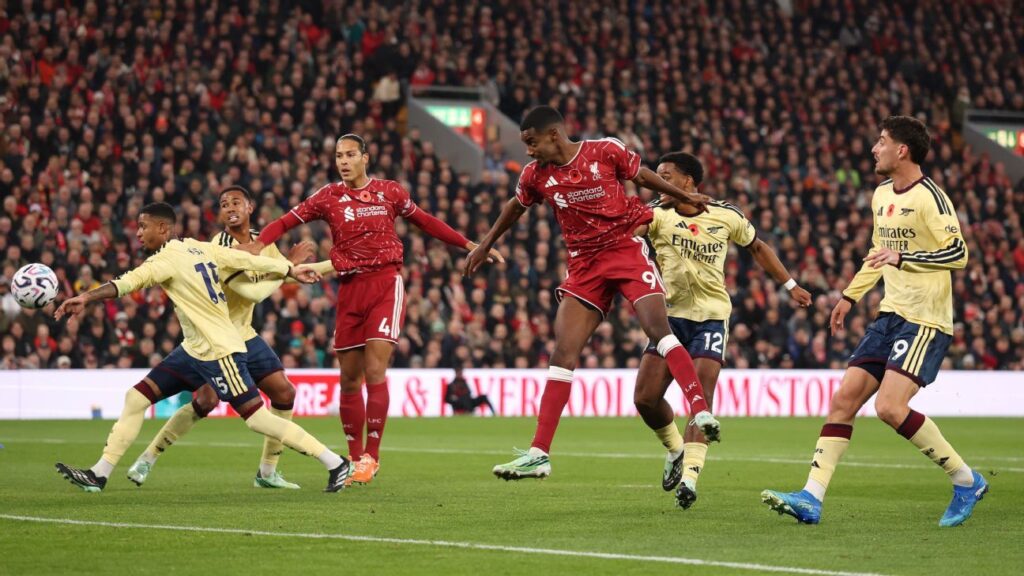
Match context and the disputed incident
On 8 November 2026 Liverpool travelled to the Emirates Stadium for a top‑of‑the‑table clash with Arsenal. The game, billed as a potential title decider, was tightly contested until the 63rd minute when Arsenal’s Swedish striker Alexander Isak went down after a brief tussle with Liverpool defender Ibrahima Konaté.
Replays showed Konaté pulling on Isak’s shirt as the forward attempted to turn away from a looming challenge. The referee, Michael Oliver, waved play on and did not award a penalty, prompting an immediate outcry from Liverpool supporters and pundits alike.
The incident occurred just after Arsenal had taken a 1‑0 lead through a set‑piece. Had a penalty been given and converted, the momentum of the match could have shifted dramatically, a point that fuels much of the post‑match debate.
The expert panel’s verdict and its standing
A week after the fixture, a panel of former referees and analysts convened on Sky Sports to review controversial decisions. The panel, chaired by ex‑FA Premier League referee Mark Halsey, concluded that the shirt‑tug met the criteria for a foul inside the penalty area and should have resulted in a spot‑kick.
Halsey argued that the contact was “deliberate and forceful enough to impede a clear goal‑scoring opportunity,” echoing language from the Laws of the Game. The panel’s assessment was not an official overturn but carries weight in shaping public opinion and future officiating guidance, according to a statement from the Professional Game Match Officials Limited (PGMOL).
Critics of the panel’s conclusion note that similar incidents in previous seasons have been ruled differently, pointing to an inconsistency that the Premier League has struggled to resolve. Nonetheless, the panel’s endorsement adds pressure on the league to revisit its interpretation of shirt‑pulling fouls.
Why the ruling matters for Premier League officiating
The decision sits at the intersection of two ongoing debates: the role of VAR in real‑time decision‑making and the consistency of foul interpretation across matches. While VAR can intervene on clear‑and‑obvious errors, it does not automatically review every shirt‑tug, leaving room for subjective judgment.
If the Premier League adopts a stricter stance on shirt‑pulling, clubs may see a rise in penalty awards, potentially altering tactical approaches. Teams might train attackers to provoke defenders into illegal pulls, knowing that a penalty could be on the table.
Furthermore, the incident highlights the growing influence of post‑match expert panels. Their verdicts can sway fan sentiment, impact betting markets, and even prompt the league’s disciplinary committees to issue retroactive guidance, as seen in the 2024 “hand‑ball clarification” episode.
Implications for African referees and the continent’s football ecosystem
African referees have increasingly been featured in the Premier League’s officiating roster, with officials like South Africa’s Lesley Mokganyetsi and Nigeria’s Uche Okwu gaining exposure. A clearer, more consistent rule on shirt‑pulling would provide a concrete benchmark for these officials, reducing the ambiguity that often hampers their performance assessments.
The controversy also reverberates in African betting circles. According to a report by BetAfrica, over 30 % of its users follow Premier League matches, and a shift in penalty‑award frequency can swing betting odds dramatically, affecting both local operators and punters.
Beyond the pitch, the discussion feeds into the broader push for African representation in football governance. If the Premier League adopts transparent guidelines after expert panel pressure, it sets a precedent that could be mirrored in CAF competitions, where officiating standards have long been a point of contention.
What could happen next – possible rule tweaks and fan reaction
The Premier League’s Referees Committee is expected to meet in early December to review the panel’s findings. Sources say the committee may issue a clarification memo that explicitly categorises shirt‑pulling as a “penalty‑area foul” when the pull disrupts a clear goal‑scoring chance.
Liverpool’s manager, Jürgen Klopp, has already hinted that the club will lodge a formal complaint with the league’s disciplinary body, seeking a review of the match report. A successful appeal could set a precedent for future retroactive penalties, a scenario that would ripple through league standings and club finances.
Fans have taken to social media in droves, with the hashtag #IsakPenalty trending across Nigeria, Ghana, and Kenya. The online debate underscores how a single refereeing decision can ignite continental conversation, especially when a high‑profile player of African descent—Isak’s teammate, Nigerian winger Kelechi Iheanacho—defended the call on his Instagram Live.
Quick Answers
Did Liverpool receive a penalty for the Alexander Isak shirt‑tug?
No, the referee did not award a penalty during the match, though an expert panel later said the foul should have resulted in a spot‑kick.
How might this controversy affect African referees in the Premier League?
A clarified rule on shirt‑pulling would give African officials a clearer standard to apply, helping them avoid inconsistent judgments that have previously drawn criticism.
Will the Premier League change its rules because of this incident?
The league’s Referees Committee is set to review the panel’s recommendation and could issue a guidance memo that treats shirt‑pulling as a penalty‑area foul when it stops a clear goal‑scoring chance.
Source: www.espn.com




💬 Comments 0