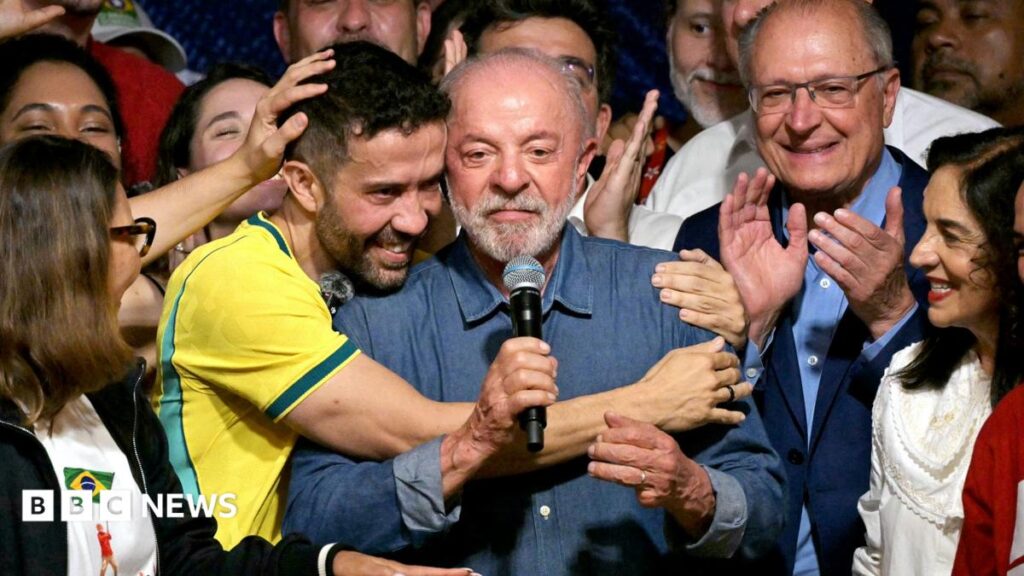
Lula beats Flávio Bolsonaro in Brazil 2026 election by 1.2% to secure fourth term
Background: Brazil’s polarized political climate
Since the impeachment of President Dilma Rousseff in 2016, Brazil has been caught in a tug‑of‑war between a fragmented left that rallies around the Workers’ Party (PT) and a resurgent right that coalesced around the legacy of former President Jair Bolsonaro. The country’s economy has struggled with stagnant growth, high inflation and a series of corruption scandals that have eroded public trust in institutions.
Lula da Silva, a former union leader who first served as president from 2003 to 2010, re‑entered the political arena in 2022 after his convictions were overturned. His comeback was built on a promise to restore social programmes, renegotiate debt and re‑ignite Brazil’s role in the Global South. Meanwhile, Flávio Bolsonaro, the son of the former president and a senator from Rio de Janeiro, positioned himself as the heir to his father’s hard‑line security agenda and market‑friendly reforms.
The 2026 contest was the first time the two Bolsonaros—Jair and Flávio—faced a direct challenge from Lula on the same ballot. Analysts warned that the election could either deepen Brazil’s ideological split or, if the results were accepted peacefully, provide a rare moment of democratic consolidation.
The 2026 election: Candidates, campaigns and the razor‑thin margin
Lula’s campaign focused on a “Brazil for All” narrative, promising to expand Bolsa Família, protect the Amazon, and deepen South‑South cooperation with African, Latin American and Caribbean nations. He toured the country’s poorest states, using his personal story of rising from poverty to the presidency as a rallying point.
Flávio Bolsonaro ran a high‑tech campaign that leaned heavily on social media, emphasizing law‑and‑order policies, tax cuts for small businesses, and a pledge to continue his father’s “family values” platform. He also courted evangelical churches and the burgeoning middle‑class in the south‑east, presenting himself as the candidate of stability after years of economic turbulence.
When the votes were counted on October 28, Lula edged Flávio by just 1.2 percentage points – 50.6 % to 49.4 %. The result was confirmed by Brazil’s Superior Electoral Court after a brief period of recounts in three swing states. The narrowness of the victory sparked immediate calls for calm from both sides of the aisle.
How Lula turned the tide in the final days
In the last two weeks of the campaign, Lula’s team deployed a targeted outreach program in the northeast, where the PT still enjoys a strong base. By partnering with local NGOs and Afro‑Brazilian cultural groups, they highlighted recent successes in reducing child malnutrition and expanding broadband in rural areas.
Simultaneously, a series of investigative reports released by Brazilian media exposed alleged irregularities in Flávio’s campaign financing, linking some donations to offshore accounts. While the accusations were never proven in court before the vote, they sowed doubt among undecided voters who feared a repeat of the 2018 corruption scandals.
Lula also benefited from a late‑stage endorsement by former president Fernando Henrique Cardoso, a centrist figure who urged “national unity over partisan rivalry.” The endorsement helped swing moderate voters in São Paulo and Minas Gerais, two states that ultimately delivered the decisive margin.
Why the result matters for Africa and the Brazilian diaspora
Lula’s fourth term revives a foreign‑policy agenda that treats Africa as a strategic partner rather than a peripheral market. During his earlier presidencies, Brazil signed agricultural, energy and health cooperation agreements with Angola, Mozambique, and Nigeria, and launched the Brazil‑Africa Forum in 2022. Analysts expect a renewal of these ties, especially in renewable‑energy projects where Brazilian firms have expertise in bio‑fuels and wind power.
The Afro‑Brazilian community, which makes up roughly 55 % of the population, has long looked to Lula as a champion of racial equity. His administration’s pledge to increase funding for Afro‑Brazilian cultural institutions and to combat police violence in favela neighborhoods resonates with diaspora groups in the United States and Europe, who often lobby for policies that protect their relatives back home.
For African investors, the election outcome signals a more predictable regulatory environment. Lula’s previous tenure saw the creation of the “Brazil‑Africa Investment Fund,” which pooled resources from Brazilian development banks and African sovereign wealth funds to finance infrastructure in both regions. With the PT back in power, the fund is likely to receive renewed capital, opening opportunities for African construction firms and fintech startups.
Reactions at home and abroad, and the road ahead
In Brasília, Lula addressed the nation on television, thanking his supporters and urging Flávio’s camp to “accept the will of the people.” He promised to form a broad‑based cabinet that would include technocrats from the private sector, a move aimed at reassuring investors worried about policy volatility.
Flávio Bolsonaro, in a statement to the press, conceded defeat but warned that “the fight for Brazil’s future continues.” His party vowed to monitor the electoral process for irregularities, a claim that international observers from the Organization of American States have dismissed as “unsubstantiated.”
Globally, markets reacted positively to the news. The Bovespa index rose 2 % in the hours after the announcement, while the Brazilian real gained against the dollar, reflecting investor confidence in Lula’s commitment to fiscal discipline. African leaders, including Nigeria’s President Bola Tinubu, sent congratulatory messages emphasizing “strengthened South‑South cooperation” as a priority for the coming years.
What’s next: Policy priorities and potential challenges
Lula’s immediate agenda centers on renegotiating Brazil’s debt with the International Monetary Fund, expanding social safety nets, and launching a new Amazon protection plan that includes partnerships with African nations experienced in rainforest management. The plan could become a flagship example of climate diplomacy linking the Global South.
Domestically, the president faces a fragmented Congress where the right‑leaning parties hold a slim majority in the Senate. Passing ambitious reforms will require coalition‑building and concessions on tax policy, a delicate balancing act that could test Lula’s political capital.
Finally, the administration must address the lingering social unrest that flared after the vote. Protesters in Rio de Janeiro and São Paulo have called for police reforms and accountability for past human‑rights abuses. How Lula navigates these demands will shape Brazil’s democratic health and its image as a reliable partner for African governments seeking long‑term collaboration.
Quick Answers
What was the final vote margin between Lula and Flávio Bolsonaro in Brazil's 2026 election?
Lula won with 50.6 % of the vote, while Flávio Bolsonaro received 49.4 %, a margin of 1.2 percentage points.
How could Lula’s victory affect Brazil‑Africa trade relations?
Lula is expected to revive and expand Brazil‑Africa cooperation, including renewable‑energy projects and the Brazil‑Africa Investment Fund, creating new market opportunities for African firms.
What are Lula’s main policy priorities for his fourth term?
His agenda focuses on debt renegotiation, expanding social programmes, protecting the Amazon, and strengthening South‑South diplomatic ties, especially with African nations.
Source: www.bbc.co.uk


💬 Comments 0