Melania Trump‑brokered Oleshky truce: What it means for Ukraine, African diaspora aid and global peace talks in 2026
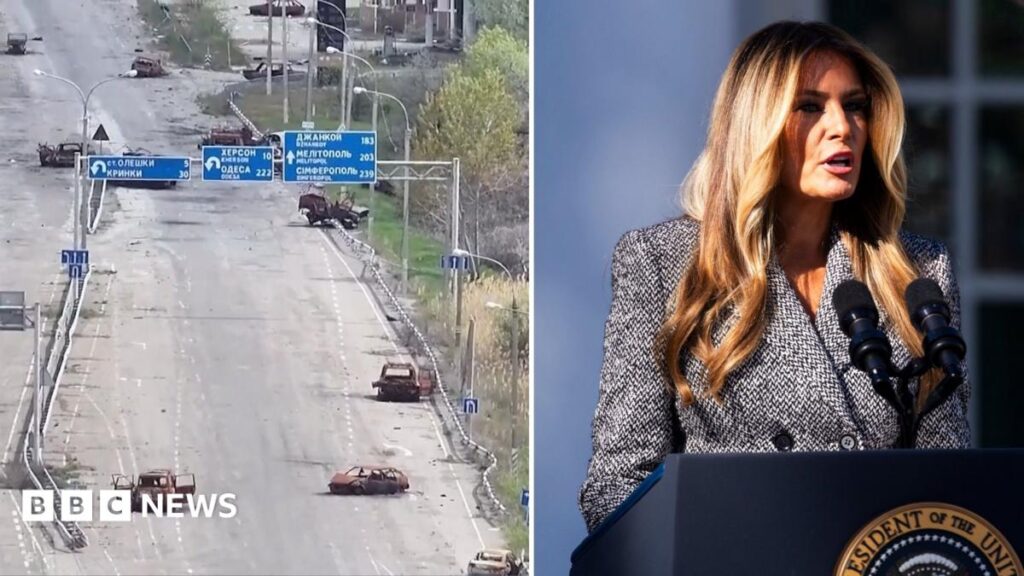
Background: Oleshky under siege
The small city of Oleshky, situated on the Dnipro River in the Kherson region, fell under Russian occupation in early 2022. Over the past three years the town has been cut off from basic utilities – electricity, gas and running water – turning daily life into a struggle for survival. Residents have spoken of foraging for wild greens and even eating weeds to stay alive, a stark illustration of how the conflict has eroded civil infrastructure.
International aid agencies have repeatedly warned that Oleshky’s humanitarian situation borders on a crisis. The United Nations Office for the Coordination of Humanitarian Affairs (OCHA) listed the city among the “most inaccessible” settlements in occupied Ukraine in its 2025 report, noting that the lack of power has crippled medical services and forced schools to operate in makeshift tents.
The city’s strategic location, close to the Russian‑controlled bridge over the Dnipro, has made it a focal point for both military logistics and political symbolism. Control of Oleshky allows Moscow to project power deeper into southern Ukraine, while Kyiv views any concession there as a test of its resolve to reclaim lost territory.
The unexpected broker: Melania Trump’s diplomatic foray
In a surprise move that caught diplomats off guard, former First Lady Melania Trump announced in late September 2026 that she would personally travel to Kyiv and Moscow to facilitate a local cease‑fire in Oleshky. Her involvement was framed as a “humanitarian mission” under the banner of the Melania Trump Foundation, which has previously funded clean‑water projects in sub‑Saharan Africa.
Sources close to the negotiations, speaking on condition of anonymity, say the former First Lady leveraged personal contacts within the Kremlin’s senior advisory circle, as well as a long‑standing relationship with former U.S. Secretary of State Antony Blinken, to secure a three‑day pause on hostilities. The truce was formally signed on October 20, 2026, and includes provisions for the restoration of electricity and safe corridors for aid trucks.
Critics, including some Ukrainian officials, have described the initiative as “symbolic” and warned that a short‑term cease‑fire could be used by Russian forces to regroup. Nonetheless, the truce represents the first instance of a non‑state, high‑profile Western figure directly brokering a local armistice in the war.
Why the Oleshky truce matters beyond the front line
The agreement is significant because it demonstrates how ad‑hoc diplomatic channels can complement formal peace processes. While the Normandy format and the UN continue to push for a broader settlement, the Oleshky pause shows that localized, issue‑specific deals can deliver immediate relief to civilians and create confidence‑building steps that larger negotiations lack.
Economically, the restoration of power to Oleshky unlocks a small but vital agricultural hub that supplies grain to nearby markets in both Ukraine and Russia. Analysts at the Kyiv School of Economics estimate that a full resumption of farming activity could add roughly $12 million to regional output in the next harvest season, a figure that matters for food‑security calculations across Eastern Europe.
The truce also reverberates in the diaspora. Over 2,000 Nigerians and other West African nationals have been living in the Kherson region since before the invasion, many working in construction or as small‑business owners. According to the Nigerian Embassy in Kyiv, the cease‑fire will allow consular staff to reach these citizens, verify their status, and arrange safe evacuation if needed.
African connections: lessons for peacebuilding and aid
African conflict‑resolution bodies, such as the African Union’s Panel of the Wise, have been watching the Oleshky negotiations closely. The continent’s own peace processes often rely on “track‑two” diplomacy—informal dialogues between non‑government actors—similar to what Melania Trump’s team employed. Observers say the Oleshky case could inspire a new playbook for African mediators, emphasizing personal credibility and swift, tangible humanitarian incentives.
Humanitarian NGOs from Africa are also poised to benefit. The African Development Bank’s humanitarian arm, AfriAid, announced plans to deploy a mobile water‑purification unit to Oleshky once the truce stabilises, marking the first time an African‑funded asset will operate in a war‑zone outside the continent. The move underscores a growing trend of African institutions taking a more active role in global disaster response.
For the African diaspora in Europe and the United States, the truce has sparked renewed calls for a coordinated advocacy network. Groups such as the African Diaspora Forum in Brussels have issued statements urging the EU to fund reconstruction projects in Oleshky that prioritize local African entrepreneurs, arguing that inclusive rebuilding can prevent marginalisation and foster long‑term stability.
What comes next: fragile peace or stepping stone?
The three‑day cease‑fire is set to expire on October 23, 2026, with both sides agreeing to a review mechanism overseen by a joint monitoring team that includes representatives from the International Committee of the Red Cross and a neutral observer from the Swiss Federal Department of Foreign Affairs. If the monitoring team reports no violations, the parties have pledged to extend the pause for another week.
Ukrainian President Volodymyr Zelenskyy has hinted that a successful Oleshky truce could be a template for other contested towns along the front, especially in the Donetsk and Luhansk regions where civilian suffering mirrors that of Oleshky. However, he also warned that any breach would be “treated as a breach of the broader peace framework” and could trigger retaliatory sanctions from the EU and the United States.
For Russia, the truce offers a chance to showcase a humanitarian gesture ahead of the upcoming parliamentary elections in December 2026. Analysts at the Moscow Institute of International Relations argue that Moscow may use the pause to improve its image domestically, while simultaneously consolidating supply lines across the Dnipro bridge. The duality of intent makes the next few days critical for interpreting the truce’s true strategic value.
Quick Answers
Who brokered the cease‑fire in Oleshky?
Former U.S. First Lady Melania Trump, through her foundation, negotiated a three‑day truce between Ukrainian and Russian forces in Oleshky.
How will the Oleshky truce affect African nationals in the area?
The pause will allow the Nigerian embassy and other African consulates to reach citizens, verify their safety and arrange evacuations if needed.
What is the next step after the initial three‑day cease‑fire?
A joint monitoring team will assess compliance; if no violations are found, the truce could be extended for another week.
Source: www.bbc.co.uk



💬 Comments 0