Moscow stays silent on Trump’s energy ceasefire as Zelensky seeks Ukraine power grid truce
Background: the energy war in Ukraine
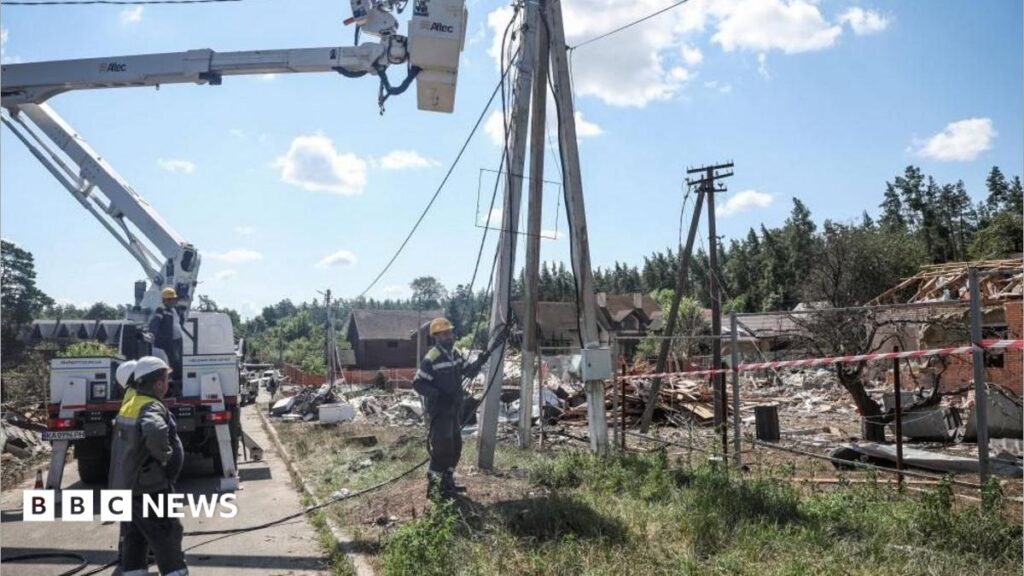
Since Russia’s full‑scale invasion in February 2022, attacks on Ukraine’s power grid have become a central weapon of war. Targeting substations, transmission lines and fuel depots has forced Kyiv to impose rolling blackouts, especially during the harsh winter months, and has strained the country’s ability to keep industry and households running.
The United Nations estimates that more than 4 million Ukrainians have endured prolonged electricity shortages, while the World Bank warns that repeated outages could push the nation’s GDP growth below 1 percent for the next three years. International donors have poured billions into grid repairs, but the pace of reconstruction is hampered by ongoing shelling and the difficulty of importing equipment under sanctions.
In parallel, the global energy market has felt the ripple effects of Ukraine’s power crisis. Europe’s scramble for alternative gas supplies has lifted prices, prompting many African nations that import Russian gas to reconsider their contracts. The situation underscores how a regional conflict can reverberate through worldwide energy security.
Trump’s ceasefire proposal and Zelensky’s response
In early October 2026, former U.S. President Donald Trump, speaking at a conference in Miami, floated the idea of a “temporary energy ceasefire” that would shield Ukraine’s critical infrastructure from further strikes. He framed the proposal as a humanitarian gesture that could open a diplomatic back‑channel between Moscow and Kyiv.
Ukrainian President Volodymyr Zelensky publicly welcomed the notion, saying he would be willing to sign a limited truce that focuses exclusively on power facilities, provided it is backed by credible guarantees from Russia and the international community. Zelensky’s statement was reported by Kyiv’s official press service on October 10.
The proposal, however, has not been formalised through any multilateral forum, and no Russian official has commented on it. Analysts note that the timing coincides with a surge in Russian missile launches targeting energy sites, suggesting that Moscow may be testing the limits of diplomatic pressure while still pursuing its military objectives.
Why Moscow’s silence matters
Russia’s refusal to address the ceasefire suggestion is more than a diplomatic snub; it signals a strategic calculation. By staying quiet, Moscow avoids committing to any legal constraint that could limit its operational freedom on the battlefield, while also denying Kyiv a clear negotiating lever.
Experts at the European Council on Foreign Relations argue that silence allows Russia to maintain ambiguity, keeping Ukraine and its allies guessing about Moscow’s red lines. This ambiguity can be leveraged to extract concessions on other fronts, such as sanctions relief or territorial negotiations, without formally acknowledging a ceasefire.
Moreover, Moscow’s silence has a psychological impact. For Ukrainian civilians, the lack of a Russian response reinforces the perception that attacks on the grid are deliberate and unmitigated, potentially eroding morale and complicating Kyiv’s efforts to rally international humanitarian aid.
Implications for African energy markets
African countries that rely on Russian gas—most notably Egypt, South Africa and Algeria’s European‑linked pipelines—are watching the Ukraine energy standoff closely. A sustained disruption in Russian energy exports, triggered by further sanctions or a broader ceasefire, could force African utilities to seek costlier alternatives, driving up electricity tariffs for households.
Conversely, if a ceasefire were to materialise and reduce the demand for Russian gas in Europe, Moscow might redirect more volumes toward African buyers. Trade data from the International Energy Agency suggests that in 2025, African imports of Russian gas rose by 12 percent, a trend that could accelerate if Europe’s appetite wanes.
Diaspora investors and renewable‑energy entrepreneurs in Nigeria and Kenya are also feeling the ripple effect. Higher fossil‑fuel prices make green projects more attractive, prompting a surge in financing for solar farms and battery storage. The World Bank’s 2026 Africa Energy Outlook notes that a 10 percent rise in global gas prices could boost renewable‑energy investment in sub‑Saharan Africa by roughly $3 billion.
What could happen next
If Moscow continues to ignore Trump’s proposal, Kyiv may look for alternative diplomatic pathways, perhaps through the United Nations or the OSCE, to secure a limited protection zone for power infrastructure. Such a move would require a credible monitoring mechanism, something Russia has historically rejected.
On the other hand, a sudden Russian concession—perhaps prompted by mounting economic pressure from the West—could open the door to a limited, time‑bound ceasefire. This would likely be tied to a broader negotiation on grain exports, prisoner swaps, and the status of occupied territories, echoing the 2023 Black Sea grain deal framework.
For African stakeholders, the key takeaway is to diversify energy sources and accelerate the transition to renewables. Governments that hedge against volatility in Russian gas supplies will be better positioned to protect consumers and attract foreign investment, regardless of how the Ukraine energy deadlock evolves.
Quick Answers
What is Trump’s energy ceasefire proposal for Ukraine?
It is a suggestion by former President Donald Trump for a temporary truce that would halt attacks on Ukraine’s power grid, aimed at reducing civilian suffering.
Why is Russia not responding to the ceasefire idea?
Moscow likely stays silent to avoid legal constraints on its military actions and to keep diplomatic ambiguity, according to analysts.
How could the Ukraine energy conflict affect African electricity prices?
If Russian gas supplies to Europe shrink, Russia may redirect more gas to Africa, potentially raising prices; higher global gas costs also make renewables more competitive in African markets.
Source: www.bbc.co.uk




💬 Comments 0