Myanmar diplomat Kyaw Moe Tun’s tearful UN plea 2026 sparks global debate on aid and African response
Background: Myanmar’s protracted crisis
Since the military coup on February 1, 2021, Myanmar has descended into a multi‑front conflict that has displaced more than 2.5 million people and left an estimated 140,000 dead, according to the United Nations Office for the Coordination of Humanitarian Affairs. The junta’s crackdown on dissent, the rise of ethnic armed groups, and the brutal suppression of the National Unity Government (NUG) have turned the country into a humanitarian disaster zone that has repeatedly tested the limits of international assistance.
The United Nations has struggled to coordinate relief amid restrictions imposed by the military, which has blocked aid convoys, shut down internet access, and targeted humanitarian workers. While donor countries have pledged over $4 billion in aid since 2021, only a fraction has reached the most vulnerable populations because of bureaucratic hurdles and security concerns. The stalemate has left the international community increasingly frustrated and questioning its own efficacy.
The emotional appeal at the UN General Assembly
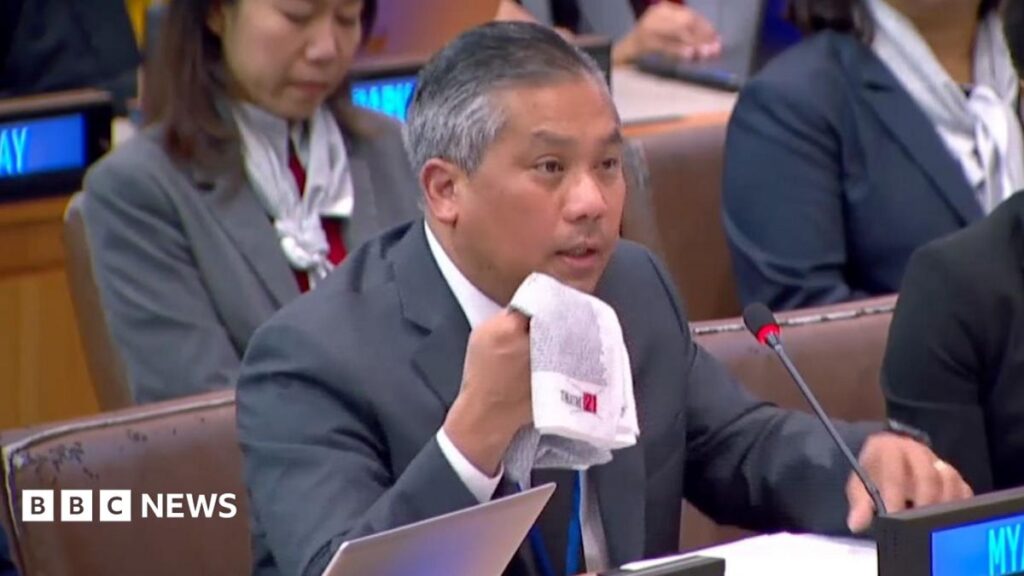
On October 27, 2026, Kyaw Moe Tun, Myanmar’s designated ambassador to the United Nations, delivered a speech that quickly turned from diplomatic rhetoric to a visibly trembling testimony. As he recounted the daily horrors faced by civilians—forced labour, mass arrests, and the loss of basic services—his voice cracked and tears streamed down his face, prompting a brief pause in the session.
Kyaw Moe Tun warned that “the world has failed our people” and urged member states to “end our suffering” by lifting the embargo on humanitarian supplies, allowing independent monitors into conflict zones, and pressing the junta to negotiate a genuine transition to civilian rule. The plea was punctuated by a moment when he clutched a photograph of a young girl in a makeshift camp, a visual that quickly went viral on social media platforms across the globe.
The reaction in the hall was mixed. While many Western delegations applauded the heartfelt appeal, several Asian and African representatives remained seated, citing procedural concerns and the need for a “balanced approach” that respects Myanmar’s sovereignty. The episode, however, succeeded in pushing the crisis back onto the world stage, where it had begun to recede from headlines.
Why the UN drama matters beyond Southeast Asia
The UN’s handling of Myanmar is now a litmus test for its credibility in dealing with protracted internal conflicts. If the Security Council fails to adopt a robust resolution, critics argue that the body risks being seen as a forum for symbolic gestures rather than decisive action. Moreover, the ongoing violence threatens regional stability, potentially spilling over into Thailand, Bangladesh, and India, where refugee flows could strain already fragile border infrastructures.
Economically, Myanmar’s position as a source of cheap labour for the global garment industry and a supplier of critical minerals—especially rare earths used in smartphones and electric‑vehicle batteries—means that prolonged instability could disrupt supply chains that affect manufacturers in Africa, Europe, and North America. Companies that have diversified their sourcing to avoid reliance on China are now watching Myanmar’s output with heightened anxiety.
Human‑rights advocates also see Kyaw Moe Tun’s breakdown as a rare moment when a government‑appointed diplomat publicly acknowledges the suffering of his own people, a phenomenon that could embolden opposition groups and civil‑society actors worldwide to demand accountability from authoritarian regimes.
African perspectives: solidarity, caution, and opportunity
African nations have historically taken a pragmatic stance at the UN, often balancing non‑interference with calls for human rights. In the latest vote on a resolution condemning the Myanmar junta, the African Group split: South Africa, Kenya, and Nigeria voted in favour, while Ethiopia, Tanzania, and Algeria abstained, citing concerns about precedent and the potential for selective enforcement. This division mirrors debates that have arisen over crises in Sudan and the Sahel, where African states wrestle with sovereignty versus intervention.
African civil‑society groups, particularly diaspora organisations in the United Kingdom and the United States, seized on Kyaw Moe Tun’s tears to launch coordinated campaigns demanding greater humanitarian funding. The African Union’s Humanitarian Affairs Department announced a $50 million rapid‑response fund aimed at supporting refugees fleeing Myanmar into Bangladesh and India, with a portion earmarked for health clinics that will also serve African migrant workers in the region.
On the economic front, several African textile manufacturers have begun exploring Myanmar’s garment factories as potential partners for low‑cost production. The recent instability, however, has prompted a reassessment of risk, leading companies like Ethiopia’s Hadiya Group to diversify into Vietnam and Bangladesh instead. The situation underscores how political turmoil in one corner of the globe can ripple through African supply chains, influencing job creation and export revenues back home.
What’s next: diplomatic pathways and African agency
In the coming weeks, the United Nations is expected to convene a special session on Myanmar, where the Security Council may consider a targeted sanctions package that focuses on the junta’s financial networks rather than a blanket embargo that could further hurt civilians. Analysts suggest that African diplomats could leverage the split within the African Group to push for a sanctions regime that includes clear humanitarian exemptions, a model that would protect vulnerable populations while pressuring the military leadership.
For African NGOs and diaspora activists, the momentum generated by Kyaw Moe Tun’s emotional address offers a platform to lobby both their home governments and international bodies. By framing the Myanmar crisis within a broader narrative of post‑colonial sovereignty and human‑rights protection, they can build coalitions that link the plight of Burmese civilians to similar struggles on the continent, from the Tigray region in Ethiopia to the Sahel insurgencies. Such alliances could shape future UN debates and ensure that Africa’s voice remains integral to any lasting solution.
Quick Answers
What did Myanmar’s UN ambassador Kyaw Moe Tun say in his October 2026 speech?
He warned that the world had failed the Myanmar people, urged an end to their suffering, and called for unrestricted humanitarian aid and a negotiated transition to civilian rule.
How are African countries responding to the UN debate on Myanmar?
African states are divided; some, like South Africa and Nigeria, voted for a condemnation, while others abstained, reflecting a balance between non‑interference and human‑rights concerns.
Could the Myanmar crisis affect African economies?
Yes, disruptions in Myanmar’s garment and rare‑earths sectors could impact African manufacturers and exporters that rely on these global supply chains.
Source: www.bbc.co.uk


💬 Comments 0