Myanmar junta snatches young men for army in 2026 forced conscription crisis, UN warns
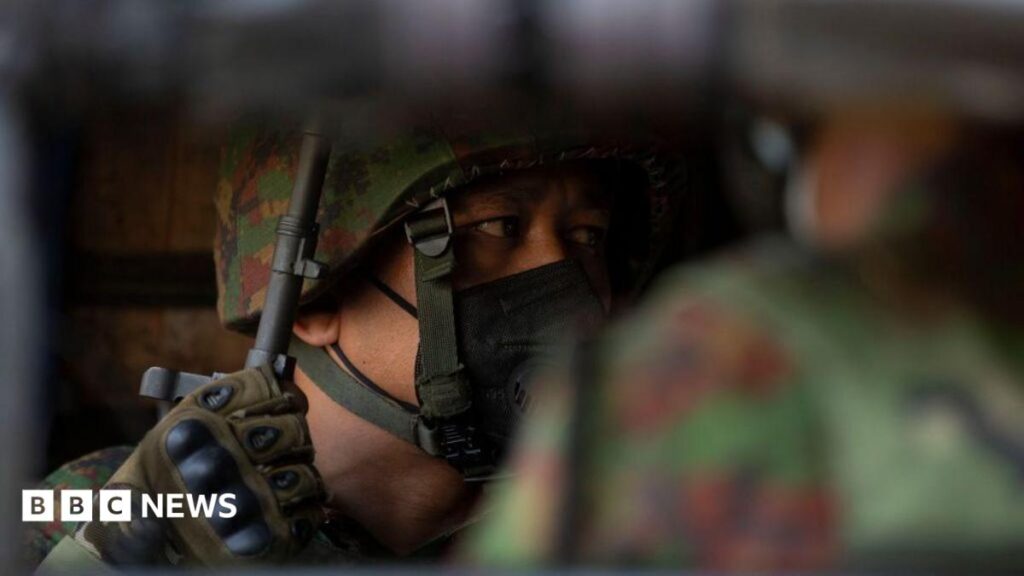
Background: Myanmar’s escalating coercion
Since the military coup in February 2021, the State Administration Council has faced mounting resistance from ethnic armed groups, civil disobedience movements, and a growing underground network of civilian volunteers. By early 2026, the junta’s conventional offensives were failing to quell these forces, prompting a shift toward more desperate tactics that include forced recruitment, extortion, and the outright sale of civilians to the army for a nominal fee, according to a recent Human Rights Watch report.
The practice of “snatching” young men—often teenagers and early‑twenties—has deep roots in Myanmar’s history of forced labor, but the scale and brutality have surged in the last year. Families report that men are taken from markets, bus stops, or even their own homes in the middle of the night, handed over to local militia commanders who then deliver them to army checkpoints for a price that can range from $200 to $500 per individual.
International observers note that this method serves a dual purpose for the junta: it replenishes depleted frontline ranks while also terrorising entire communities. The fear of disappearance has forced many villages to relocate or go underground, undermining any semblance of normalcy and further destabilising the country’s already fragile humanitarian situation.
How the junta is snatching young men
The recruitment process is often cloaked in a veneer of legitimacy. Local “security committees”—essentially proxies for the army—announce mandatory “national service” rallies that turn into mass abductions. Witnesses say that men are gathered under the pretext of a job fair, then blindfolded, beaten, and loaded onto trucks bound for army barracks in the central and eastern regions.
In several documented cases, the junta has sold captured men to private contractors who act as informal labor brokers for the military. These brokers, operating in the shadows of Myanmar’s informal economy, receive cash payments that are later funneled back to senior army officers. A source close to the operation told Reuters that the practice is now a “lucrative side‑business” for commanders who struggle to meet recruitment quotas set by the Supreme Command of the Armed Forces (SAC).
The victims are rarely released. Most end up in grueling frontline duties, forced to fight against the very ethnic groups that share their language and culture. Others are dispatched to work on military‑run construction projects, minefields, or as porters in remote jungle outposts. The United Nations Office of the High Commissioner for Human Rights (OHCHR) estimates that at least 12,000 young men have been forcibly conscripted since the start of 2026.
Why the practice matters beyond Myanmar
Beyond the immediate human‑rights horror, the junta’s forced‑conscription model threatens regional stability. Neighboring Thailand and Bangladesh have already reported spikes in cross‑border smuggling of weapons and refugees fleeing the new wave of abductions. The influx of traumatized youths into refugee camps raises concerns about long‑term radicalisation and the potential for a new generation of combatants to be recruited by transnational insurgent networks.
Economically, the practice undermines Myanmar’s already battered labour market. International investors, already wary of sanctions, see the forced‑labor scheme as a further risk to supply‑chain integrity. Companies that source raw materials such as jade, rubies, and timber from conflict zones are now forced to conduct deeper due‑diligence, a move that could stall projects and reduce export revenues by an estimated 3‑5 percent, according to a 2026 analysis by the Asian Development Bank.
For the global diaspora, especially the sizable Burmese community in the United States, Canada, and Europe, the crisis has reignited activism. Diaspora groups are organising fundraising drives to support families of the abducted and lobbying foreign governments to expand targeted sanctions against individuals directly profiting from the “sale” of civilians. Their efforts have already prompted the European Union to consider a new round of travel bans on senior junta officers.
Regional and diaspora responses
Southeast Asian neighbours are walking a diplomatic tightrope. While ASEAN’s principle of non‑interference limits overt condemnation, Thailand’s Ministry of Foreign Affairs quietly increased funding for border‑monitoring NGOs after a joint UN‑Thai task force documented several abduction routes in 2025. In contrast, India’s Ministry of External Affairs has issued a travel advisory for its citizens in border states, signalling growing unease about spill‑over violence.
African nations, though geographically distant, have entered the conversation through the United Nations. Nigeria, a leading voice on the UN Human Rights Council, called for an emergency session in March 2026 to address the junta’s “systemic exploitation of civilians.” The call resonated with African civil‑society groups that see parallels with past forced‑labour scandals on the continent, prompting a coalition of NGOs to demand a UN‑mandated investigation.
The Burmese diaspora in the United Kingdom launched a digital campaign titled #FreeMyanmarYouth, which has amassed over 200,000 views on social media platforms. The campaign pressured British MP David Lammy to table a parliamentary question on the UN’s findings, illustrating how diaspora advocacy can translate into concrete parliamentary scrutiny and potential policy shifts.
What comes next: paths to accountability
The UN’s latest report urges the International Criminal Court (ICC) to consider the forced‑conscription scheme as a crime against humanity, citing the systematic nature of the abductions and the profit‑driven sale of civilians. While Myanmar is not a party to the Rome Statute, the ICC can exercise jurisdiction if the alleged crimes are linked to crimes committed in a member state, a legal avenue that human‑rights lawyers are already exploring.
On the ground, grassroots organisations are forming “safe‑houses” in border villages, offering shelter, medical aid, and legal counsel to families of the disappeared. These shelters operate covertly, often funded by diaspora remittances and international NGOs such as Amnesty International and the International Rescue Committee. Their expansion could create a de‑facto network that undermines the junta’s ability to intimidate entire communities.
In the longer term, the sustainability of the junta’s recruitment model hinges on the outcome of ongoing peace talks with ethnic armed organisations. If a comprehensive ceasefire is reached, the need for forced labour may diminish, but the entrenched profit networks could persist, morphing into other forms of illicit trade. Continued pressure from the UN, regional bodies, and an active diaspora will be essential to ensure that any peace settlement includes robust mechanisms for reparations and the prosecution of those who profited from the abductions.
Quick Answers
How many young men have been forcibly conscripted by Myanmar’s junta in 2026?
The UN estimates that at least 12,000 men aged 16‑25 have been abducted and forced into army service since January 2026.
What legal avenues exist to hold the junta accountable for selling civilians to the army?
Human‑rights groups are urging the International Criminal Court to treat the forced‑conscription scheme as a crime against humanity, despite Myanmar not being an ICC member.
How are African countries responding to the forced‑labour crisis in Myanmar?
Nigeria, speaking for the African bloc at the UN Human Rights Council, called for an emergency session to investigate the junta’s practices and urged a UN‑mandated probe.
Source: www.bbc.co.uk




💬 Comments 0