Navi Pillay wins 2026 Nobel Peace Prize – South African former UN rights chief honoured for global law impact
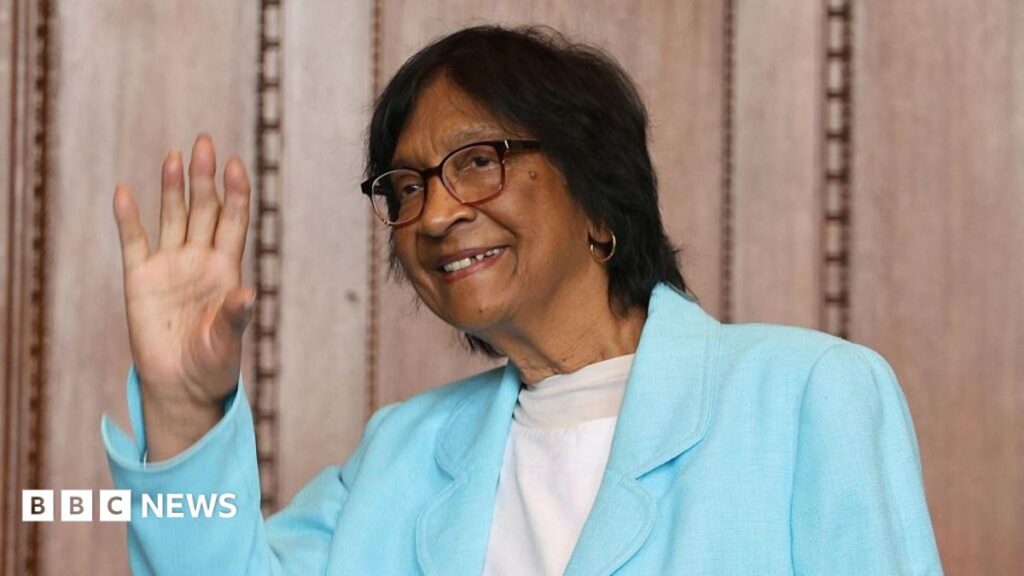
From Durban to the UN: Pillay’s African roots and legal journey
Born in Durban in 1941, Navi Pillay grew up under apartheid, an experience that shaped her lifelong commitment to justice. After qualifying as a lawyer in South Africa, she left for the United Kingdom to escape the oppressive regime, later returning to the continent to serve as a judge on the International Criminal Tribunal for Rwanda. Her career has been a bridge between African realities and international legal institutions, giving her a unique perspective that few Western jurists possess.
Pillay’s tenure as South Africa’s first black woman judge on the Constitutional Court (1994‑1999) coincided with the country’s transition to democracy. She helped lay the constitutional groundwork that enshrined equality, gender rights, and the protection of minorities. Those early victories cemented her reputation as a champion of the rule of law, a reputation that later propelled her to the United Nations.
Why the Nobel Committee chose Pillay in 2026
The Norwegian Nobel Committee cited Pillay’s “efforts to promote peace and international law” as the core reason for the award. In its citation, the committee highlighted her work on the rights of refugees, her advocacy for gender‑based violence prevention, and her leadership of the UN’s Human Rights Council during a period marked by rising authoritarianism. According to the committee’s press release, Pillay’s ability to translate legal principles into concrete policy made her stand out among the shortlist of nominees.
Pillay’s most visible achievement as UN High Commissioner (2008‑2014) was the launch of the first global strategy on sexual violence in conflict, which forced governments and militaries to adopt stricter accountability mechanisms. The strategy has since been referenced in more than 30 national legislations, a fact noted by human‑rights NGOs in a joint statement after the Nobel announcement.
Why the prize matters for Africa and the global human‑rights agenda
The Nobel win sends a powerful signal that African leadership in international law is being recognised on the world stage. For a continent where many states still grapple with weak judicial independence, Pillay’s accolade validates the push for stronger regional courts such as the African Court on Human and Peoples’ Rights. Scholars at the University of Pretoria argue that the prize will likely boost funding for African‑led human‑rights research and training programmes.
Beyond academia, the award could influence policy negotiations at the African Union. The AU’s Human Rights Commission has been lobbying for a continent‑wide treaty on climate‑related displacement; Pillay’s expertise on refugee law may accelerate that process. Moreover, the recognition may inspire a new generation of African lawyers to pursue careers in international tribunals, where representation from the Global South remains low.
Reactions across the continent and among the diaspora
African leaders quickly voiced support. South African President Cyril Ramaphosa called the prize “a proud moment for all South Africans and for the continent’s fight for justice.” In Kenya, the Ministry of Foreign Affairs issued a statement saying Pillay’s honor reflects “the growing influence of African voices in shaping global norms.” Diaspora organisations in the United Kingdom and the United States organised virtual town‑hall meetings to discuss how Pillay’s legacy can be leveraged for local advocacy on issues such as migrant rights and police reform.
Social media buzz in Nigeria, Ghana, and Ethiopia showed a mix of celebration and critique. While many praised Pillay’s achievements, some activists warned that laurels must translate into concrete action on the ground, especially in countries where human‑rights defenders face intimidation. A coalition of African NGOs, however, pledged to use the momentum to launch a continent‑wide petition urging the UN General Assembly to adopt a binding resolution on corporate accountability for human‑rights abuses.
What’s next: policy shifts, legal reforms and the future of African human‑rights leadership
The Nobel prize is likely to amplify Pillay’s voice in upcoming UN forums. She is slated to address the 2026 UN Human Rights Council in Geneva, where she is expected to push for a universal definition of gender‑based violence that can be enforced by national courts. Analysts predict that her presence will increase pressure on reluctant states to ratify the Optional Protocol to the Convention on the Rights of the Child, a treaty that many African countries have yet to sign.
In practical terms, the award may unlock new funding streams for African NGOs working on transitional justice. The European Commission, citing the Nobel decision, announced a €50 million grant programme aimed at strengthening legal aid services in post‑conflict zones across the Sahel. Meanwhile, private foundations such as the Open Society Initiative for Southern Africa have indicated they will prioritize projects that align with Pillay’s emphasis on victim‑centred approaches.
Finally, the prize could reshape the narrative around African contributions to global governance. By highlighting an African jurist at the pinnacle of international recognition, the Nobel Committee challenges the long‑standing perception that human‑rights leadership is a Western domain. This shift may encourage multilateral bodies to seek more African input when drafting future treaties on digital privacy, climate migration, and the regulation of emerging technologies.
Quick Answers
Who is Navi Pillay and why did she win the 2026 Nobel Peace Prize?
Navi Pillay is a South African lawyer and former UN High Commissioner for Human Rights; she won for her decades‑long work promoting peace, gender‑based violence prevention, and international law.
What impact could Pillay’s Nobel win have on African human‑rights institutions?
The award is expected to boost funding, strengthen regional courts, and encourage African states to adopt stronger human‑rights legislation.
When will Pillay speak at the UN after receiving the Nobel prize?
She is scheduled to address the UN Human Rights Council in Geneva later in 2026.
Source: www.bbc.co.uk




💬 Comments 0