Nepal observes national day of mourning for flash flood victims, 13 days after disaster, 2026
Background and the disaster
On August 25, 2026, a sudden cloudburst triggered a flash flood in the eastern hills of Nepal, sweeping away homes, roads and fields across the districts of Ilam and Jhapa. Official tallies released by the Nepalese government put the death toll at 112, with more than 400 people injured and thousands displaced.
The disaster unfolded in a region already vulnerable to landslides and river overflow, where narrow valleys funnel rainwater into powerful torrents. Rescue teams from the Nepalese Army, local NGOs and community volunteers scrambled to reach isolated villages, often on foot, because road access was completely cut off.
International aid began to flow within hours, with neighboring India dispatching medical teams and the United Nations Office for the Coordination of Humanitarian Affairs (OCHA) coordinating relief supplies. Yet the sheer scale of the damage highlighted long‑standing gaps in early‑warning systems and disaster‑preparedness in Nepal’s remote mountain communities.
The mourning rituals and national response
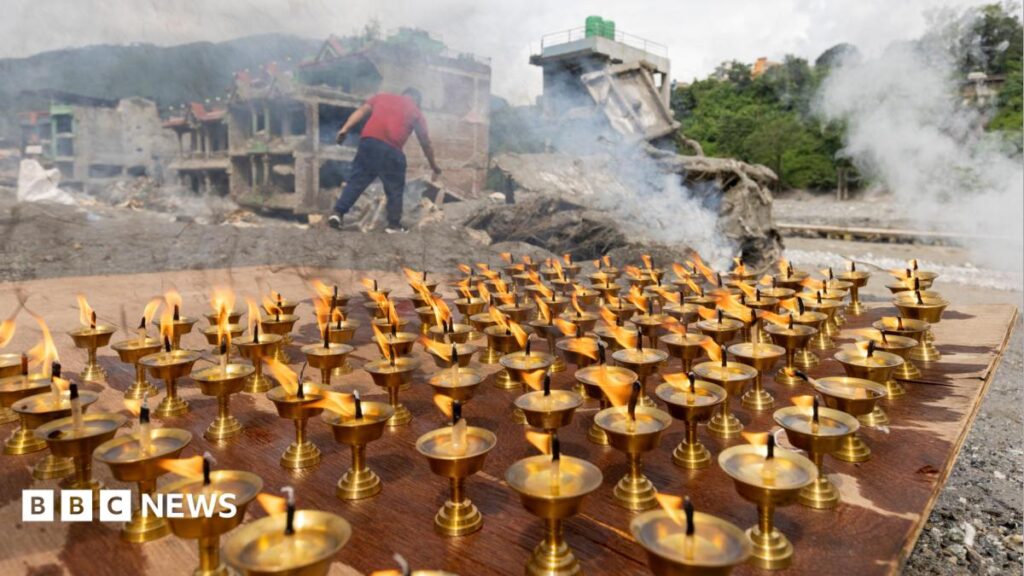
On September 6, the 13th day after the flood, Nepal’s flag was lowered to half‑mast across government buildings, schools and public offices, marking the final day of the Hindu mourning period known as "Sutak." The Ministry of Home Affairs announced a one‑day national day of mourning, urging citizens to observe silence and offer prayers for the victims.
Traditional rites were observed in the affected districts, where families gathered at makeshift shrines to light incense and perform chants. Local priests led ceremonies that blended Buddhist and Hindu elements, reflecting the region’s cultural diversity. The day also provided a moment for the government to publicly acknowledge the suffering of survivors and pledge further assistance.
Prime Minister Pushpa Kamal Dahal, speaking at a televised address, described the flood as “a stark reminder of our fragile relationship with nature” and promised accelerated reconstruction of damaged infrastructure. He also announced a special relief fund of NPR 2.5 billion (approximately USD 16 million) to support reconstruction of homes and schools.
Climate change and disaster risk in the Himalayas
Scientists have warned that the Himalayas are warming three times faster than the global average, a trend that intensifies monsoon rains and increases the frequency of glacial lake outbursts. According to a 2025 report by the International Centre for Integrated Mountain Development (ICIMOD), extreme precipitation events in Nepal have risen by 18 % over the past decade.
The flash flood in August 2026 fits this broader pattern. Researchers from Tribhuvan University noted that deforestation in the catchment area amplified runoff, turning what might have been a moderate rainstorm into a deadly deluge. The loss of forest cover is partly driven by illegal logging and the expansion of cash‑crop agriculture, both linked to economic pressures on rural households.
In response, the Nepalese government has pledged to expand its early‑warning network, installing additional river‑level sensors in vulnerable watersheds. However, implementation has been uneven, and many remote communities still rely on word‑of‑mouth alerts that can arrive too late.
Links to Africa: shared climate challenges and diaspora solidarity
While the Himalayas and Africa lie on opposite ends of the globe, both regions face escalating climate‑related hazards. East African nations such as Kenya and Ethiopia have reported record‑breaking rains that caused flash floods and landslides in the same month, displacing thousands. The parallel experiences underscore a growing need for South‑South cooperation on climate resilience.
The Nepali diaspora in Africa, though small, has mobilised to send relief kits through community groups in Nairobi and Johannesburg. Similarly, African NGOs operating in the Indian Ocean basin have expressed willingness to share expertise on community‑based early‑warning systems, a model that has proved effective in coastal Tanzania.
Financially, the African Development Bank (AfDB) and the Asian Development Bank (ADB) have both launched joint climate‑finance facilities aimed at vulnerable mountain and high‑land economies. Observers suggest that Nepal’s current appeal for reconstruction funds could be a catalyst for a broader, cross‑regional funding pool that includes African nations facing similar topographic risks.
What comes next: rebuilding and international aid
In the weeks ahead, Nepal’s Ministry of Physical Infrastructure and Transport will begin a phased reconstruction of the damaged highway linking Ilam to the national road network. The project, estimated at NPR 5 billion, will prioritize climate‑resilient design, such as reinforced bridges and slope‑stabilisation measures.
International donors have pledged additional support. The World Bank announced a USD 30 million grant to fund community shelters and improve local water‑management systems. Meanwhile, the European Union’s humanitarian office (ECHO) is earmarking funds for psychosocial support services for flood survivors, a component often overlooked in disaster response.
Long‑term, experts stress that rebuilding must go beyond bricks and mortar. “If we rebuild the same vulnerable settlements without addressing the root causes—deforestation, unplanned urbanisation, and climate exposure—we risk repeating this tragedy,” said Dr. Maya Shrestha, a climate‑risk analyst at the Nepal Climate Change Knowledge Centre. The coming months will test whether policy promises translate into tangible, climate‑smart infrastructure.
Quick Answers
When did Nepal observe the national day of mourning for the flash flood victims?
Nepal observed the national day of mourning on September 6, 2026, the 13th day after the flood.
What caused the flash flood disaster in eastern Nepal?
A sudden cloudburst on August 25, 2026, triggered a flash flood that swept through the Ilam and Jhapa districts.
How is Nepal planning to rebuild after the flood?
The government has allocated a special relief fund, will reconstruct damaged roads with climate‑resilient designs, and is receiving international grants for shelters and water‑management systems.
Source: www.bbc.co.uk




💬 Comments 0