Northern Ireland court backs Orange Order march on Garvaghy Road in 2026 ruling, sparking fresh tensions
Historical backdrop to the Garvaghy Road dispute
The Garvaghy Road in Portadown has been a flashpoint for sectarian friction for more than three decades. Since the late 1980s, the annual Orange Order parade that commemorates the 1689 Battle of the Boyne has repeatedly been rerouted away from this predominantly Catholic neighbourhood after violent clashes erupted in the early 1990s. The Good Friday Agreement of 1998 institutionalised a framework for managing such disputes, granting the Parades Commission the authority to alter routes deemed likely to inflame tensions.
Despite the Commission’s interventions, loyalist groups have long argued that rerouting infringes on their cultural rights, while nationalist residents contend that the march’s presence in their community is a provocation that revives memories of past intimidation. The stalemate has produced a series of legal challenges, most recently culminating in a High Court hearing that examined whether the Commission’s decision to block the march breached the Orange Order’s freedom of assembly under UK and European human‑rights law.
The court’s 2026 ruling and its legal rationale
On 26 September 2026, the High Court in Belfast delivered a split decision that lifted the Parades Commission’s ban, allowing the Orange Order to march along Garvaghy Road as originally planned. The majority opinion held that the Commission had overstepped its statutory powers by giving insufficient weight to the Order’s right to peaceful assembly, a right protected by the European Convention on Human Rights. The judges noted that the Commission’s risk assessment relied heavily on historic incidents rather than current intelligence, which, according to the court, did not demonstrate an imminent threat of violence.
The ruling also underscored the principle that any limitation on fundamental freedoms must be proportionate and necessary in a democratic society. While acknowledging the deep‑seated sensitivities of the Catholic community, the judges concluded that the state could mitigate risk through robust policing rather than outright prohibition. The decision was narrowly split, with dissenting judges warning that the judgment could set a precedent for ignoring community‑based conflict‑resolution mechanisms.
Immediate reactions on the ground and among political leaders
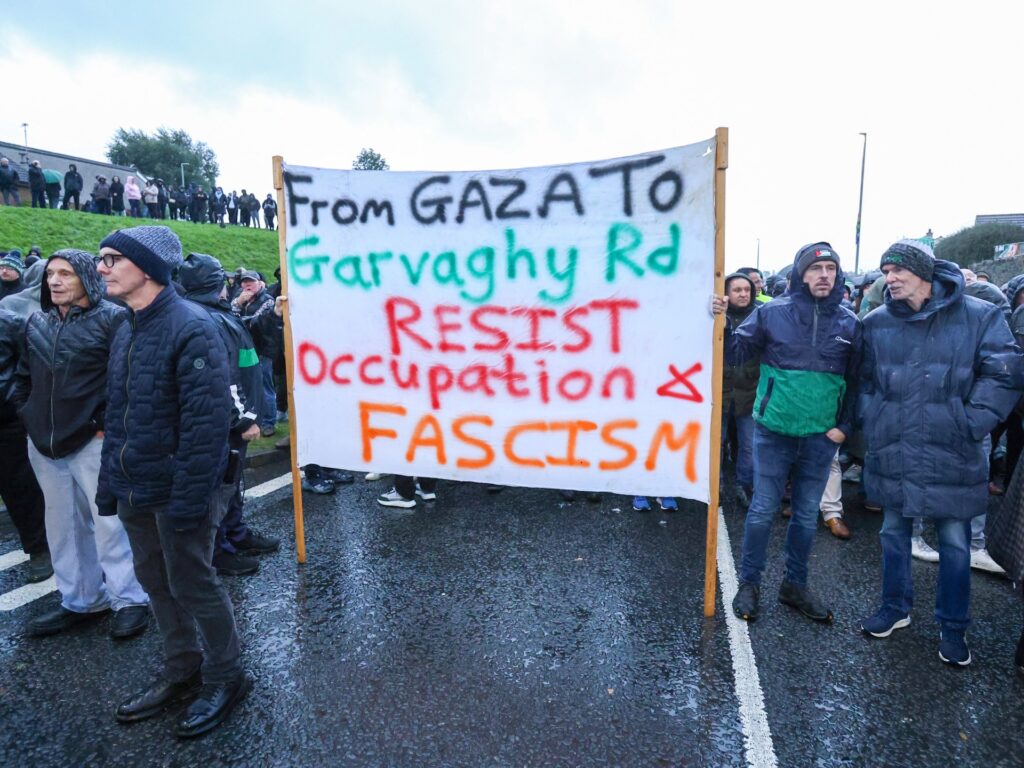
Within hours of the judgment, residents of Garvaghy Road gathered in front of their homes, chanting slogans and holding signs that read “No march, no peace.” Local councillor Michael O’Neill, a Sinn‑Fein representative, described the ruling as “a dangerous legal shortcut that disregards the lived reality of Catholic families who have felt threatened for generations.” He called for an emergency meeting of the Parades Commission to reassess security provisions.
Conversely, the Orange Order’s Grand Master, Dr. David McClure, hailed the verdict as a vindication of “our right to celebrate our heritage without fear of state censorship.” Unionist parties in the Northern Ireland Assembly, including the Democratic Unionist Party, welcomed the court’s affirmation of cultural rights, urging the police service to ensure a “peaceful and orderly” procession. The Royal Ulster Constabulary (PSNI) announced a deployment of 1,500 officers, citing a “maximum‑security operation” to prevent any outbreak of violence.
Why the decision matters beyond Belfast – diaspora, economy and peace‑building
The ruling reverberates far beyond the streets of Portadown, touching on the broader stability of the United Kingdom and the confidence of the Irish diaspora worldwide. Many British‑born Irish Americans and Canadians watch Northern Ireland’s peace process as a barometer for how post‑conflict societies manage competing identities. A perceived setback could dampen investment sentiment, especially in sectors such as fintech and renewable energy where Northern Ireland has positioned itself as a hub for cross‑border collaboration with the Republic of Ireland.
For the African continent, the case offers a comparative lens on how legal frameworks intersect with traditional dispute‑resolution mechanisms. Countries such as Kenya and South Africa have grappled with balancing constitutional freedoms against community‑based peace initiatives in ethnically diverse regions. Analysts note that the Northern Ireland court’s emphasis on proportionality may inform future judicial reasoning in African courts dealing with similar tensions between cultural expression and communal safety.
What comes next – policing, political dialogue and the long‑term peace agenda
The PSNI’s extensive deployment signals that security will dominate the days leading up to the march on 12 July 2026, the traditional date for the Orange Order’s “Twelfth” celebrations. Independent monitors from the European Union Monitoring Mission (EUMM) have been invited to observe the operation, a move intended to reassure both communities that any breach of the peace will be documented and addressed impartially.
Political leaders on both sides have pledged to reopen talks on reforming the Parades Commission. Sinn‑Fein’s deputy leader, Michelle O’Neill, urged the UK government to consider a “shared‑ownership” model that includes community representatives in decision‑making, echoing proposals that have gained traction in South Africa’s post‑apartheid land‑reform negotiations. Meanwhile, Unionist voices argue that any dilution of the Orange Order’s route could set a precedent for future legal challenges, potentially opening a floodgate of rights‑based claims that strain the already‑fragile power‑sharing arrangements established by the Good Friday Agreement.
Quick Answers
What legal basis did the High Court use to allow the Orange Order march on Garvaghy Road?
The court based its decision on the European Convention on Human Rights, stating that the ban was disproportionate and that the Parades Commission had not sufficiently justified restricting the Order’s freedom of assembly.
How might the ruling affect Northern Ireland’s economy and diaspora relations?
Uncertainty around public order can deter investors, especially in sectors reliant on cross‑border cooperation, and may cause diaspora communities to question the durability of the peace process.
What steps are being taken to ensure the march remains peaceful?
The PSNI is deploying about 1,500 officers, and the EU Monitoring Mission will observe the event to provide independent reporting on any incidents.
Source: www.aljazeera.com




💬 Comments 0