Novaya Gazeta founder Dmitry Muratov says ‘they strangled us’ as Russia shuts paper, hurting Africa‑Russia coverage 2026
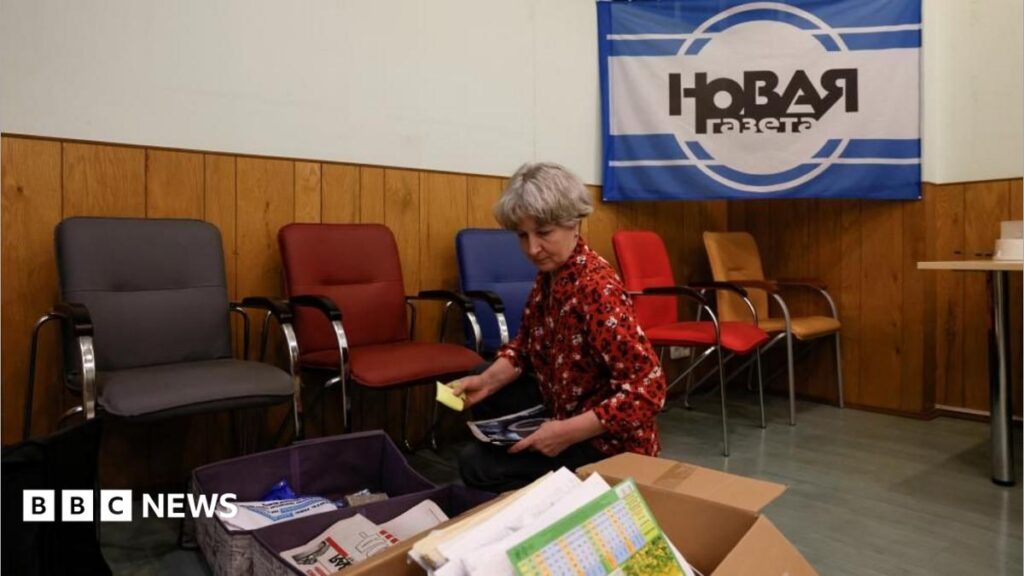
A three‑decade legacy of fearless reporting
Since its launch in 1993, Novaya Gazeta has become synonymous with investigative journalism that dared to expose corruption, human‑rights abuses, and the murky links between the Kremlin and powerful business interests. The newspaper earned a reputation for publishing stories that mainstream Russian outlets avoided, from the 1999 apartment bombings to the 2013 murder of journalist Anna Politkovskaya’s colleague. Its editor‑in‑chief, Nobel Peace Prize laureate Dmitry Muratov, has been the public face of that defiance, often appearing at international forums to defend press freedom.
The outlet’s reach extended far beyond Moscow. Analysts in Europe, the United States, and Africa relied on its deep‑dive pieces to understand how Russian policy intersected with global markets. In particular, Novaya Gazeta’s reporting on Russian mining concessions in the Democratic Republic of Congo, arms shipments to Sudan, and the growing presence of Russian private military contractors in the Sahel offered rare, verified data that shaped diplomatic and business decisions on the continent.
How the authorities moved to silence the paper
In early October 2026, the Russian Ministry of Justice filed a series of tax‑evasion allegations against Novaya Gazeta’s publishing house. Within days, a court ordered the suspension of its print edition and the seizure of its online domain. The move followed a pattern of administrative pressure that began in 2022, when the state introduced “foreign agent” labels for outlets receiving any overseas funding. Sources close to the newsroom say that the final trigger was a series of articles published in September exposing secret payments from Russian mining firms to officials in Zambia and Angola.
Muratov, who had previously survived a 2019 assassination attempt, addressed his staff in a video that quickly went viral on social media. “They strangled us,” he said, describing the cumulative effect of raids, fines, and intimidation. The founder’s statement echoed earlier testimonies from journalists who had been detained or harassed for covering anti‑corruption investigations, confirming that the shutdown was not a bureaucratic mishap but a calculated effort to eliminate a critical voice.
Why the closure matters beyond Russia’s borders
The disappearance of Novaya Gazeta removes one of the few remaining Russian outlets that could be trusted to verify claims made by the Kremlin, especially regarding its foreign policy in Africa. Without its investigative lens, misinformation about Russian mining contracts, energy projects, and security arrangements can spread unchecked, complicating the work of African regulators and investors who depend on accurate data to negotiate fair deals.
International watchdogs such as Reporters Without Borders and the Committee to Protect Journalists have already warned that the loss of a high‑profile newspaper weakens global accountability mechanisms. In the context of the ongoing war in Ukraine, the shutdown also signals a broader retreat of independent media, limiting the world’s ability to track how Russian resources are being redirected to other theatres, including the continent’s conflict zones.
The African angle: transparency, investment, and diaspora voices
Over the past decade, Russia has deepened its economic and security ties with several African states, from copper mining deals in the DRC to the establishment of a naval base in Sudan. Novaya Gazeta’s investigative pieces often provided the only English‑language source that dissected the terms of these agreements, revealing hidden royalties, environmental risks, and the involvement of Russian private military companies (PMCs). African civil‑society groups cite the newspaper’s work when calling for greater scrutiny of foreign contracts.
For members of the African diaspora living in Europe and North America, the paper served as a bridge to understand how Russian actions abroad could affect their home countries. Its shutdown means that journalists and activists in Lagos, Nairobi, and Johannesburg now have one fewer reliable source to cross‑check official statements from Moscow. This gap may embolden corrupt officials on both continents, as the risk of exposure diminishes.
A widening trend of media repression worldwide
The fate of Novaya Gazeta mirrors a growing pattern of authoritarian clampdowns on independent media, not only in Russia but also across parts of Africa. In 2025, Ethiopia’s government introduced stringent licensing rules that forced two leading independent dailies to close. Kenya’s media regulator has been accused of using tax investigations to silence outlets critical of the president’s infrastructure deals. These parallel moves suggest a global erosion of the legal safeguards that once protected journalists from politically motivated prosecutions.
Human‑rights experts argue that the simultaneous weakening of press freedom in both Russia and several African states creates a feedback loop: reduced scrutiny in one region can embolden similar tactics elsewhere. The loss of cross‑regional investigative journalism also hampers collaborative reporting projects that have historically exposed transnational corruption, such as the “Pan‑African Investigative Network” which partnered with Novaya Gazeta on a 2023 series about illicit mining exports.
What comes next for independent reporting and African stakeholders
In the immediate aftermath, former Novaya Gazeta journalists have announced plans to continue their work through a decentralized, encrypted online platform, funded by a coalition of European NGOs and African civil‑society foundations. The model aims to bypass state‑controlled infrastructure, allowing reporters to publish under pseudonyms while still reaching an international audience. Early tests show promising engagement from readers in Kinshasa and Lusaka, who are eager for the kind of granular data the paper once provided.
Meanwhile, African governments and business chambers are being urged to diversify their sources of information, investing in local investigative units that can fill the void left by Novaya Gazeta. The African Union’s media freedom task force has scheduled a summit in Addis Ababa for early 2027 to discuss joint strategies against external media suppression. For the diaspora, community‑run newsletters and podcasts are emerging as alternative channels to keep track of Russian activities on the continent.
Quick Answers
What happened to Novaya Gazeta in October 2026?
Russian courts ordered the newspaper’s print edition suspended and its website seized after tax‑evasion charges, effectively shutting down the outlet.
Who is the founder who said 'they strangled us'?
Dmitry Muratov, the Nobel Peace Prize‑winning editor‑in‑chief and co‑founder of Novaya Gazeta, made the statement.
How does the shutdown affect African interests?
It removes a key source of verified information on Russian mining, energy and security deals in Africa, making it harder for governments, investors and diaspora groups to assess those partnerships.
Source: www.bbc.co.uk




💬 Comments 0