Osun election police arrest 295 suspects after 2026 governorship vote – implications
Background: a tightly contested governorship race
The February 2026 Osun State governorship election was one of Nigeria’s most closely watched contests, pitting the incumbent Peoples Democratic Party (PDP) candidate against a strong All Progressives Congress (APC) challenger. Both parties poured significant resources into voter mobilisation, promising infrastructure projects and youth employment, while opposition groups warned of vote‑buying and intimidation.
Osun, a southwestern state with a population of about 5 million, has historically been a bellwether for national politics. In the 2019 cycle, the state swung to the PDP, a result that foreshadowed the party’s resurgence in the 2023 presidential election. Analysts therefore expected the 2026 race to be a micro‑cosm of the broader power struggle between the two dominant parties.
The Independent National Electoral Commission (INEC) deployed over 15,000 security personnel and introduced biometric verification to curb past irregularities. Yet, on election day, reports of armed thugs, ballot‑box snatching and vote‑rigging emerged from several local government areas, prompting immediate police action.
The police operation and the numbers
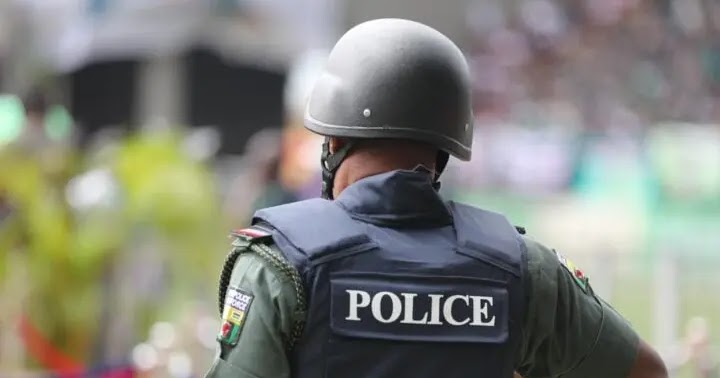
Within hours of the polls closing, the Nigeria Police Force announced the arrest of 295 individuals suspected of participating in electoral violence, intimidation or fraud. Of those, 293 were released on bail after a preliminary screening that confirmed no immediate evidence of a crime, while two remain in custody for deeper investigation.
Police spokesperson Col. Emmanuel Olagunju told reporters that the arrests were part of a “heightened security operation” launched across the state after INEC flagged irregularities in 12 polling units. The operation reportedly involved roadblocks, aerial surveillance and coordinated raids on suspected “political thuggery” hideouts.
Human rights observers, including the Civil Society Legislative Advocacy Centre (CISLAC), cautioned that mass arrests risked violating due‑process rights, especially where evidence was thin. They called for transparent judicial review and warned that over‑reliance on police‑led investigations could erode public confidence in the electoral system.
Why the arrests matter for Nigeria’s democracy
Nigeria’s democratic trajectory hinges on the credibility of its elections. Large‑scale arrests signal that authorities are willing to intervene, but they also raise questions about the balance between security and civil liberties. If police actions are perceived as partisan, they could deepen mistrust among voters and opposition parties.
Economically, political instability in a state that contributes roughly 2 % of Nigeria’s GDP can deter investment. Foreign firms monitoring the West African market often cite “electoral risk” as a factor in capital allocation. The Osun arrests, therefore, have a ripple effect that could influence investor sentiment beyond the state’s borders.
For the diaspora, many of whom send remittances that account for an estimated $2 billion annually to Osun households, the perception of a fair election affects confidence in sending money home. A contested result or prolonged legal battles could slow remittance flows, tightening household budgets in a region already grappling with inflation.
Connecting the dots: a pattern of post‑election crackdowns
Osun is not an isolated case. Similar police sweeps followed the 2023 gubernatorial elections in Kaduna and the 2021 local elections in Rivers, where hundreds of suspects were detained on vague “public order” charges. Scholars note a growing trend of using security forces as a tool to manage post‑election fallout rather than relying on independent electoral tribunals.
The pattern reflects a broader challenge in Nigeria: the blurred line between law enforcement and political patronage. When police are deployed on the behest of party leaders, the impartiality of investigations can be compromised, leading to accusations of “selective justice” from opposition groups and international watchdogs.
Nevertheless, some analysts argue that these crackdowns are a pragmatic response to endemic electoral violence. They point to the decline in reported deaths during elections since 2015, suggesting that a visible security presence, even if heavy‑handed, may deter would‑be thugs. The debate continues over whether the trade‑off is worth the democratic cost.
Reactions from the diaspora and local stakeholders
The Osun diaspora, organized through groups such as the Osun State Association of Nigerians in the UK (OSANUK), issued a joint statement urging the government to ensure “transparent, swift, and fair judicial processes” for the two detainees. They also warned that any perception of political bias could fuel protests in diaspora hubs across London, New York and Toronto.
Local civil‑society organisations, including the Osun Civil Society Forum, called for an independent commission to investigate the alleged electoral crimes. Their demand aligns with a growing domestic push for reforms that would shift investigative powers from the police to specialised electoral tribunals, a move championed by former INEC chairmen.
Business chambers, such as the Osun Chamber of Commerce, expressed cautious optimism. While they welcomed decisive action against violence, they stressed the need for “predictable legal outcomes” to maintain a stable environment for trade and to avoid disruptions to the state’s agricultural export pipeline, which supplies cocoa and palm oil to regional markets.
What comes next: legal and political fallout
The two suspects still in custody face charges ranging from unlawful assembly to alleged collusion with armed groups. Their cases are expected to be heard in the Osun State High Court, where judges have been urged by the National Judicial Council to adhere strictly to procedural fairness. The outcome could set a precedent for how future electoral offenses are prosecuted.
Politically, the PDP and APC are already positioning themselves for the 2027 election cycle. Both parties have hinted that the handling of the Osun arrests will be a litmus test for their commitment to democratic norms. The PDP, currently in power in the state, is likely to argue that the arrests demonstrate a zero‑tolerance stance on violence, while the APC may frame them as selective persecution.
In the medium term, civil‑society advocates hope the episode will catalyse legislative reforms. Bills currently pending in the National Assembly aim to create an independent Electoral Crime Investigation Agency, modeled after Kenya’s Independent Electoral and Boundaries Commission. If passed, such a body could reduce the police’s direct involvement in election‑related matters, offering a more neutral avenue for accountability.
Quick Answers
Why were 295 people arrested after the Osun 2026 governorship election?
Police detained them on suspicion of electoral violence, intimidation or fraud following reports of ballot‑box snatching and armed thuggery on election day.
How might the arrests affect foreign investment in Osun State?
Political instability can raise perceived risk for investors, potentially slowing new projects and affecting the state’s contribution to Nigeria’s GDP.
What legal process will the two remaining suspects face?
They will be tried in the Osun State High Court on charges such as unlawful assembly, with judges expected to follow strict procedural safeguards.
Source: dailypost.ng



💬 Comments 0