Osun governor Ademola Adeleke urges political unity after 2026 election, citing Bola Oyebamiji peace appeal
Background: A tightly contested 2026 governorship race
The 2026 Osun State governorship election was one of the most closely watched contests in Nigeria’s southwest. Incumbent Governor Ademola Adeleke, a member of the Peoples Democratic Party (PDP), faced a strong challenge from the All Progressives Congress (APC) candidate Bola Oyebamiji, a former legislator with deep roots in the state’s traditional power structures. The campaign was marked by high voter turnout, vigorous rallies, and a flurry of accusations over vote‑buying and media bias, reflecting the broader national polarization that has intensified since the 2023 general elections.
On election day, the Independent National Electoral Commission (INEC) declared Adeleke the winner by a narrow margin of about 1.2% of the total votes cast. While the PDP celebrated the result, the APC immediately questioned the tally, filing petitions in the tribunal and urging supporters to remain calm. The tension was palpable in Osun’s capital, Ile‑Ife, where both parties organized post‑election town‑hall meetings to rally their bases.
In the weeks that followed, the APC’s Bola Oyebamiji released a formal peace appeal, calling for an end to partisan hostilities and urging all political actors to respect the democratic outcome. The appeal, delivered at a public rally in Osogbo, was unusual in its conciliatory tone and set the stage for Governor Adeleke’s own response, which he framed as a broader call for unity across the state’s political spectrum.
The call for unity: Adeleke’s public appeal
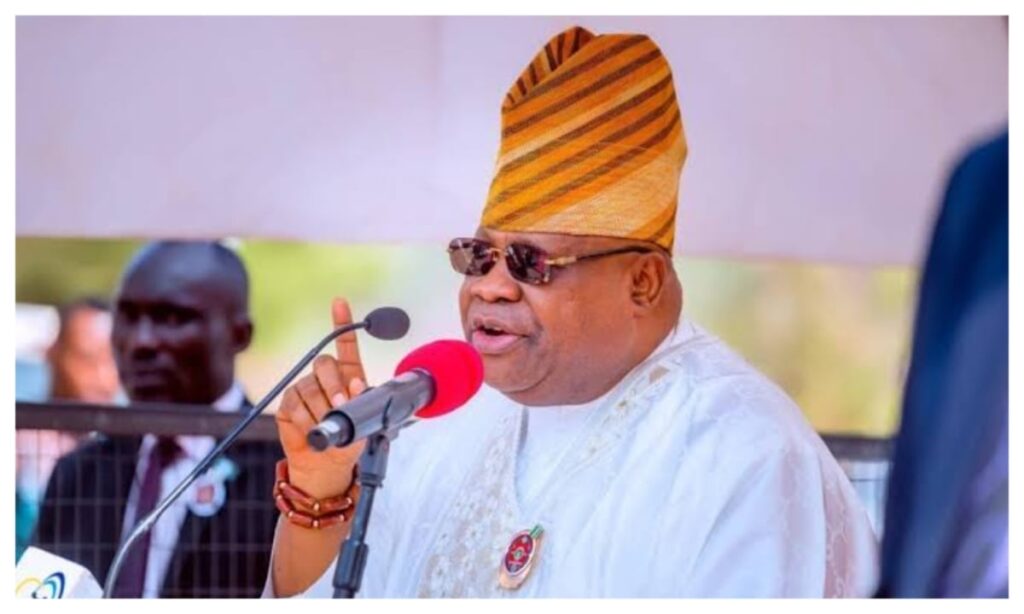
Governor Adeleke addressed a mixed audience of PDP loyalists, APC supporters, traditional rulers, and civil society groups at the Osun State Secretariat on August 20, 2026. He thanked Bola Oyebamiji for his peace appeal and urged every political leader to “put aside personal ambitions and work together for the development of Osun.” Adeleke emphasized that the state’s future depends on collaborative policy‑making rather than partisan deadlock, echoing a sentiment that has been echoed by several Nigerian governors after contentious elections.
In his speech, Adeleke highlighted specific sectors—education, agriculture, and infrastructure—that require cross‑party cooperation. He warned that continued rivalry could jeopardise ongoing projects such as the Osun‑Lagos rail link and the state’s renewable‑energy pilot program, both of which rely on budget approvals from the state assembly, where opposition members hold a sizable bloc. By framing unity as a prerequisite for tangible development, Adeleke aimed to shift the narrative from political victory to pragmatic governance.
The governor’s remarks were covered by local outlets such as The Nation and Punch, which reported that his tone was “measured but firm,” signalling a willingness to engage with the APC while also reminding them of the electorate’s mandate. Political analysts, including Professor Oladipo of the University of Ibadan, noted that Adeleke’s appeal could serve as a litmus test for how Nigerian states manage post‑election transitions in an era of heightened partisan identity.
Why it matters for Osun’s citizens and investors
Osun State’s economy is heavily dependent on agriculture—particularly cocoa, cassava, and oil palm—and on a growing service sector anchored by tourism to historic sites such as the Osun‑Osogbo Sacred Grove. Political stalemate can stall budget allocations for agricultural extension services, disrupt supply chains, and deter foreign direct investment (FDI) in the nascent agro‑processing industry. Investors typically look for policy stability; any perception of prolonged conflict could push capital toward more predictable environments like Lagos or Accra.
Beyond economics, the call for unity has social implications. Osun’s diverse ethnic composition, comprising Yoruba sub‑groups with distinct chieftaincy traditions, can become a flashpoint if political leaders mobilize ethnic loyalties for partisan gain. By urging collaboration, Adeleke is also attempting to prevent the re‑emergence of communal tensions that have historically flared during disputed elections, such as the 2007 crisis in neighboring Oyo State.
The diaspora community, which contributes an estimated $200 million annually through remittances and investment, is watching closely. Nigerian expatriates in the United Kingdom, United States, and Canada often channel funds into real‑estate and small‑business ventures in Osun. A stable political climate reassures them that their capital will not be jeopardized by sudden policy reversals or civil unrest, thereby encouraging continued financial inflows that are vital for local development.
A broader Nigerian pattern: post‑election reconciliation efforts
Adeleke’s unity appeal fits into a growing trend among Nigerian governors who, after fiercely contested elections, pivot toward reconciliation to safeguard economic growth. In 2019, Governor Rotimi Akeredolu of Ondo State convened a bipartisan committee to oversee the implementation of his election manifesto, a move credited with attracting a $150 million road‑construction contract from a Chinese firm. Similarly, after the 2023 gubernatorial race in Ekiti, Governor Biodun Oyebanji pledged a “government of all Nigerians,” which helped calm investor anxiety and secured a partnership with a European agritech startup.
These precedents suggest that political unity is increasingly seen as a market‑friendly signal. International rating agencies, such as Moody’s, have begun to factor intra‑state political cohesion into sub‑national credit assessments. When a governor publicly acknowledges the opposition’s role in governance, it can translate into a modest but meaningful downgrade in perceived risk, making the state more attractive for bond issuances and public‑private partnerships.
However, the effectiveness of such appeals varies. In states where opposition parties dominate the legislature—like Rivers and Bayelsa—reconciliation attempts have often stalled, leading to budgetary impasses and delayed infrastructure projects. Osun’s political arithmetic, with the PDP holding a slim majority but the APC controlling key committee chairmanships, makes Adeleke’s invitation for cooperation both necessary and strategically delicate.
What could happen next: scenarios for Osun’s political landscape
If the APC’s legislative bloc embraces Adeleke’s overture, the most immediate outcome could be the swift passage of the 2026–2029 state budget, unlocking funds for the rail link and the renewable‑energy pilot. Such cooperation would likely be reflected in joint press releases and shared oversight committees, creating a model of bipartisan governance that could be replicated in other southwestern states.
Conversely, if the opposition remains skeptical, the state assembly may experience prolonged debate over key bills, leading to a “government‑in‑waiting” scenario where projects are delayed and public services suffer. In that case, civil society groups—such as the Osun Youth Coalition and the Women’s Development Association—could become pivotal mediators, organizing town‑hall meetings and facilitating dialogue between the parties.
The diaspora’s role could also evolve. Nigerian professional associations abroad have previously mobilized lobbying efforts in Washington and London to influence Nigerian policy. A coordinated diaspora campaign championing political stability in Osun might pressure both parties to keep the state’s economic agenda on track, especially if investors begin to tie funding to measurable governance benchmarks.
Quick Answers
Who is the current governor of Osun State?
The current governor is Ademola Adeleke of the Peoples Democratic Party, re‑elected in the 2026 governorship election.
What was Governor Adeleke’s main message after the 2026 election?
He urged all political leaders in Osun to set aside partisan differences and work together for the state’s development.
How could Adeleke’s call for unity affect investors in Osun?
A unified political environment can lower perceived risk, encouraging both local and foreign investors to fund infrastructure, agriculture, and renewable‑energy projects.
Source: dailypost.ng


💬 Comments 0