Pakistan locks down Imran Khan’s Lahore stronghold amid protests – risk of backlash and diaspora impact, Oct 2026
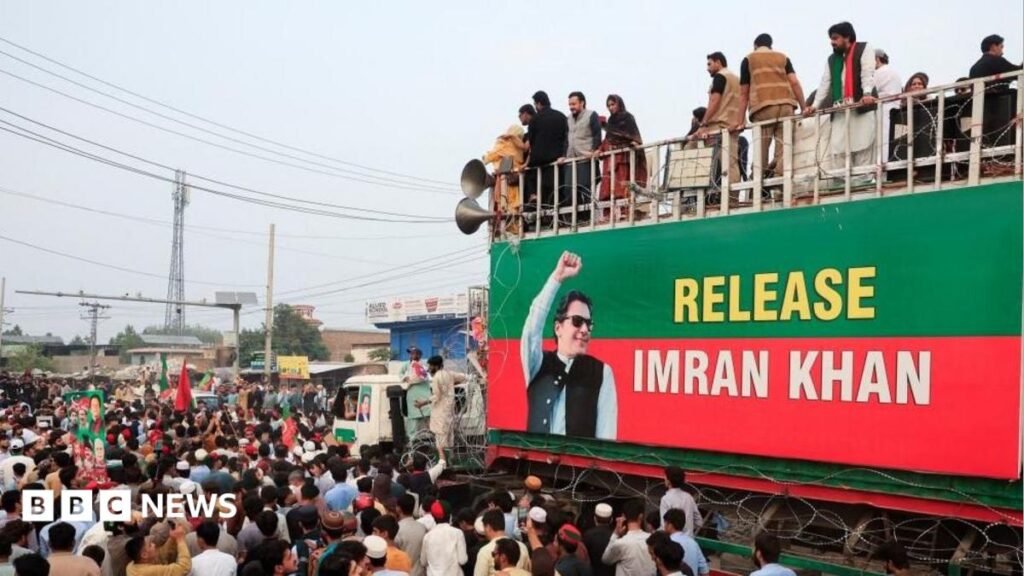
Background: Imran Khan’s political resurgence and the stakes
Former prime minister Imran Khan, leader of the Pakistan Tehreek-e-Insaf (PTI), has been the focal point of Pakistan’s political turbulence since his ouster in 2022. After a series of mass rallies and a high‑profile corruption case, Khan’s popularity surged again in early 2026, especially in his home province of Punjab, where he enjoys deep-rooted support among youth and rural voters.
The government, led by Prime Minister Shehbaz Sharif, has repeatedly accused Khan of inciting violence and attempting to destabilise the democratic process. In response, the administration has pursued a series of legal and administrative actions, culminating in the recent decision to impose a security lockdown on the Lahore district that houses PTI’s headquarters and key rally sites.
What the lockdown looks like on the ground
From 02:00 GMT on October 12, police and paramilitary forces sealed off a 15‑kilometre radius around the historic Minar-e-Pakistan, the symbolic heart of Khan’s political base. Entry points were manned, public transport halted, and internet services were throttled to curb the spread of real‑time protest coordination, according to a statement from the Ministry of Interior.
The measures also include a curfew that lasts until 22:00 each night, a ban on public gatherings larger than ten people, and the temporary suspension of PTI offices. While authorities say the move is intended to prevent a “mass mobilisation that could turn violent,” human‑rights groups have warned that the blanket restrictions could infringe on constitutional freedoms.
Why the crackdown could backfire domestically
Experts argue that the lockdown may deepen the polarization that already plagues Pakistan’s polity. Dr. Ayesha Malik, a political scientist at Lahore University, notes that “forcing a popular leader’s supporters into a corner often fuels martyrdom narratives, which can translate into larger street protests once the restrictions are lifted.”
Economically, the shutdown hits a region that contributes roughly 25 % of Pakistan’s GDP. Retail, transport, and small‑scale manufacturing are already feeling the pinch, raising concerns that a prolonged clampdown could depress consumer confidence ahead of the scheduled general elections in early 2027.
Diaspora and African connections: why the news matters beyond South Asia
Pakistan’s diaspora in Africa, though numerically modest, plays an outsized role in trade and remittances. Nigerian and Kenyan markets host Pakistani textile exporters, while a growing community of Pakistani entrepreneurs runs logistics firms that link South Asia to East African ports. A disruption in Lahore’s industrial output could ripple through these supply chains, potentially raising prices of Pakistani cotton fabrics in African markets.
Remittance flows to Pakistan, which total about $3 billion annually, include a notable share from African‑based workers. According to the State Bank of Pakistan, a 5 % dip in remittance receipts would shave roughly $150 million off the country’s foreign‑exchange reserves – a figure that could affect the stability of the Pakistani rupee and, by extension, the cost of imports for African nations that rely on Pakistani food products.
A broader pattern: authoritarian clampdowns in emerging democracies
The Lahore lockdown joins a growing list of security‑driven interventions in emerging democracies, from Kenya’s 2025 crackdown on opposition rallies to Nigeria’s 2024 suspension of internet services during election protests. Analysts see a common thread: governments using emergency powers to pre‑empt dissent, often citing national security or public order.
Such tactics risk eroding democratic norms and can invite international criticism. The United Nations Human Rights Office issued a brief reminder on October 13 that “any restriction on assembly must be lawful, necessary, and proportionate,” a sentiment echoed by the European Union’s diplomatic mission in Islamabad.
What’s next: scenarios and potential fallout
If the lockdown remains in place for more than two weeks, the most likely scenario is a surge of nationwide protests, possibly coordinated through encrypted messaging apps that bypass the internet throttling. The government could respond with further security measures, raising the spectre of a prolonged standoff that would strain law‑enforcement resources.
Conversely, a negotiated de‑escalation – perhaps through an independent inquiry into the corruption charges against Khan – could restore a fragile calm and open space for dialogue ahead of the 2027 elections. International observers, including the Commonwealth Secretariat, have signalled willingness to mediate if both sides agree to a transparent process.
Quick Answers
Why did the Pakistani government lock down Imran Khan's Lahore stronghold?
Authorities said the lockdown was to stop a planned mass protest that could turn violent and to secure ongoing investigations into alleged corruption linked to Khan.
How could the lockdown affect African markets?
Disruptions in Lahore’s textile production may raise prices of Pakistani fabrics exported to Africa, while a dip in remittances from African‑based Pakistani workers could weaken Pakistan’s foreign‑exchange reserves.
What are the possible outcomes of the lockdown?
Experts warn it could trigger larger protests if prolonged, but a negotiated settlement or independent inquiry could defuse tensions before the 2027 elections.
Source: www.bbc.co.uk


💬 Comments 0