Police Launch Operation to Relocate Migrants from Ceuta Beaches Amid Surge of Sub‑Saharan Arrivals, 2026
Background: Ceuta’s Role as Europe’s Front Door
Ceuta, a Spanish enclave on the North African coast, has long been a flashpoint for irregular migration into the European Union. Its short, heavily fortified border with Morocco makes it a prime target for migrants hoping to cross into Europe without the bureaucratic hurdles of legal channels.
In recent years, the flow has shifted from primarily North African nationals to a growing number of sub‑Saharan Africans fleeing conflict, climate‑driven displacement, and economic hardship. According to the International Organization for Migration, arrivals at Ceuta increased by 38 % in the first half of 2026 compared with the same period in 2025.
The Spanish government has responded with a mix of deterrence measures—such as razor‑wire fences and patrols—and humanitarian tented sites on the enclave’s beaches where migrants are temporarily housed while their asylum claims are processed.
What Happened on Friday: Police Move to Clear the Beaches
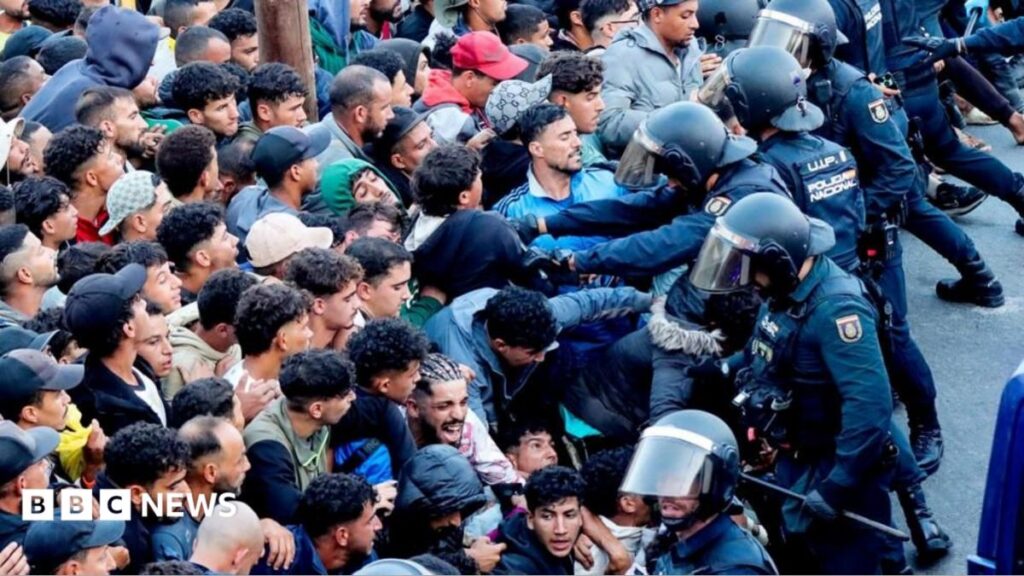
On Friday morning, Spanish police launched a coordinated operation to relocate migrants from the makeshift tented camp that had sprung up on Ceuta’s Playa del Norte. Witnesses reported that officers fired warning shots into the air to disperse crowds that were jostling for space in the camp.
The operation, which lasted several hours, involved both local police and members of the Spanish National Police Corps. Migrants were escorted to a larger reception centre inland, where they will undergo registration and health checks before their cases are forwarded to the Spanish authorities.
Human rights groups, including Amnesty International, said they were not consulted in advance and warned that the rapid clearance could jeopardise the safety of vulnerable individuals, especially unaccompanied minors.
Why It Matters: Implications for African Migrants and EU Policy
The clearance underscores a broader tension between European border‑control priorities and the humanitarian obligations owed to migrants, many of whom originate from African nations such as Nigeria, Sudan, and the Democratic Republic of Congo. For these countries, each successful crossing can translate into remittance inflows that support families back home.
However, abrupt relocations can disrupt the informal networks that migrants rely on to send money, potentially reducing the volume of remittances that African economies depend on. The World Bank estimates that remittances account for roughly 5 % of sub‑Saharan Africa’s GDP, a figure that could dip if migration routes become more volatile.
Politically, the operation feeds into the EU’s ongoing debate over a common asylum system. Spain’s move may pressure other member states to adopt similar “clear‑and‑contain” tactics, which could reshape migration patterns across the Mediterranean and alter the dynamics of African‑European mobility.
Reactions: Voices from Ceuta, Africa and the Diaspora
Local NGOs in Ceuta condemned the police action as “counter‑productive,” arguing that it pushes migrants into more precarious situations and fuels smuggling networks that thrive on uncertainty. A spokesperson for the Red Cross in Ceuta said the organization would monitor the wellbeing of those relocated.
In Lagos, Nigerian diaspora organisations expressed concern that the crackdown could deter future migrants from seeking asylum in Spain, a historically popular destination due to language and existing community ties. A Lagos‑based advocacy group warned that tighter controls might push Nigerians toward riskier routes across the Atlantic.
Conversely, some Spanish political figures hailed the operation as a necessary step to restore order and protect public safety. A senior member of the ruling party, speaking on national television, claimed that “Ceuta cannot become a permanent settlement for people who have not yet entered the legal process.”
What’s Next: Prospects for Policy Reform and African Stakeholders
In the short term, the relocated migrants will face a backlog in asylum processing, a problem that has plagued Spanish courts for years. Legal experts predict that the cases could take months to resolve, during which time many will remain in limbo, unable to work or travel.
Long‑term, the episode may accelerate calls for a regional migration framework that includes African source countries. Officials from the African Union have recently advocated for a “co‑responsibility” model that would see EU states fund development projects in departure zones in exchange for more orderly migration pathways.
For African economies, the key will be to diversify reliance on remittances and to engage with European partners on migration‑linked development programmes. If the EU adopts stricter border measures, African governments may need to negotiate new bilateral agreements that protect the rights of their citizens while still addressing the root causes of migration.
Quick Answers
Why did Spanish police fire warning shots during the Ceuta beach operation?
Police used warning shots to disperse crowds that were crowding the tented camp, aiming to prevent clashes as they moved migrants to a reception centre.
How could the Ceuta clearance affect remittances to African countries?
Disrupting migrants’ ability to settle and work in Europe can reduce the flow of money they send home, potentially lowering remittance‑driven income for families in sub‑Saharan Africa.
What is the EU likely to do after Spain’s operation in Ceuta?
The EU may consider similar “clear‑and‑contain” tactics in other border hotspots, sparking debate over a unified asylum policy and prompting calls for a new migration framework involving African states.
Source: www.bbc.co.uk




💬 Comments 0