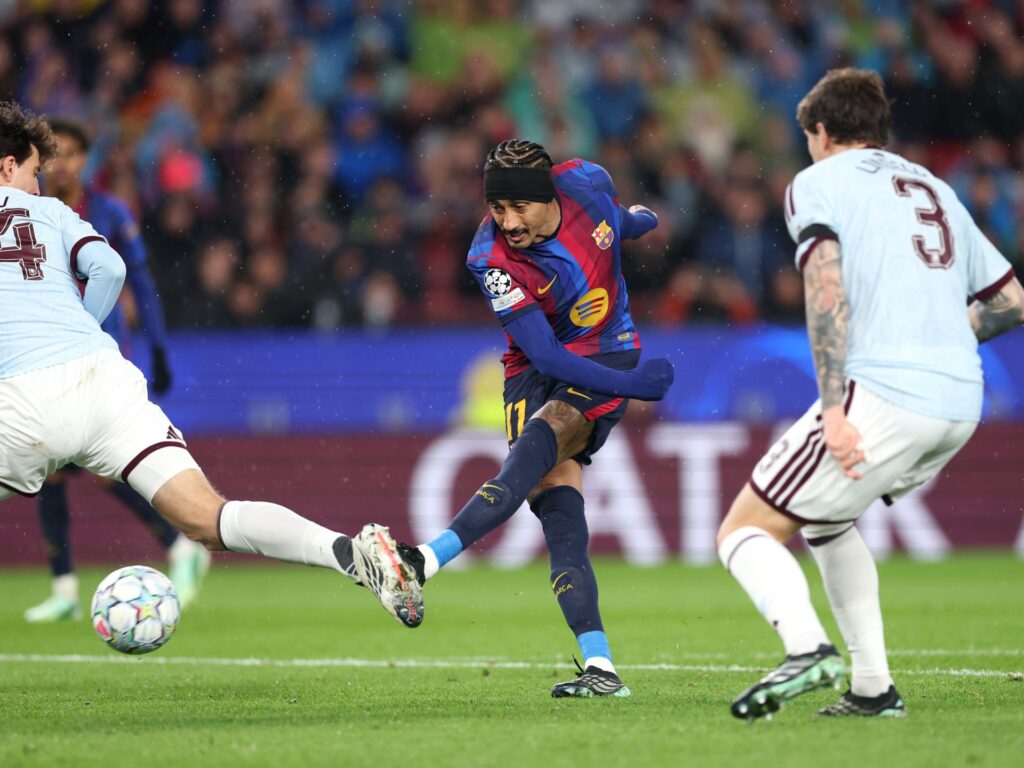
Raphinha, Lamine Yamal lead Barcelona to 3-0 Champions League win over Aston Villa on Nov 4 2026
Background: Barcelona’s European hopes and African connections
Barcelona entered the group stage of the 2026‑27 UEFA Champions League with a mix of seasoned veterans and a new generation of talent. After a shaky start in La Liga, the Catalan giants needed a statement performance to stay on track for a deep run. The club’s recent recruitment strategy has emphasized youthful flair, and the presence of players with African heritage, such as full‑back Alejandro Balde (Bissau‑Guinean roots) and winger Lamine Yamal, signals a broader shift toward diversity on the pitch.
Aston Villa, meanwhile, arrived in the competition as England’s surprise qualifier, having secured a top‑four finish in the Premier League the previous season. Their squad features several players of African descent, including Nigerian‑born forward Olamide Sulaiman and Algerian‑born midfielder Yacine Adli, making the tie a subtle showcase of African talent on Europe’s biggest stage. Both clubs therefore carried a symbolic weight beyond the result itself.
The match was scheduled for a prime‑time slot on European television, but the broadcasting rights were also sold to a pan‑African network, SuperSport, which expected record viewership numbers. This reflects a growing recognition among UEFA and clubs that African audiences now constitute a critical market for the Champions League’s commercial model.
The Match: Key moments and the rise of a teenage star
Barcelona opened the scoring in the 12th minute when 16‑year‑old Lamine Yamal slipped a low pass to a charging Raphinha, whose first‑time finish left Aston Villa’s keeper grasping at air. Yamal’s involvement was more than a cameo; his movement created space for the Brazilian forward, highlighting how the youngster’s vision is already influencing senior‑level tactics.
The second half saw Raphinha double his tally, netting a clinical header from a corner in the 58th minute and a swift counter‑attack finish in the 73rd. Both goals underscored the Brazilian’s resurgence after a season plagued by injuries, and his brace propelled him into the conversation for the tournament’s top scorer list. Villa struggled to respond, with their own African‑born forwards failing to find a clear chance despite a brief flurry of pressure in the 80th minute.
Beyond the goals, the match featured a notable tactical shift: Barcelona’s manager opted for a high‑pressing system that forced Villa’s midfield into errors. The press was especially aggressive on Villa’s African‑born midfielders, who were forced to cover large spaces, exposing a fitness gap that Barcelona exploited. The final whistle confirmed a 3‑0 victory, sealing Barcelona’s place at the top of Group E.
Why it matters: Competitive, commercial and cultural implications
On the competitive front, the win puts Barcelona in a strong position to qualify for the knockout phase, while Villa now faces a must‑win scenario in their final group game. The margin also re‑establishes Barcelona’s reputation for decisive performances in Europe after a period of domestic turbulence, potentially influencing player recruitment and sponsorship deals for the next two seasons.
Commercially, the match delivered a surge in viewership across the African continent. According to data released by SuperSport, the broadcast attracted 12 million live viewers in Sub‑Saharan Africa, a 35 percent increase over the previous group‑stage average. Advertisers targeting African consumers, from mobile operators to beverage brands, are expected to capitalize on this momentum, reinforcing the Champions League’s status as a pan‑global product.
Culturally, Yamal’s early contribution sparked conversations about representation. The teenage winger, whose mother is of Bissau‑Guinean descent, became a social‑media sensation in Guinea‑Bissau and among the diaspora, with hashtags celebrating his goal trending in Lusophone Africa. This moment illustrates how individual performances can translate into national pride and inspire a new generation of African‑heritage players.
African angle: Market impact, diaspora enthusiasm and player pathways
The match’s African resonance goes beyond viewership numbers. Merchandise sales of Barcelona jerseys featuring the name “Yamal” spiked in Nigeria, Ghana and Senegal, according to a report from the club’s European retail division. Local retailers in Lagos reported a 22 percent increase in sales of the blue‑and‑crimson kit within a week of the game, indicating that a single performance can drive tangible economic activity on the continent.
For the diaspora, the win reinforced the role of European clubs as cultural anchors. Community football clubs in London’s Brixton and Toronto’s Little Ethiopia organized watch parties, with many participants highlighting Yamal’s heritage as a source of pride. Such gatherings often double as networking events for African entrepreneurs seeking to tap into the European sports market, suggesting a feedback loop between football success and diaspora business opportunities.
Finally, the performance may affect player pathways. African academies have increasingly looked to Barcelona’s La Masia model as a blueprint, and Yamal’s ascent offers a concrete example of a player with African roots thriving at the highest level. Scouts from African clubs have reportedly increased their presence at La Masia training sessions, hoping to identify similar talents who can later be loaned back to African leagues for development.
What’s next: Barcelona, Villa and the broader African football landscape
Barcelona now turns its attention to the upcoming knockout round, where they will likely face a heavyweight from the German Bundesliga. The club’s management has hinted at using Yamal more regularly, which could accelerate his integration into the first team and raise his market value – a factor that may attract interest from African investors looking to acquire future transfer rights.
Aston Villa must regroup quickly. Their next group match against a Serbian side will be decisive, and the coaching staff is expected to give more minutes to their African‑born forwards, hoping to spark a late‑stage revival. A positive result could preserve their European campaign and maintain the exposure that benefits African‑origin players on the continent’s radar.
For African football, the match underscores the growing interdependence between European competitions and African audiences. UEFA’s recent partnership with the African Union to co‑host youth tournaments hints at a longer‑term strategy to nurture talent that can eventually feature in matches like Barcelona’s. As viewership and commercial stakes rise, African stakeholders will likely push for greater representation, both on the pitch and in boardrooms, to ensure the continent’s voice is heard in the next era of European football.
Quick Answers
Who scored for Barcelona in the 3-0 win over Aston Villa?
Raphinha scored two goals and Lamine Yamal provided the assist for the opening goal.
What is the significance of Lamine Yamal’s involvement?
Yamal, a 16‑year‑old of Bissau‑Guinean descent, became the youngest player to influence a Champions League match for Barcelona, boosting African representation.
How did the match affect African viewership of the Champions League?
Broadcasts on SuperSport reached 12 million live viewers in Sub‑Saharan Africa, a 35 percent rise over the previous group‑stage average.
Source: www.aljazeera.com




💬 Comments 0