Russia attacks Ukraine data centres in 2026, Zelensky says aim to cripple daily life and diaspora connectivity
Background: Russia’s expanding playbook against civilian digital infrastructure
Since the start of the war in 2022, Moscow has blended conventional artillery with cyber tools to erode Ukraine’s resilience. Early on, Russian hackers flooded banks and power grids with malware, while later the Kremlin sanctioned physical strikes on fiber‑optic hubs, satellite dishes and data‑centre complexes that host cloud services for businesses and NGOs.
The strategy reflects a broader shift in modern conflict: targeting the “digital layer” that underpins education, remote work, health‑care and humanitarian coordination. By striking servers and network nodes, an aggressor can inflict civilian hardship without crossing the threshold of mass casualties, yet still achieve a political objective of demoralising the population.
What happened: Recent raids on Ukrainian data centres
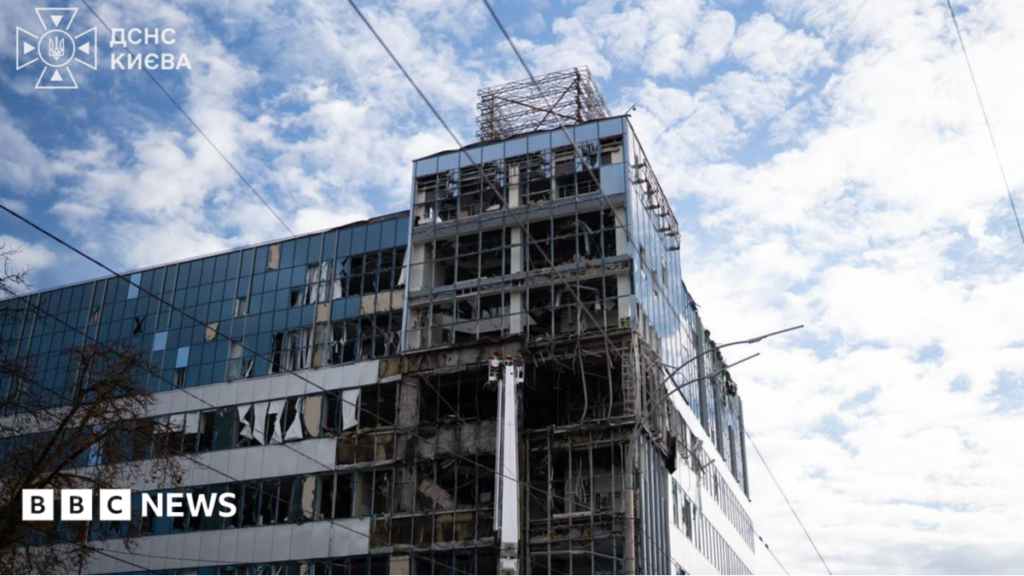
In a televised briefing on September 24, President Volodymyr Zelensky said Russian forces had launched a coordinated series of missile and drone attacks on three major data‑centre facilities in Kyiv, Kharkiv and Dnipro. The strikes damaged fiber‑optic landing stations and knocked out power to racks that host both domestic services and foreign‑hosted cloud platforms.
According to Ukrainian officials, the attacks disrupted broadband for an estimated 2.5 million users for several hours, halted online classes in dozens of schools, and forced remote‑working tech firms to shift to backup servers in neighboring countries. The Ministry of Digital Transformation reported that some Ukrainian‑based diaspora NGOs, which store donor databases on the hit servers, temporarily lost access to critical information.
Why it matters for Ukrainians and the African diaspora
Beyond the immediate inconvenience, the attacks strike at the lifeline of a population that has increasingly relied on digital tools to stay connected with families abroad. Over 200,000 Africans—students, health workers and construction laborers—are currently in Ukraine, many of whom depend on Ukrainian internet services to coordinate with relatives in Lagos, Nairobi and Johannesburg.
When the data centres went offline, several African student groups reported that their Zoom lectures with universities in Accra and Dar es‑Salaam were interrupted, and that payments for tuition sent from African banks were delayed. Humanitarian organisations such as the African Union’s Disaster Management Centre, which runs a real‑time logistics dashboard from a server in Kyiv, faced a temporary blackout that hampered the distribution of food aid to Ukrainian‑based African refugees.
Reactions: From Kyiv to African capitals
Western allies condemned the strikes as a violation of international humanitarian law, urging Russia to respect civilian digital infrastructure. The United States Department of State announced an additional $50 million in cyber‑defence assistance to Ukraine, earmarked for hardening data‑centre resilience.
In Africa, several ministries of communication issued statements of solidarity. Nigeria’s Ministry of Information highlighted the need for “robust backup systems for any African‑run operations abroad,” while Kenya’s ICT Authority called for a regional dialogue on protecting critical digital assets in conflict zones. Diaspora organisations in the UK and Canada have begun lobbying for emergency funding to relocate their data to African cloud providers as a precaution.
What’s next: Building a more resilient digital ecosystem
Experts say the attacks are likely to intensify as Russia seeks to pressure Kyiv ahead of upcoming peace talks. They recommend a three‑pronged approach: diversifying data‑hosting across multiple jurisdictions, investing in satellite‑based internet backups, and establishing rapid‑response cyber‑forensics teams that can restore services within minutes.
For African governments, the episode offers a cautionary tale. The continent is witnessing a surge in data‑centre construction, especially in Kenya, South Africa and Nigeria, yet many projects lack the redundancy protocols that Western counterparts have adopted after years of cyber‑warfare. Regional bodies such as the African Union could draft a “digital protection charter” that sets minimum standards for data‑centre fortification in hostile environments, ensuring that African businesses and diaspora communities are not left vulnerable when geopolitical storms spill over.
Quick Answers
How many people were affected by the recent Russian attacks on Ukrainian data centres?
Ukrainian officials estimate that around 2.5 million internet users experienced outages for several hours.
Why are African students and workers in Ukraine concerned about these strikes?
They rely on Ukrainian broadband for online classes, tuition payments and communication with families back home, which were disrupted by the attacks.
What steps are African countries taking in response to the data‑centre attacks?
Nigeria and Kenya have issued statements urging stronger backup systems, and the African Union is considering a digital‑protection charter to improve resilience.
Source: www.bbc.co.uk




💬 Comments 0