Sam Altman says world is right to fear AI but must trust firms – 2026 impact
Why Altman's warning matters now
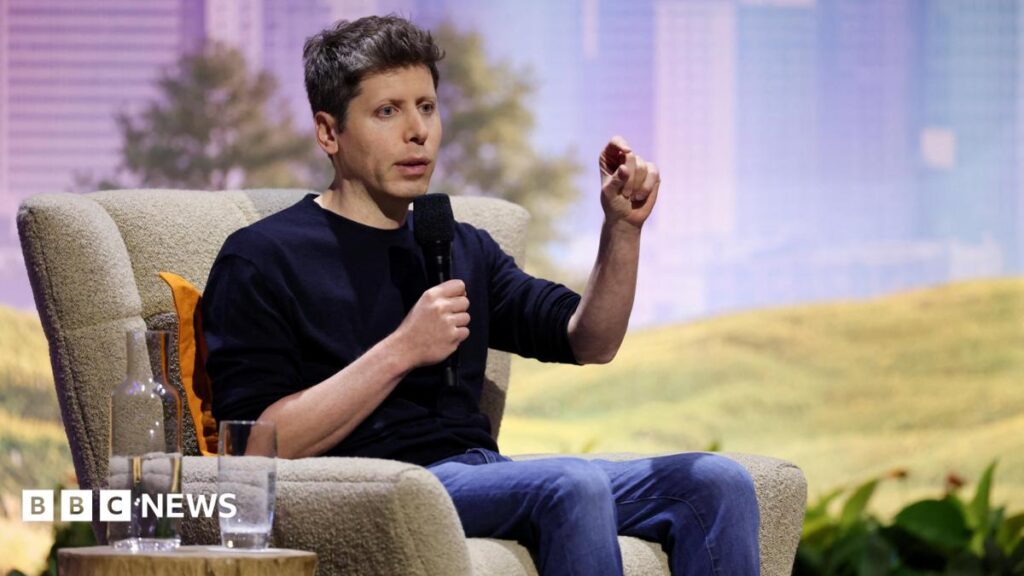
The conversation around artificial intelligence has shifted from excitement about new products to a sober assessment of existential risk. In early September 2026, Sam Altman, the chief executive of OpenAI, told reporters that the public’s fear of AI is justified, but that people should also have confidence in the companies building the technology. His remarks came at a time when governments from the United States to the European Union are drafting legislation that could reshape the industry’s future.
Altman’s statement is not an isolated PR soundbite; it reflects a growing tension between the promise of rapid AI advances and the reality of potential harms such as deep‑fakes, automated weaponisation, and massive job displacement. By acknowledging that “the world is right to be afraid,” he signals that the industry is aware of the stakes, while his call to “trust AI firms” suggests a belief that self‑regulation and internal incentives can keep the technology on a safe track.
The timing is crucial because the next wave of generative models is expected to be far more capable than today’s ChatGPT‑5. Investors are already pouring billions into startups that promise to embed these models into everything from finance to health. Altman’s dual message therefore sets the tone for how capital, policy and public opinion will align in the months ahead.
The incentives Altman says can curb runaway AI
According to Altman, the biggest lever to slow down potentially dangerous AI development is the alignment of profit with safety. He argues that firms will naturally embed guardrails if doing so protects their brand, avoids costly lawsuits, and preserves market access. In practice, this could mean more rigorous internal testing, transparent reporting of model capabilities, and a willingness to delay releases until safety checks are satisfied.
Altman also pointed to the emerging ecosystem of “AI insurance” and liability frameworks as financial incentives that could force companies to think twice before launching a model that could cause harm. Early adopters of such insurance, like a handful of European fintech firms, have already reported higher compliance costs but fewer regulatory penalties, suggesting a market‑based path to responsibility.
Critics, however, warn that profit motives can be overridden by competitive pressure. A report from the Center for AI and Democracy notes that when rivals race to be the first to market, safety can become a secondary concern. Altman’s confidence in self‑regulation therefore hinges on a collective industry pact, something that has historically been difficult to achieve in fast‑moving tech sectors.
What this means for African AI ecosystems
Africa’s burgeoning AI scene is watching the debate closely. Nations such as Kenya, Nigeria and Rwanda have launched national AI strategies that emphasize inclusive growth, data sovereignty, and ethical standards. Altman’s reassurance that firms can be trusted may open doors for OpenAI and other big players to partner with African startups, providing access to powerful models that can accelerate local innovation in agriculture, health and education.
At the same time, the same fear that Altman acknowledges resonates strongly across the continent. Civil society groups in South Africa and Ghana have warned that imported AI tools could exacerbate existing inequalities, especially if the models are trained on data that under‑represent African languages and cultures. The call for trust therefore comes with a demand for transparent data practices and local capacity‑building, lest African users become passive recipients of technology designed elsewhere.
Investors are also recalibrating. Venture capital firms with a focus on African tech, such as Partech Africa and TLcom Capital, have begun to include AI safety clauses in their term sheets. These clauses require portfolio companies to adopt third‑party audits and to disclose any high‑risk use‑cases, echoing Altman’s belief that market incentives can drive safer outcomes.
Global reactions and the push for coordinated policy
Altman’s comments have sparked a mixed response from other tech leaders. Elon Musk, who co‑founded OpenAI, reiterated his warning that “AI is more dangerous than nukes” in a recent podcast, while Microsoft’s Satya Nadella praised OpenAI’s “commitment to responsible innovation.” The divergence underscores a split within the industry between those who favour aggressive rollout and those who advocate a precautionary approach.
Governments are moving in parallel. The U.S. Senate’s AI Subcommittee scheduled a hearing for October, focusing on “trust frameworks for AI developers.” In Europe, the AI Act entered its final negotiation stage, with a specific clause that could require large model providers to share safety documentation with regulators. African Union officials, meanwhile, have announced a summit in Addis Ababa to align continental AI policy with these global efforts.
Non‑governmental organisations have also weighed in. The Future of Life Institute released a brief urging that “trust must be earned through verifiable safety records,” while the African Digital Rights Alliance called for an “African‑first” oversight body to ensure that global AI firms respect local norms. These voices suggest that any trust placed in AI firms will be contingent on demonstrable accountability.
Looking ahead: possible pathways for safer AI
In the short term, the most likely development is a wave of voluntary industry standards. The Partnership on AI, which includes OpenAI, Google, Meta and several African research institutes, plans to publish a “Safety Scorecard” by early 2027. The scorecard will benchmark models on transparency, robustness and societal impact, giving customers a measurable way to assess trustworthiness.
Longer‑term, governments may adopt a hybrid regulatory model that blends mandatory safety certifications with incentives for firms that exceed baseline standards. For example, a proposed tax credit in the United Kingdom rewards companies that invest in independent AI safety research. If similar schemes are adopted in African economies, they could spur home‑grown expertise while ensuring that foreign AI providers play by the same rules.
Finally, the African diaspora’s role could be pivotal. Engineers and entrepreneurs based in Europe, North America and the Middle East are increasingly launching AI ventures that target African markets. By leveraging Altman’s call for trust, they can position themselves as responsible partners, offering localized models that respect linguistic diversity and data privacy. This could create a virtuous cycle where safe AI fuels economic development, which in turn funds further safety research.
Quick Answers
What did Sam Altman say about public fear of AI?
Altman acknowledged that the world’s fear of AI is justified but urged people to trust AI companies that embed safety into their development processes.
How could Altman's remarks affect AI policy in Africa?
His comments may encourage African governments and investors to demand transparent safety standards from global AI firms, influencing local AI strategies and partnership models.
What are the main incentives that could keep AI development safe?
Financial incentives like liability insurance, brand protection, market access and investor‑driven safety clauses can align profit with responsible AI practices.
Source: www.bbc.co.uk




💬 Comments 0