Saudi minister vows serious response to Houthi Riyadh airport attacks 2026 – impact on oil markets and Africa
Background: The Yemen war and the Houthi strike capability
The conflict that began in Yemen in 2014 has morphed into a proxy war that pits Iran‑backed Houthi rebels against a Saudi‑led coalition supporting the internationally recognised government. Over the past decade, the Houthis have evolved from a guerrilla force into a semi‑conventional group capable of launching long‑range missile and drone attacks, especially after receiving Iranian technology and expertise.
Since 2019, the Houthis have repeatedly targeted Saudi infrastructure, including oil facilities at Abqaiq and Khurais, and more recently, civilian airports. Their use of ballistic missiles and loitering munitions reflects a strategic shift: rather than merely harassing coalition forces, they aim to strike high‑profile targets that can generate political pressure on Saudi Arabia and its allies.
International observers, such as the United Nations Panel of Experts on Yemen, have warned that the increasing frequency of attacks on civilian sites risks breaching international humanitarian law. The latest strike on Riyadh’s King Khalid International Airport marks the first time the capital’s main aviation hub has been hit, underscoring the Houthis’ expanding reach.
The October 2026 Riyadh airport attack
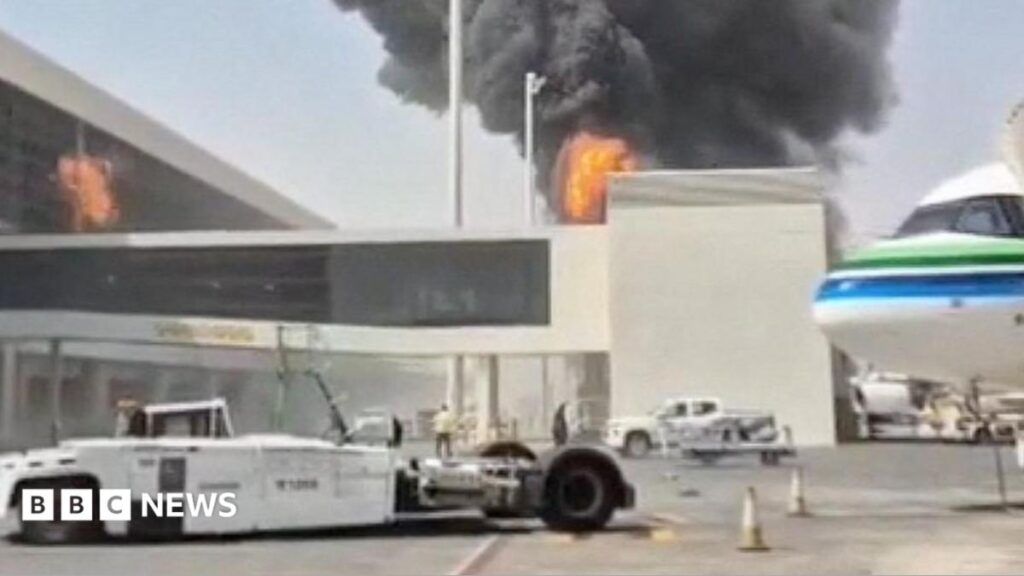
On 12 October 2026, Houthi‑launched missiles struck Riyadh’s King Khalid International Airport and a nearby military logistics complex, killing 13 people and injuring dozens more. The attack caused temporary shutdown of the airport’s main runway, prompting the diversion of several international flights and sparking panic among travelers.
Saudi officials confirmed that the missiles were intercepted by the kingdom’s Patriot air‑defence system, but not before they hit the terminal building. Early assessments by the Ministry of Interior suggested that the weapons used were a mix of short‑range ballistic missiles and a new type of loitering drone that the Houthis have been testing since early 2025.
The incident was condemned by the United Nations and the European Union, both calling for an immediate de‑escalation. Saudi Crown Prince Mohammed bin Salman ordered an emergency security meeting, and the Ministry of Defense announced a “serious response” to be delivered within days, though details of the retaliation were not disclosed at the time.
Why the response matters: Regional security and oil market volatility
Saudi Arabia’s oil‑export capacity accounts for roughly 12 % of global supply, and any perceived threat to its stability instantly reverberates through world oil prices. After the Riyadh attack, Brent crude rose 1.4 % in early trading, while analysts at Bloomberg warned that a broader escalation could push prices above $90 a barrel, a level that would strain oil‑importing economies across Africa.
Beyond the commodity markets, the attack raises concerns about the security of the Red Sea shipping lane, a chokepoint through which over 10 % of global trade passes, including a significant share of African exports of minerals and agricultural products. Houthi attacks on commercial vessels have already forced many shipping lines to reroute around the Cape of Good Hope, adding days and millions of dollars to freight costs for African exporters.
The Saudi minister’s pledge of a “serious response” signals a possible expansion of Saudi air‑defence and missile‑intercept capabilities in the Gulf, which could include joint exercises with the United Arab Emirates and Bahrain. Such moves may deter further Houthi aggression but also risk pulling the coalition into a more direct confrontation with Iran‑aligned forces, potentially destabilising the wider Middle East and its periphery.
African angle: How the fallout could hit the continent’s economies and investors
Many African economies are tightly linked to Saudi oil imports. Nigeria, South Africa, and Kenya purchase a large share of their petroleum from the kingdom, and any sustained price surge would widen trade deficits and fuel inflation. The International Monetary Fund projects that a $5‑barrel increase in oil prices could add up to 0.3 % to inflation in sub‑Saharan Africa, eroding real incomes for millions of households.
Saudi Arabia is also a major source of direct investment in Africa, with projects ranging from renewable‑energy farms in Egypt to petrochemical complexes in Nigeria. Heightened security concerns could cause Saudi sovereign wealth funds to pause or reassess new investments, especially in high‑risk sectors such as mining in the Democratic Republic of Congo or infrastructure in Ethiopia, where financing often hinges on stable oil‑price forecasts.
The Red Sea corridor is a lifeline for landlocked countries like Ethiopia, Uganda, and Rwanda, which rely on the port of Djibouti for most of their imports and exports. If Houthi attacks intensify, insurers may raise premiums for vessels transiting the Gulf of Aden, a cost that would inevitably be passed on to African exporters of coffee, tea, and horticultural produce, squeezing profit margins.
What’s next: Diplomatic, military and economic pathways
In the short term, Saudi Arabia is likely to launch a calibrated military response aimed at degrading Houthi missile launch sites in northern Yemen, possibly with the support of U.S. air‑strike assets that have been operating from the kingdom’s bases. However, experts caution that a purely kinetic approach could entrench the conflict, prompting the Houthis to shift tactics toward more asymmetric attacks on civilian infrastructure.
Diplomatically, Riyadh may intensify pressure on the United Nations to adopt a stricter enforcement regime against arms shipments to the Houthis, many of which pass through illicit channels in the Horn of Africa. Regional actors such as Egypt and Sudan have expressed willingness to cooperate on maritime security patrols, a move that could improve safety for African shipping but also entangle those states in the broader Saudi‑Iran rivalry.
For African businesses and policymakers, the prudent course is to diversify supply chains and hedge against oil‑price volatility. Several African central banks are already expanding foreign‑exchange reserves in euros and yuan to offset potential shocks. Moreover, investors are urged to monitor Saudi‑linked project pipelines closely, as any delay could create gaps that Chinese or Indian firms may be eager to fill.
Quick Answers
What was the casualty count in the Riyadh airport attack?
Thirteen people were killed and dozens more were injured when Houthi missiles struck King Khalid International Airport on 12 October 2026.
How could the attack affect oil prices in Africa?
The attack pushed Brent crude up about 1.4 %, and analysts warn that a prolonged escalation could lift prices above $90 a barrel, raising inflation and trade deficits for oil‑importing African nations.
Will the Houthi attacks disrupt African trade through the Red Sea?
Yes, increased Houthi activity raises insurance costs and may force vessels to detour around the Cape of Good Hope, adding time and expense for African exporters that rely on the Red Sea corridor.
Source: www.bbc.co.uk




💬 Comments 0