Saudi Riyadh airport hit twice by Houthi missiles in two days – 13 dead, African pilgrim travel at risk, oil prices surge 2026
A new phase in the Yemen‑Saudi conflict
The Houthi movement, which has fought the Saudi‑backed Yemeni government since 2015, stepped up its long‑range missile and drone campaign in early 2026. After months of intermittent strikes on oil tankers in the Red Sea, the group announced that it now possessed "precision‑strike" capabilities that could reach deep inside Saudi Arabia, a claim echoed by analysts at the International Institute for Strategic Studies. The escalation coincides with Israel’s ongoing war in Gaza, which has drawn Saudi Arabia into a broader regional contest and prompted the Houthis to seek leverage by targeting the kingdom’s economic heartland.
Since January, the Houthis have fired more than 150 projectiles toward Saudi territory, according to data compiled by the United Nations Panel of Experts on Yemen. While many of those attacks were intercepted, a growing number have penetrated the kingdom’s air‑defence umbrella, signalling both technical improvement and a willingness to accept higher civilian casualties. This shift reflects a pattern seen in other proxy wars where non‑state actors use longer‑range weapons to pressure state actors without engaging in full‑scale ground combat.
The latest attacks come after a brief lull following the United Nations‑brokered ceasefire talks in August, which collapsed amid accusations of cease‑fire violations from both sides. The Houthis, meanwhile, have repeatedly warned that any perceived support for Israel by Riyadh would trigger "retaliatory strikes" on strategic infrastructure, a statement that appears to have been put into practice with the twin assaults on the capital’s main airport.
Twin strikes on King Khalid International Airport
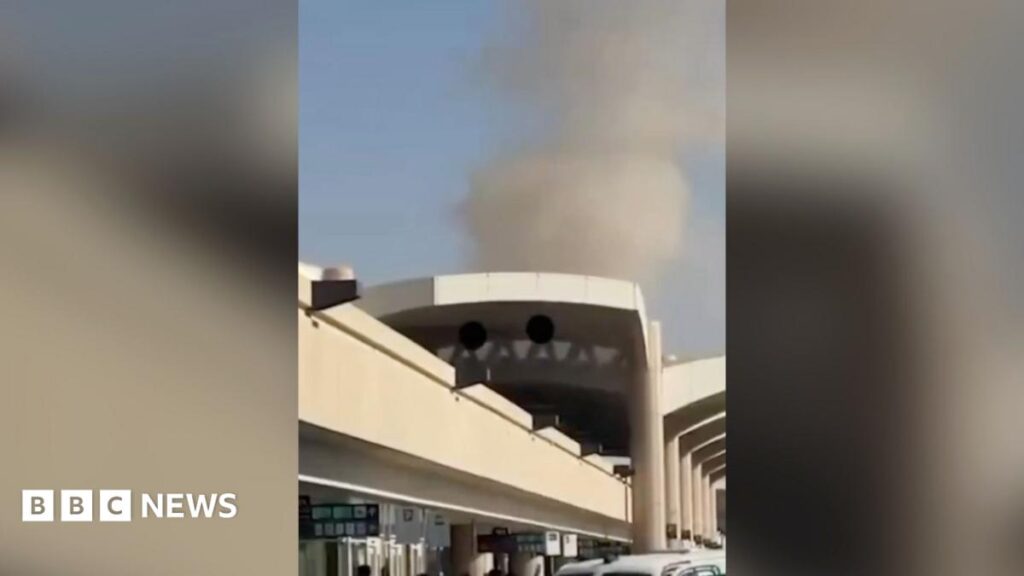
On Saturday night, Houthi forces launched a coordinated missile barrage aimed at King Khalid International Airport, the gateway for most international flights in and out of Riyadh. According to Saudi state media, the first missile struck the airport’s cargo terminal, igniting a fire that damaged several warehouses and halted freight operations for several hours. The second missile, which arrived minutes later, hit a passenger boarding gate, causing a partial collapse of the structure and injuring dozens of travelers.
A second attack followed just 24 hours later, this time targeting the runway’s navigation system. The missile, described by the Saudi Ministry of Defense as a "ballistic projectile," disabled the instrument landing system and forced all inbound and outbound flights to be diverted to secondary airports such as Dammam and Jeddah. The Ministry confirmed that 13 people were killed – including three airport staff and ten passengers – and that more than 200 were treated for injuries ranging from shrapnel wounds to smoke inhalation.
The Houthi movement claimed responsibility for both strikes in a short video posted on their official Telegram channel, stating that the attacks were a direct response to Saudi Arabia’s "military support for Israel" and its continued blockade of Yemeni ports. While the group did not provide technical details, independent analysts at the Middle East Institute suggest that the weapons used were likely a mix of domestically modified ballistic missiles and Iranian‑supplied drones, both of which have become more reliable over the past year.
Why the strikes matter for Africa and the wider world
Saudi Arabia supplies roughly 30 % of the world’s oil, and its export routes pass close to the Red Sea – a waterway that handles about 10 % of global maritime trade, including a significant share of African oil and grain shipments. The disruption of Riyadh’s main airport has already sent ripples through the oil market, with Brent crude climbing 2.3 % on the day of the second strike, according to Bloomberg. African oil‑importing nations such as Nigeria, Ghana and Kenya watch Saudi price movements closely, as even modest fluctuations can affect national budgets and fuel subsidies.
Beyond commodities, the airport is a critical hub for African pilgrims heading to Mecca for the Hajj. In 2025, more than 1.2 million pilgrims from the continent travelled through Riyadh, many of them using King Khalid International as a transit point. The temporary closure forced travel agencies to reroute flights to Jeddah, inflating ticket prices by an estimated 15‑20 % and jeopardising the ability of low‑income pilgrims to secure a spot. For diaspora workers in Saudi Arabia – especially those from Egypt, Sudan and Ethiopia – the attacks raise fresh safety concerns and could influence future migration decisions.
The Red Sea shipping corridor, which links the Suez Canal to the Gulf of Aden, is another African lifeline. With Houthi missile launches now reaching further inland, shipping firms have begun to reconsider routing decisions, adding extra security costs that are ultimately passed on to importers in East Africa. Moreover, the attacks have revived fears of a broader escalation that could see the Houthis target other Gulf ports, a scenario that would threaten the already fragile supply chain for African agricultural exporters relying on Gulf markets.
What comes next – Saudi response and African stakes
Saudi Arabia has vowed a "decisive" retaliation, pledging to intensify air strikes on Houthi‑controlled areas in northern Yemen and to boost its missile‑defence network along the Red Sea coast. The kingdom is also in talks with the United States and United Arab Emirates to secure additional Patriot and THAAD batteries, a move that could reshape the regional security architecture. Analysts at the Carnegie Middle East Center warn that an expanded Saudi campaign could exacerbate humanitarian suffering in Yemen, potentially prompting a wave of refugees into neighboring African states such as Djibouti and Somalia.
For African governments, the key takeaway is the need to diversify energy and logistics dependencies. Nigeria’s Ministry of Petroleum recently announced plans to increase domestic refining capacity, a strategic pivot designed to reduce reliance on Saudi crude in the event of prolonged price volatility. Meanwhile, Kenya’s port authority is accelerating its partnership with the Red Sea Development Company to create an alternative inland logistics hub that bypasses the most exposed maritime routes.
Civil society groups across the continent are also monitoring the human‑rights dimension. The attacks killed civilians, including women and children, sparking condemnation from Amnesty International and the African Union’s Human Rights Commission. If the conflict escalates further, African diplomatic missions in Riyadh may push for a renewed UN‑mediated ceasefire, positioning the continent as a stakeholder in a conflict that has traditionally been framed as a Middle‑East issue.
Quick Answers
How many people were killed in the second Houthi strike on Riyadh airport?
Thirteen people, including three airport staff and ten passengers, were confirmed dead after the second attack.
Why could the Riyadh airport attacks affect African pilgrims?
The airport handles most flights for African pilgrims traveling to Mecca; its closure forced costly rerouting, threatening many low‑income pilgrims' ability to attend the Hajj.
What impact might the strikes have on African oil‑importing countries?
Disruption to Saudi oil exports pushed Brent crude up about 2 % and could raise fuel costs for African nations that rely heavily on Saudi petroleum.
Source: www.bbc.co.uk




💬 Comments 0