Serbian student protests intensify ahead of 2026 vote, challenging Aleksandar Vučić’s 12‑year rule
The Context: Aleksandar Vučić’s Tenure and Democratic Backsliding
Since first becoming prime minister in 2014 and later president in 2017, Aleksandar Vučić has consolidated power through a mix of media control, electoral law changes and patronage networks. International observers have repeatedly flagged Serbia’s democratic deficit, noting a shrinking space for opposition parties and civil society. By 2026, Vučić’s Serbian Progressive Party (SNS) has dominated parliament for twelve consecutive years, turning the country into what analysts at Freedom House describe as a “hybrid regime” rather than a full democracy.
Economic stagnation and persistent corruption have eroded public confidence, especially among young people who entered university after the 2008 global financial crisis. While the government touts infrastructure projects and EU‑integration talks, unemployment among graduates hovers above 25 percent, and many feel that the political elite benefits from foreign investment without delivering tangible improvements to daily life.
From Campus to Streets: The Evolution of Serbia’s Student Movement
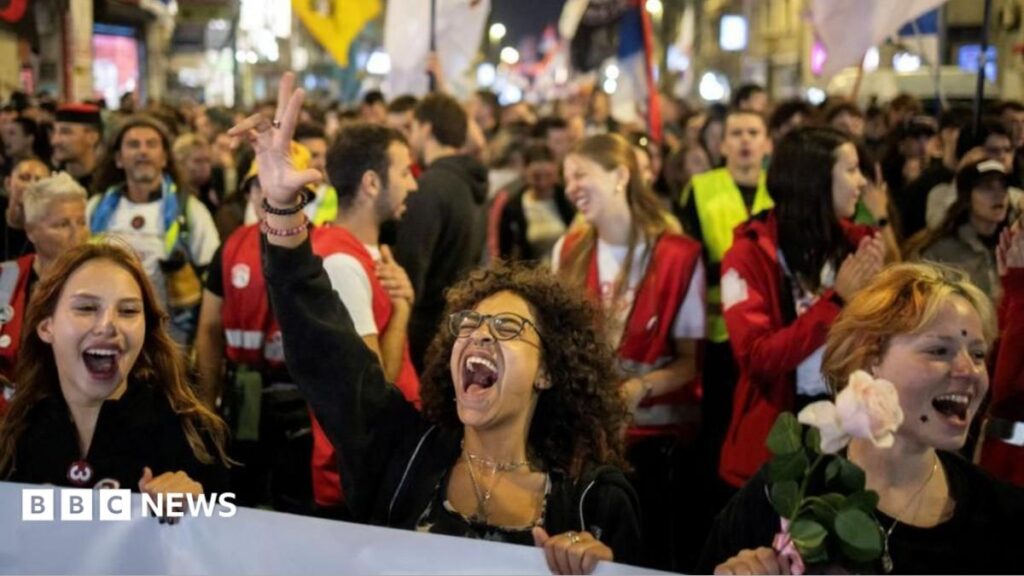
What began in late 2024 as a modest sit‑in at the University of Belgrade’s Faculty of Law quickly spread to dozens of campuses across the country. Students demanded transparent university funding, an end to political interference in academic appointments, and a broader crackdown on the “brain‑drain” that sees many graduates leaving for Western Europe. By spring 2025, the protests adopted a more overtly political tone, chanting slogans such as “Vučić must go” and calling for free, fair elections.
The movement’s organizational structure is notable for its reliance on digital tools. A Telegram channel, created by a group of activist students, coordinates flash‑mob demonstrations, shares legal advice, and livestreams police confrontations. Unlike earlier Serbian protests that were led by labor unions or opposition parties, this wave is largely youth‑driven, with a gender‑balanced leadership that includes several prominent female activists who have become symbols of the cause.
Why the Protests Could Reshape Serbian Politics
The timing of the demonstrations is crucial. Serbia’s parliamentary elections are set for 27 October 2026, and early polls suggest that the SNS’s vote share could dip below the 45‑percent threshold needed for an outright majority. If the student movement sustains its momentum, it may push undecided voters—especially first‑time voters under 30—toward opposition coalitions that promise institutional reform and a reset of Serbia’s EU accession timeline.
Beyond the numbers, the protests have forced the ruling party to confront a legitimacy crisis. Vučić’s usual strategy of delegitimising dissent as “foreign‑instigated” is losing traction, as the movement frames its grievances in purely domestic terms: education, jobs, and democratic rights. International actors, including the EU delegation in Belgrade, have begun to reference the protests in their diplomatic dialogues, signalling that the outcome of the vote could affect Serbia’s future integration prospects.
African Parallels: Youth‑Led Change in Nigeria, Kenya and Beyond
Serbian students are not alone in using campus activism as a springboard for broader political change. In Nigeria, the #EndSARS protests of 2020 evolved into a sustained demand for electoral reform, while Kenyan university rallies in 2022 helped catalyse a coalition that eventually unseated the incumbent president in the 2023 election. Observers note a common thread: digitally savvy youth leveraging social media to bypass state‑controlled outlets and to build trans‑national solidarity networks.
For the African diaspora in Europe, the Serbian protests resonate because they echo similar frustrations about corruption, brain‑drain, and limited political agency. Nigerian and Ghanaian students studying in Belgrade have joined the marches, bringing their own experiences of state‑repression and adding a multicultural dimension to the movement. This cross‑border participation underscores how youth‑led dissent is increasingly a global phenomenon, with lessons that African activists can adapt to their own contexts.
The Road Ahead: Election Scenarios and Regional Implications
If the SNS falls short of a majority, Serbia could see a coalition government that includes the centrist Freedom and Justice Party, the left‑leaning Party of Freedom and Justice, and a new green‑democratic bloc that emerged from the student protests. Such a configuration would likely prioritize judicial independence, media pluralism, and a more transparent education budget—key demands of the demonstrators. However, coalition talks could be protracted, and the risk of a caretaker government remains if parties cannot agree on a power‑sharing formula.
Regionally, a shift away from Vučić could recalibrate Balkan politics. Serbia’s relationship with Russia, already strained by sanctions, might soften if a more pro‑EU coalition takes power. Conversely, neighboring Bosnia and Herzegovina could experience a spill‑over of student activism, especially in the Republika Srpska entity where university students have voiced similar grievances. For the EU, a credible opposition victory would provide a tangible example of democratic renewal in a candidate country, potentially accelerating accession talks that have stalled for years.
Quick Answers
When are Serbia's next parliamentary elections scheduled?
Serbia's parliamentary elections are set for Sunday, 27 October 2026.
What are the main demands of the Serbian student protest movement?
Students are calling for transparent university funding, an end to political interference in academia, reduced brain‑drain, and free, fair elections.
How could the protests affect Serbia’s EU accession process?
If the protests help bring a reform‑oriented coalition to power, the EU may view Serbia as a more credible candidate and could speed up accession negotiations.
Source: www.bbc.co.uk


💬 Comments 0