Somalia Repels Armed Assault on Baidoa in South West State – June 2026 Security Victory
Background
Baidoa, the administrative capital of Somalia’s South West State, has long been a flashpoint for political friction between the federal government and the region’s local leaders. The state, established in 2016, has pursued greater autonomy, often clashing with Mogadishu over resource allocation and governance structures. Over the past months, tensions escalated as the state’s chief minister publicly called for a referendum on independence, a move the federal authorities deemed unconstitutional.
The region is also a contested arena for militant groups, most notably Al Shabaab, which has exploited the political vacuum to regroup and launch sporadic attacks. In 2023, the group captured several villages near Baidoa, prompting a military response from the Somali National Army (SNA) and the African Union Mission in Somalia (AMISOM). These clashes have heightened insecurity for civilians and disrupted humanitarian aid flows.
Amid this backdrop, local militias loyal to the state’s leadership have been accused of aligning with insurgent factions, further complicating the security landscape. The federal government has repeatedly deployed federal forces to Baidoa to curb the influence of these militias, but the region’s rugged terrain and limited infrastructure have hampered sustained control.
The Assault
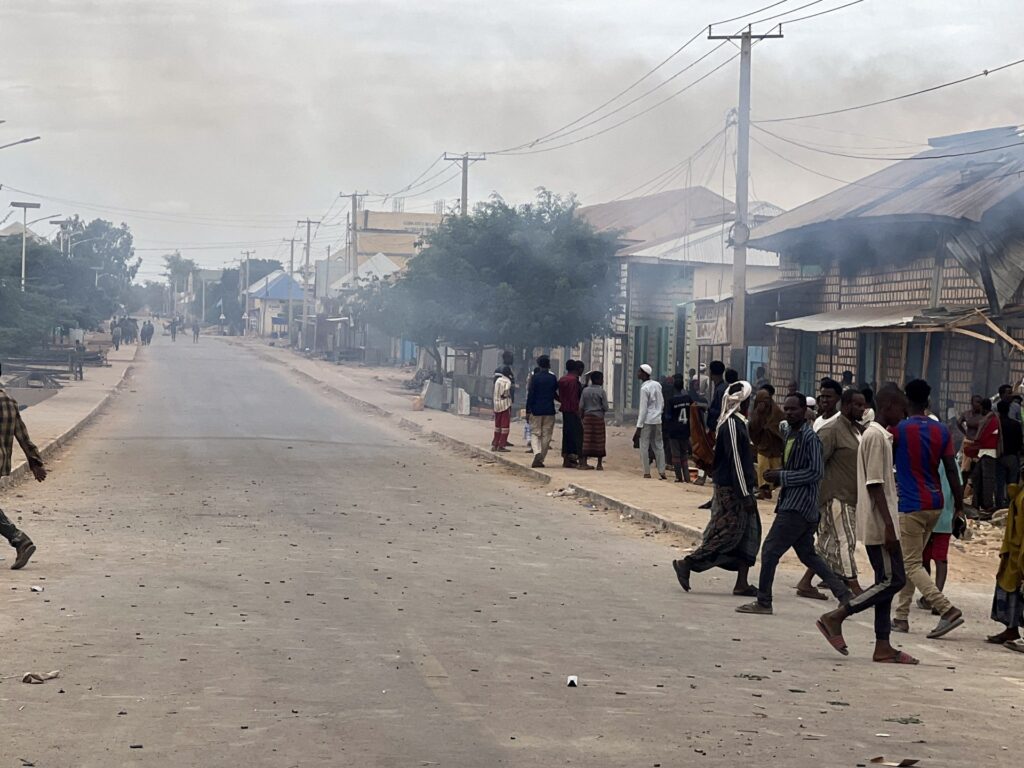
On the night of 27 June 2026, a coordinated assault launched from the outskirts of Baidoa targeted the city’s main police compound and several government offices. Witnesses reported multiple explosions followed by sustained gunfire, with militants attempting to breach the compound’s perimeter. The attack, which lasted roughly 45 minutes, ended when federal forces, reinforced by AMISOM troops, repelled the attackers and secured the area.
Security footage captured by local radio stations shows armed men, many wearing Al Shabaab insignia, attempting to enter the compound through a breached gate. The defenders, equipped with rifles and armored vehicles, managed to cut off the attackers’ escape routes, forcing them to retreat toward the surrounding hills. The assault resulted in at least five casualties among the attackers, while no civilians were reported injured.
Official statements from the Somali Ministry of Interior confirm that the assault was premeditated and linked to the broader political dispute over the South West State’s autonomy. The ministry also warned of potential reprisals, urging residents to remain vigilant and cooperate with security forces.
Why It Matters
The successful defense of Baidoa signals a pivotal moment for Somalia’s fragile federal system. By thwarting an attack that aimed to undermine the city’s governance, federal forces have demonstrated operational readiness in a region historically prone to insurgent control. This victory may deter future militant incursions and reassure the federal government that it can project power beyond the capital.
Moreover, the incident underscores the growing entanglement between political disputes and security threats. The South West State’s push for a referendum has inadvertently provided a rallying point for insurgent groups seeking to exploit the chaos. A hardening of security measures could either curb insurgent influence or push them deeper into the countryside, potentially escalating violence.
For the humanitarian sector, the incident offers a brief respite in an area where aid agencies struggle to deliver services amid insecurity. The protection of key infrastructure—such as police compounds and administrative buildings—ensures that relief operations can continue with less risk of disruption. However, the underlying political tensions remain unresolved, posing a long-term threat to stability.
Reactions
Local officials in Baidoa lauded the federal forces for their “swift and decisive action,” calling the defense a testament to the government’s commitment to national unity. The state’s chief minister, however, condemned the attack as a “political weapon” and vowed to pursue a referendum in a “transparent and democratic manner.”
International observers, including the United Nations Assistance Mission in Somalia (UNSOM), have expressed cautious optimism, noting that the incident could serve as a catalyst for renewed dialogue between the federal and state governments. UNSOM’s spokesperson highlighted the need for confidence‑building measures to prevent future escalations.
Diaspora communities in Nairobi and London have taken to social media to discuss the implications for regional security. Many diaspora activists call for increased support for peacebuilding initiatives that address the root causes of federal-state friction, while others warn that the incident could embolden militant groups to intensify their operations.
What’s Next
In the immediate aftermath, the federal government has announced a temporary deployment of additional troops to Baidoa and surrounding districts, coupled with intelligence‑gathering missions aimed at identifying potential insurgent cells. The Ministry of Interior is also planning a joint operation with local police to secure key transportation routes that the attackers had targeted.
Diplomatic channels have been reactivated to negotiate a settlement between the federal government and the South West State’s leadership. A series of talks is slated to begin next week in Mogadishu, with the aim of outlining a framework for a referendum that satisfies both parties’ concerns about sovereignty and resource sharing.
From a security perspective, the Somali Armed Forces have pledged to increase patrols in the hills surrounding Baidoa, a strategic move that could prevent insurgents from establishing safe havens. The African Union Mission in Somalia (AMISOM) has also committed to enhancing its presence in the region, providing both logistical support and counter‑insurgency training for local forces.
Quick Answers
What was the main objective of the assault on Baidoa?
The attackers aimed to breach the city’s main police compound and government offices, likely to destabilise the local administration and exploit political tensions.
How many attackers were neutralised?
Reports indicate that at least five attackers were killed during the confrontation, with no civilian casualties.
What are the next steps for the Somali federal government?
The government plans to deploy additional troops, conduct intelligence operations, and re‑initiate talks with South West State leaders to address the autonomy dispute.
Source: www.aljazeera.com




💬 Comments 0