St Petersburg oil facilities attack kills one, damages Yandex data centre, October 2026
Background: Russia’s oil hub and digital footprint in St Petersburg
St Petersburg, Russia’s second‑largest city, hosts a cluster of oil processing plants that feed the country’s western pipeline network. The facilities, many of them built during the Soviet era, are strategically important because they allow Russia to ship refined products to Europe without routing through the Baltic Sea, a route that has become riskier under sanctions. In recent years the city has also become a centre for Russia’s tech sector, housing a data centre that stores the bulk of traffic for VKontakte, the nation’s home‑grown social network often described as the Russian Facebook.
The oil complex is owned largely by state‑linked companies such as Rosneft and Lukoil, which have been under pressure to keep production steady despite Western export bans. Meanwhile, the VKontakte data centre, operated by the state‑controlled telecom firm Rostelecom, is a critical node for millions of users, including a sizable diaspora of African students and workers who rely on the platform to stay in touch with families back home.
Because of its dual role in energy and digital communications, any disruption in St Petersburg reverberates far beyond the city limits. Analysts have long warned that the concentration of vital infrastructure makes the region a tempting target for groups looking to send political messages or to extract leverage in the ongoing geopolitical tug‑of‑war.
The overnight strike: what happened and the immediate toll
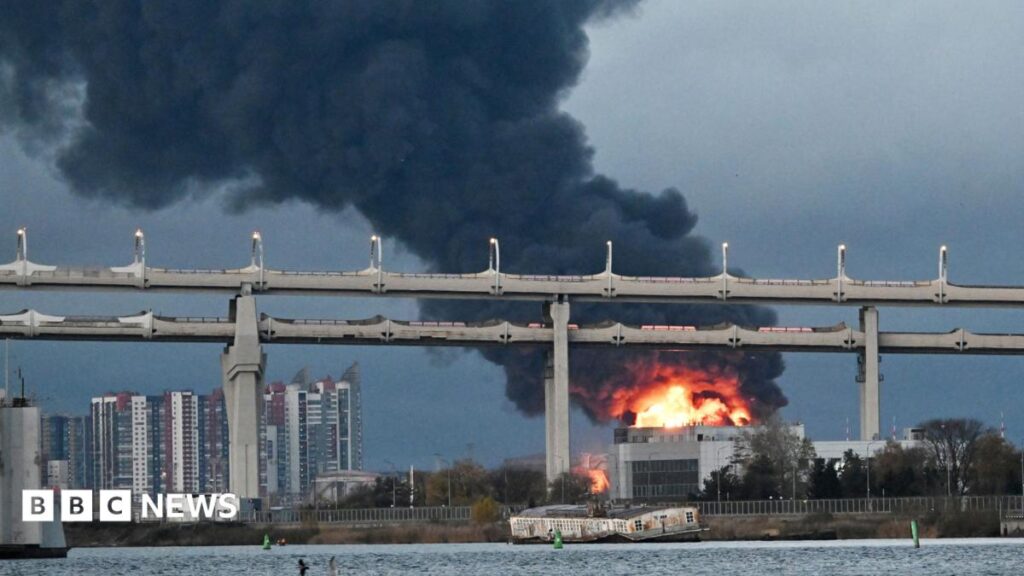
In the early hours of October 19, 2026, a coordinated attack struck the oil processing zone on the outskirts of St Petersburg. Explosive devices, reportedly delivered by unmanned aerial systems, hit two refinery units and a storage depot, igniting fires that took several hours for emergency crews to contain. Russian officials confirmed that one person, a night‑shift technician, was killed and several others injured, though the exact number of casualties remains under review.
At the same time, a separate blast damaged the roof of the VKontakte data centre located a few kilometres away. Preliminary reports indicate that the impact knocked out power to a portion of the server farm, temporarily disabling access for users in the western part of the country. The outage was restored within twelve hours, but the incident raised concerns about the resilience of Russia’s digital infrastructure under attack.
Authorities have not yet identified the perpetrators. The Federal Security Service (FSB) released a brief statement suggesting “a hostile act aimed at undermining Russia’s energy security and information sovereignty,” but refused to name any group. Speculation in Russian media ranges from domestic dissident militias to foreign special‑operations units, though no conclusive evidence has been presented.
Why the attack matters for global oil markets and African economies
Russia is the world’s second‑largest oil exporter, and any interruption in its refining capacity can shift global supply dynamics. The St Petersburg facilities process roughly 3 million barrels of crude per day, a modest share of total output but enough to influence spot prices when combined with other disruptions in the country’s western pipeline network. In the days following the strike, Brent crude rose by 1.2 %, a movement that rippled through African oil‑exporting nations such as Nigeria, Angola and Equatorial Guinea, whose revenues are tightly linked to global price trends.
For African economies, higher oil prices translate into larger foreign‑exchange earnings, but they also raise the cost of imported fuel and diesel, which can strain transport budgets and inflation targets. Nigeria’s central bank, for instance, has warned that sustained price spikes could erode the modest gains it achieved after the 2024 oil price rally. Conversely, oil‑producing countries that have diversified into petrochemicals may see a short‑term boost as refineries elsewhere scramble to secure feedstock.
Beyond the immediate price effect, the attack underscores a growing vulnerability: the intertwining of energy and digital infrastructure. If similar strikes were to target other Russian oil hubs, the knock‑on effect could be amplified by cyber‑enabled disruptions that affect trading platforms and logistics software used by African oil firms. Investors are therefore watching the incident as a possible harbinger of a more fragmented, security‑risk‑laden energy market.
Digital fallout: impact on VKontakte and African users
VKontakte remains the primary social network for many Russian‑speaking Africans, especially students in Moscow and St Petersburg who use the platform to share news, find housing, and keep in touch with families back home. The data‑centre outage, while brief, temporarily cut off access for an estimated 200,000 African‑origin accounts, according to a community poll posted on the diaspora forum AfriLink. Users reported difficulty receiving verification codes for banking apps, a problem that could have serious financial implications in a region where mobile money is often linked to social media authentication.
The incident also raises questions about data sovereignty for African users whose personal information is stored on Russian servers. Human‑rights groups have long warned that the Russian government could exploit such data for surveillance, especially during periods of political unrest. An attack that damages the physical infrastructure may prompt a wave of migration toward alternative platforms, potentially accelerating the adoption of African‑run social networks like Kenya’s Mzalendo or Nigeria’s Nairaland.
From a broader perspective, the strike illustrates how geopolitical conflicts can spill over into the digital lives of diaspora communities. As Western sanctions push Russia to deepen ties with Asian tech firms, African developers who partner with Russian companies may find their supply chains disrupted, affecting everything from app localisation to payment gateway integration.
Reactions, security implications and what comes next
The Russian government has pledged a swift investigation and warned of “harsh retaliation” against anyone responsible. Kremlin spokesperson Dmitry Peskov called the attack “an act of terrorism aimed at destabilising our economy” and hinted at possible counter‑measures in the form of heightened security at other oil sites. International observers, including the European Union’s energy watch, have called for a transparent inquiry to determine whether the strike violates the Geneva Conventions on the protection of civilian infrastructure.
Security experts see the event as part of a broader trend where non‑state actors use low‑cost drones and improvised explosives to target high‑value assets. A 2025 report by the International Institute for Strategic Studies warned that “urban energy hubs are increasingly exposed to asymmetric threats,” a warning now echoed in Russian defence circles. The report recommended greater integration of cyber‑defence with physical security, a recommendation that could reshape how African oil companies protect their own facilities against similar tactics.
Looking ahead, the incident may accelerate Russia’s push to decentralise its refining capacity, moving more processing to the east where it can rely on Chinese and Indian markets. For African exporters, this could mean a shift in the balance of trade, with Russian oil potentially competing more directly with West African crude in Asian markets. Policymakers in Lagos, Luanda and Brazzaville will need to monitor how these geopolitical shifts affect long‑term contracts and investment pipelines.
Quick Answers
Who was responsible for the St Petersburg oil facility attack?
No group has been officially identified; Russian authorities suspect a hostile act but have not named a perpetrator.
How might the attack affect oil prices in Africa?
Disruption to Russian refining can push global crude prices higher, which raises export revenues for African oil producers but also increases fuel costs domestically.
Did the VKontakte data centre outage impact African users?
Yes, the brief outage temporarily blocked access for many African‑origin accounts, affecting communication and services that rely on VKontakte authentication.
Source: www.bbc.co.uk




💬 Comments 0