Sudan army drones kill over 300 at funeral and fuel market in Khartoum, 2026
Background: A war that has already blurred the line between combatants and civilians
Since the power struggle between Sudan’s regular army and the Rapid Support Forces (RSF) erupted in April 2023, the country has descended into a conflict that routinely targets civilian infrastructure. The fighting has stretched from the capital Khartoum to the far‑flung regions of Darfur, causing massive displacement and a humanitarian crisis that the United Nations has described as “one of the world’s worst”.
Both sides have increasingly relied on air power to gain tactical advantage. The Sudanese army, backed by a modest fleet of Russian‑made drones, has used them to strike RSF‑held positions, while the RSF has turned to Saudi‑supplied UAVs for reconnaissance and limited strikes. This arms race in the skies has already resulted in several civilian casualties, but the latest attack marks a stark escalation.
The attack: Drones hit a funeral convoy and a fuel market, killing more than 300
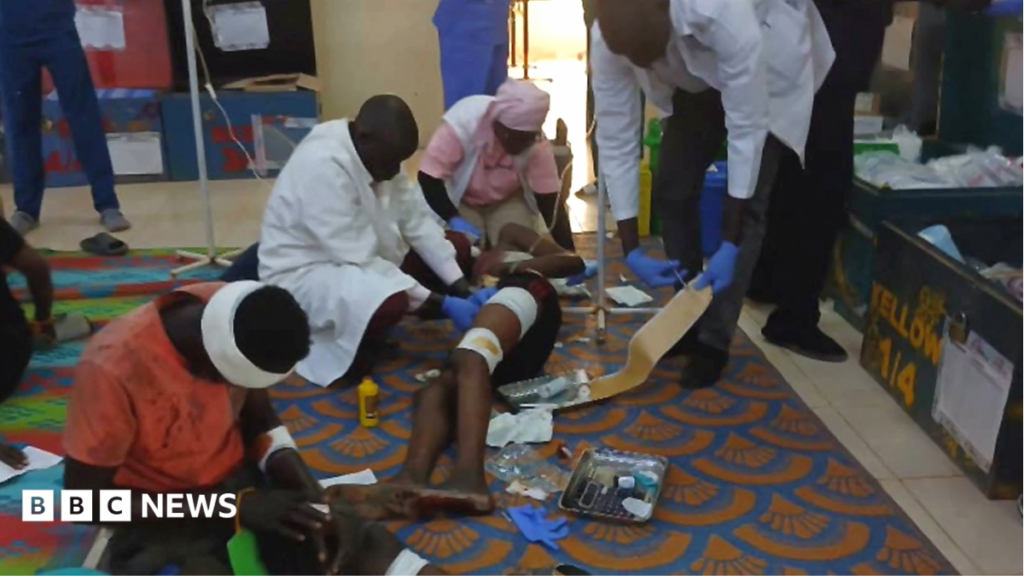
On October 18, 2026, a convoy of trucks carrying mourners to a funeral in the Al‑Jazeera district of Khartoum was struck by a series of drone‑launched munitions, according to multiple Sudanese eyewitnesses. The same day, a nearby market known for selling fuel to RSF‑controlled checkpoints was also hit, igniting a blaze that quickly engulfed surrounding stalls.
Local sources say the combined death toll exceeded 300, with many more injured. The Sudanese army has not officially confirmed responsibility, but the pattern of the strikes—precision hits on a moving convoy and a market that supplies the RSF—matches its known drone tactics. Humanitarian groups are warning that the loss of life could be the highest single‑day civilian casualty figure since the war began.
Why it matters: A new level of terror for civilians and a possible war‑crime trigger
Targeting a funeral procession violates long‑standing norms of international humanitarian law that protect mourners and other non‑combatants. If investigations confirm that the army deliberately used drones to strike a gathering of civilians, the incident could be classified as a war crime, prompting calls for accountability from the International Criminal Court and human‑rights NGOs.
Beyond the legal dimension, the attack deepens the climate of fear that already hampers aid delivery. Humanitarian corridors that relied on informal agreements between the army and the RSF are now under scrutiny, and aid agencies fear that further aerial strikes could make the already‑dangerous task of reaching displaced families impossible.
Regional ripple effects: Refugee flows, market disruptions, and diaspora concern
The sudden surge in casualties is expected to push more Sudanese families across the porous borders with Chad, South Sudan and Ethiopia. In the past month, UNHCR reported a 22 % increase in registrations at refugee camps in eastern Chad, a trend that could strain already‑overcrowded facilities and raise security concerns for host communities.
The fuel market that was hit supplies not only RSF checkpoints but also informal traders who move petroleum products to neighboring countries. Disruption of this supply chain could cause a spike in fuel prices across the Horn of Africa, affecting transport costs for goods ranging from food to medical supplies. African entrepreneurs who depend on cross‑border trade are already warning of a “price shock” that may ripple through regional markets.
Drone warfare in Africa: A technology‑driven escalation with global ramifications
Sudan’s reliance on drones reflects a broader trend across the continent, where state and non‑state actors are acquiring unmanned aerial systems from a mix of Russian, Chinese, and Middle‑Eastern suppliers. From the Sahel’s jihadist groups to Ethiopia’s internal conflicts, UAVs have become a low‑cost way to project power and intimidate civilian populations.
The Khartoum strike underscores the difficulty of regulating this technology. International arms‑control regimes have struggled to keep pace with the proliferation of cheap, commercially available drones that can be retrofitted with explosives. Experts say the lack of a clear legal framework for drone use in internal conflicts creates a gray zone where accountability is hard to enforce.
What’s next: International pressure, possible investigations and the role of the Sudanese diaspora
In the wake of the attack, the United Nations has called for an urgent independent investigation, while the African Union’s Peace and Security Council is slated to convene an emergency session on October 25. Western governments have issued statements condemning the use of drones against civilians, but concrete diplomatic leverage remains limited.
Sudanese diaspora groups in Europe and North America are mobilising protests and social‑media campaigns demanding justice for the victims. These communities, which send an estimated $2.4 billion in remittances each year, are also lobbying host‑country policymakers to pressure the Sudanese government into a ceasefire. Their activism could shape the next wave of international engagement, especially if they succeed in linking humanitarian aid to accountability measures.
Quick Answers
Who carried out the drone strike that killed over 300 people in Khartoum?
Local sources and eyewitnesses say the Sudanese army used its Russian‑made drones, though the army has not officially confirmed the attack.
Why is the funeral convoy considered a war‑crime target?
International humanitarian law protects mourners and civilian gatherings; deliberately striking a funeral violates those protections and may constitute a war crime.
How might the attack affect Sudanese refugees in neighboring countries?
The heightened violence is likely to increase refugee flows into Chad, South Sudan and Ethiopia, putting pressure on camps and host‑community resources.
Source: www.bbc.co.uk



💬 Comments 0