Tinubu promises to shift Nigeria’s capital to Lagos if re‑elected, says Primate Elijah Ayodele, 2027
A turbulent road to Abuja and why Lagos still haunts the imagination
When General Murtala Muhammed ordered the creation of a new federal capital in 1976, the decision was meant to defuse the ethnic rivalry that had long plagued the country. Abuja, a purpose‑built city in the centre of the nation, officially replaced Lagos in 1991 after a costly, decade‑long construction project. The move was celebrated as a step toward national unity, yet the economic magnetism of Lagos never waned.
Lagos remains Nigeria’s commercial powerhouse, contributing roughly 30 % of the nation’s GDP despite occupying less than 5 % of the land area. Its ports, financial districts and tech hubs draw investors from across Africa and the diaspora. The lingering perception that power and wealth are still concentrated in the south fuels occasional calls to reverse the Abuja experiment, especially from political figures who view Lagos as a natural seat of authority.
Primate Elijah Ayodele’s unexpected entry into the 2027 campaign
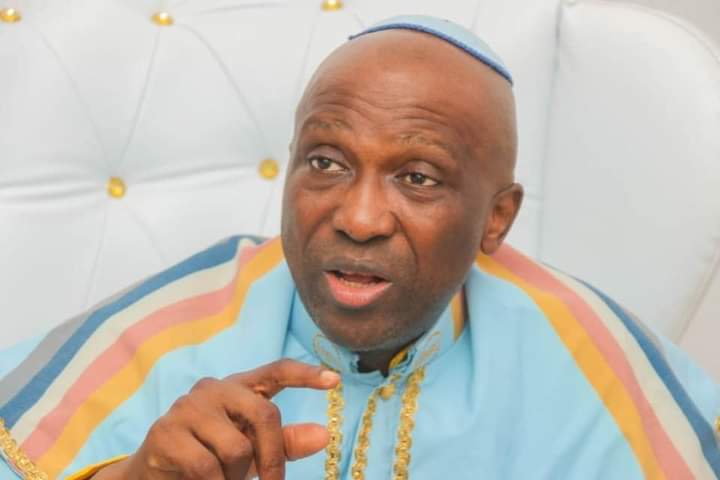
Elijah Ayodele, the charismatic head of the INRI Evangelical Spiritual Church, posted a short video on X last week proclaiming that President Bola Tinubu will relocate the capital to Lagos if declared the winner of the 2027 elections. Ayodele’s church, with an estimated 2 million followers across Nigeria and the diaspora, has increasingly positioned itself as a political king‑maker, often endorsing candidates who promise economic uplift for its congregants.
The priest’s statement is not a policy paper; it is a sermon‑style promise that blends religious authority with political ambition. By invoking the capital‑relocation idea, Ayodele taps into a long‑standing narrative of Lagos as the true heart of the nation, while also signalling to his base that Tinubu’s re‑election would bring tangible, symbolic change.
Why a capital move matters beyond the ceremonial
Relocating a capital is never just a cartographic exercise. It reshapes fiscal allocations, redirects infrastructure spending, and can alter the balance of power among Nigeria’s six geopolitical zones. Moving the seat of government back to Lagos would likely channel federal budgets toward road upgrades, housing projects and security installations in the southwest, potentially widening the development gap with the north‑central and northern regions.
On the other hand, proponents argue that Lagos already hosts the bulk of diplomatic missions, multinational headquarters and media houses. Consolidating the executive, legislative and judicial branches there could streamline decision‑making, reduce bureaucratic duplication, and cut travel costs for officials who currently shuttle between Abuja and Lagos for meetings.
Capital‑relocation fever across Africa: a pattern of symbolism and pragmatism
Nigeria is not alone in wrestling with the idea of moving its capital. Tanzania shifted from Dar es Salaam to Dodoma in 1996, citing the need for a more central location and lower living costs for civil servants. Ethiopia’s plans to develop a new administrative city, ‘Addis Ababa II’, echo similar motivations of de‑congestion and regional equity. Each case reveals a mix of political symbolism—showing a break from colonial or elite pasts—and practical concerns such as land scarcity and climate resilience.
What distinguishes the current Nigerian debate is its timing. Tinubu’s re‑election bid coincides with a surge in Lagos‑centric tech investment, a booming creative economy, and a diaspora that increasingly channels remittances back to the city. The capital‑relocation discourse therefore dovetails with a broader narrative of Lagos as Africa’s next “Silicon Savannah” hub, a narrative that foreign investors and African diaspora entrepreneurs watch closely.
Stakeholder reactions: from political rivals to the business community
Opposition parties have been swift to label the proposal a “populist stunt” that would alienate voters in the north and exacerbate regional tensions. The All Progressives Grand Alliance (APGA) issued a statement warning that any unilateral decision to move the capital would require constitutional amendment and a national referendum, processes that could take years.
Conversely, several Lagos‑based business chambers, including the Lagos Chamber of Commerce and Industry, welcomed the idea as a potential catalyst for further investment in infrastructure. They argue that a federal presence would boost demand for commercial real estate, expand public‑transport networks, and create high‑skill jobs for the city’s youthful workforce.
What lies ahead: legal hurdles, electoral calculus and possible compromises
Even if Tinubu wins a second term, the constitutional route to moving the capital is steep. Section 10 of the 1999 Constitution designates Abuja as the Federal Capital Territory, and any amendment must secure a two‑thirds majority in both houses of the National Assembly, plus approval by a national referendum. Past attempts to alter the capital’s status have stalled amid concerns over national cohesion.
Political analysts suggest that Tinubu may use the relocation promise as a bargaining chip during the campaign, rather than as a concrete policy agenda. A more plausible outcome could be a “dual‑capital” model, where key ministries remain in Abuja while certain agencies and diplomatic missions migrate to Lagos. Such a compromise would appease Lagos‑based voters without triggering the full constitutional overhaul required for a complete move.
Quick Answers
Who is Primate Elijah Ayodele?
Elijah Ayodele is the head of the INRI Evangelical Spiritual Church, a rapidly growing Nigerian Pentecostal denomination with an estimated two million followers.
Has Nigeria ever moved its capital before?
Yes, Nigeria moved its capital from Lagos to Abuja in 1991 after a decade‑long construction project intended to create a more centrally located seat of government.
What would be the impact of shifting the capital back to Lagos?
A move would likely redirect federal spending to Lagos, boost infrastructure and real‑estate development there, but could also deepen regional inequalities and require a constitutional amendment.
Source: dailypost.ng




💬 Comments 0