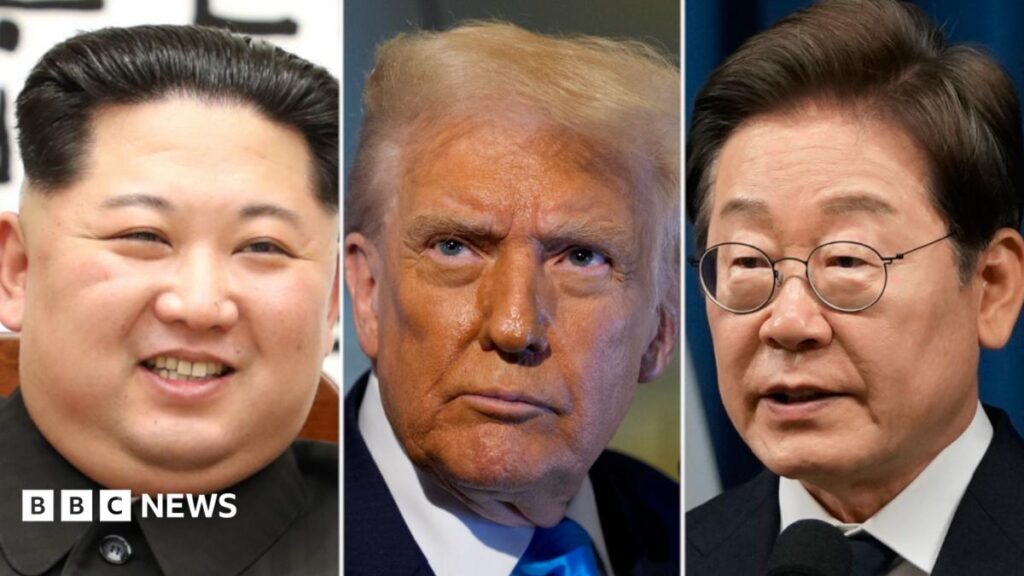
Trump announces US will cut joint drills with South Korea in 2026, citing Kim Jong Un ties
Background: Why the US‑South Korea drills matter
Since the Korean War armistice in 1953, the United States and South Korea have conducted annual combined military exercises, most notably the "Foal Eagle" and "Key Resolve" drills. These maneuvers are designed to test interoperability, deter North Korean aggression, and reassure allies across the Indo‑Pacific. Over the past two decades the scale of the exercises has grown, often involving thousands of troops, sophisticated air‑to‑air drills, and live‑fire artillery simulations.
North Korea has repeatedly condemned the drills as rehearsals for invasion, responding with missile launches and nuclear tests that raise tensions on the peninsula. The United States has defended the exercises as a cornerstone of its extended deterrence strategy, arguing that a credible joint force is essential to keep Pyongyang in check and to signal commitment to regional partners such as Japan and Australia.
What Trump said: A sudden shift in policy
During a press conference in Washington on August 17, 2026, former President Donald Trump announced that the United States would "substantially reduce" the size and frequency of its joint military exercises with South Korea. He framed the decision as a product of his "very good relationship" with North Korean leader Kim Jong Un, a claim that sparked immediate debate among security analysts.
Trump did not provide a specific timeline or a detailed roadmap for the reduction, only stating that future drills would be "scaled back to a level that respects the peace talks" and that the United States would continue to "protect our interests" through other means. The statement marked a sharp departure from the bipartisan consensus that has underpinned the US‑South Korea security pact for more than 70 years.
Why the announcement matters for regional security
A curtailment of joint drills could erode the operational readiness of the combined US‑ROK forces. Military experts warn that reduced training limits the ability to coordinate on complex scenarios such as cyber‑warfare, anti‑ship missile defense, and joint air‑space management—capabilities that have become increasingly vital as North Korea expands its missile range.
The move also sends a signal to Beijing, which has been watching the US‑Korea partnership closely. China views the drills as a containment tool, and a scaling‑back could be interpreted as a weakening of the US commitment to the Indo‑Pacific. In turn, this may embolden Chinese military planners to press harder on contested maritime zones, potentially affecting trade routes that pass through the South China Sea and the Indian Ocean.
For South Korea, the announcement raises concerns about the credibility of the US security umbrella. Seoul has been diversifying its defense portfolio, purchasing domestically produced K2 tanks and investing in indigenous missile systems, but it still relies heavily on US air‑defense assets and intelligence sharing. A perceived retreat could accelerate Seoul’s push for a more autonomous defense posture, which may alter the balance of power on the peninsula.
The African angle: How US‑Asia shifts ripple to the continent
Africa’s strategic calculus is increasingly linked to great‑power competition in Asia. The United States has used its partnership with South Korea to showcase advanced defence technology to African nations, offering joint training programmes and equipment sales that often come bundled with development aid. A reduction in US‑Korea drills could slow the flow of such technology transfers, affecting African militaries that have been modernising with Korean‑made K9 howitzers and T‑55 tanks.
Moreover, many African economies depend on stable shipping lanes that traverse the Indian Ocean. Any escalation of tensions between the US, China, and North Korea threatens the security of these sea routes, potentially raising freight costs for African exporters of commodities like copper, cocoa, and oil. The World Bank’s latest shipping index already shows a 3 % premium on container rates for routes passing the Strait of Malacca, a trend that could intensify if geopolitical friction rises.
The African diaspora in the United States also watches US foreign policy shifts closely, as they often influence domestic political narratives around immigration and security. A high‑profile figure like Trump invoking personal rapport with a North Korean dictator may reinforce anti‑immigrant rhetoric that targets Asian communities, including Korean and Chinese diasporas in cities such as Lagos, Nairobi, and Johannesburg.
What’s next: Possible scenarios and diplomatic pathways
If the Trump‑era policy sticks, the United States may replace large‑scale drills with smaller, “confidence‑building” exercises that focus on humanitarian assistance and disaster relief. Such a shift could open space for multilateral talks that include China, Japan, and Russia, but it also risks creating a security vacuum that North Korea could exploit.
Alternatively, the announcement could be a bargaining chip. Analysts suggest that Washington might be testing the limits of Pyongyang’s willingness to engage in dialogue, hoping that a perceived concession will coax North Korea back to the negotiation table for denuclearisation talks. In that scenario, South Korea would likely act as a mediator, balancing US pressure with its own security needs.
Congressional oversight is expected to intensify. Several members of the Senate Armed Services Committee have already requested a briefing on the operational impact of any drill reduction, citing the 2025 National Defense Authorization Act which mandates annual joint exercises. The outcome of those hearings could determine whether the policy remains a temporary political statement or becomes a lasting adjustment to US defence posture in East Asia.
Quick Answers
What did Trump say about US‑South Korea military drills?
Trump announced that the United States would substantially reduce joint military exercises with South Korea, citing his personal relationship with North Korean leader Kim Jong Un.
How could cutting drills affect African economies?
Reduced US‑Korea security cooperation may slow technology transfers to African militaries and raise shipping costs on key Indian Ocean routes that African exporters rely on.
What are the possible next steps after the announcement?
The US might replace large drills with smaller confidence‑building activities, or use the reduction as leverage to restart denuclearisation talks with North Korea, while Congress is expected to scrutinise the policy.
Source: www.bbc.co.uk




💬 Comments 0