Trump Board of Peace unveils $2.45 bn Gaza reconstruction plan at UNGA 2026
Background: The board, the war and the timing
The so‑called Board of Peace was formed in late 2024 by a coalition of former U.S. officials, business leaders and philanthropists who share former President Donald Trump’s belief that private‑sector initiatives can bypass what they see as stagnant diplomatic channels. While the board has no formal mandate from any government, it has attracted media attention because of its high‑profile backers and its willingness to announce multi‑billion‑dollar projects on the world stage.
The announcement came just weeks after the latest round of hostilities between Israel and Hamas, which left more than 30,000 Palestinians dead and large swathes of Gaza’s infrastructure in ruins. International donors have pledged billions for emergency relief, but long‑term rebuilding has stalled amid political deadlock at the United Nations and competing narratives about accountability and security.
The $2.45 bn plan: What it promises and where the money could come from
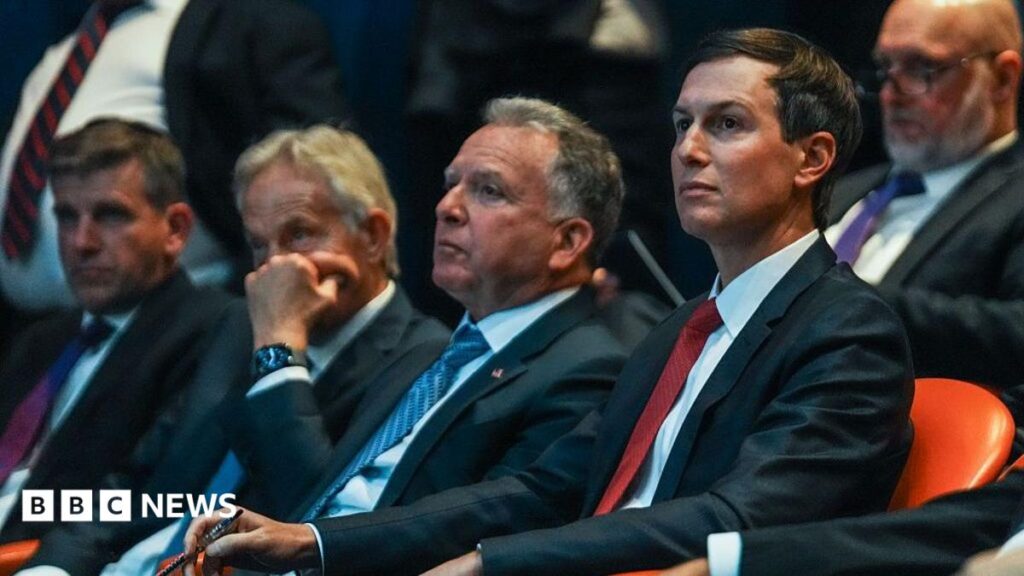
During a side meeting of the board at the United Nations General Assembly in New York, members outlined a $2.45 billion package aimed at restoring housing, water and power networks, and rebuilding schools and hospitals in Gaza. The proposal calls for a mix of private equity, philanthropic contributions and a limited line of credit from a consortium of U.S. banks that have expressed interest in “impact‑driven” investments in conflict zones.
According to the board’s spokesperson, the first tranche of $500 million would be released within six months, contingent on the establishment of a joint oversight committee that includes representatives from the United Nations, the International Committee of the Red Cross and a panel of independent engineers. The remaining funds would be disbursed in stages linked to measurable reconstruction milestones.
Why it matters: Shifts in U.S. foreign‑policy posture
If the plan materialises, it would signal a rare instance of a private‑sector‑led effort to tackle a core element of the Israeli‑Palestinian conflict. Traditionally, U.S. reconstruction assistance in the region has been channeled through official agencies such as USAID or the State Department, often subject to congressional approval and diplomatic conditioning. The board’s approach sidesteps those hurdles, suggesting a broader trend toward “philanthro‑capitalist” diplomacy that could reshape how American influence is exercised abroad.
Analysts at the Brookings Institution note that the initiative may also be a test case for future private‑sector interventions in other post‑conflict settings, from Sudan’s Darfur region to the Sahel’s displaced‑person camps. By positioning the board as a rapid‑response vehicle, its backers hope to demonstrate that private capital can move faster than bureaucratic aid mechanisms, a claim that will be scrutinised as the first projects break ground.
African and diaspora angles: A new arena for solidarity and scrutiny
African countries have historically played a vocal role in United Nations debates on Palestine, with South Africa, Nigeria and Kenya often leading calls for a two‑state solution. The Trump board’s announcement has sparked a fresh wave of commentary among African civil‑society groups, many of which see the plan as an opportunity to channel diaspora remittances into a tangible reconstruction effort. The Ghanaian‑based NGO “Palestine‑Africa Solidarity” has already begun fundraising for a parallel micro‑grant programme that would support small‑scale entrepreneurs in Gaza, linking the $2.45 bn fund to grassroots economic empowerment.
For the diaspora, especially the sizable Palestinian community across Europe and North America, the proposal offers a concrete target for lobbying. A spokesperson for the Palestinian American Community Center in Detroit told Reuters that “if the board can guarantee transparent oversight, we will mobilise our networks to match the private capital with community‑level funding.” Meanwhile, African investors watching the initiative may weigh the risk‑return profile of a reconstruction market that is still under an Israeli security umbrella.
Reactions and criticism: From praise to scepticism
Supporters, including several U.S. senators from the Republican caucus, hailed the plan as “a bold step that puts American ingenuity back to work for peace.” The Israeli Ministry of Foreign Affairs issued a brief statement saying that any reconstruction effort must be coordinated with Israeli security agencies, but did not object outright to the monetary amount. Hamas, however, dismissed the proposal as “a façade that will not address the underlying occupation,” according to a statement posted on its official channels.
Humanitarian organisations expressed caution. Oxfam’s senior Middle‑East analyst warned that “private‑sector funding can sometimes bypass accountability mechanisms that protect vulnerable populations.” The United Nations Relief and Works Agency (UNRWA) also called for a clear legal framework to ensure that reconstruction does not inadvertently reinforce settlement expansion, a concern that has haunted previous donor initiatives.
What’s next: Implementation hurdles and the road ahead
The board’s timeline is ambitious: ground‑breaking is slated for early 2027, provided that the joint oversight committee secures the necessary permits from both Israeli and Palestinian authorities. One of the biggest uncertainties is the willingness of banks to extend credit in a region where political risk premiums are among the highest globally. Sources say that the board is in preliminary talks with Goldman Sachs and JPMorgan to structure a “reconstruction bond” that would be underwritten by a pool of sovereign wealth funds from the Gulf states.
Beyond financing, the success of the plan will hinge on the political climate in the coming months. If the ceasefire holds and diplomatic negotiations resume, the board could become a model for public‑private partnership in post‑conflict settings. Conversely, a resurgence of violence could stall construction, erode donor confidence, and leave the $2.45 billion pledge as another unfulfilled promise in a long list of reconstruction pledges for Gaza.
Quick Answers
What is the Trump Board of Peace?
It is a coalition of former U.S. officials, business leaders and philanthropists formed in 2024 to launch private‑sector projects aimed at conflict‑zone reconstruction, most notably the $2.45 bn Gaza plan.
How much money has been pledged for Gaza’s reconstruction?
The board announced a $2.45 billion package, with an initial $500 million tranche expected within six months of the plan’s launch.
How could the reconstruction plan affect African humanitarian efforts?
African NGOs and diaspora groups see the fund as a chance to align private capital with grassroots projects, potentially channeling remittances and African‑based philanthropy into Gaza’s rebuilding.
Source: www.bbc.co.uk




💬 Comments 0