Trump promises $5,000 to every American if GOP wins 2026 midterms – legal showdown and political fallout explained
Background: Cash promises in modern US politics
Former President Donald Trump has a long record of using direct cash offers to energise his base, most famously the "American families" plan he floated during the 2020 campaign that promised $3,000 per adult and $1,500 per child. While that proposal never became law, it set a precedent for using personal financial incentives as a campaign rallying cry.
U.S. election law has traditionally treated cash offers to voters with suspicion. The 1965 Voting Rights Act and the 1974 Federal Election Campaign Act both contain provisions that can be interpreted as prohibiting "inducements" that could sway a vote. Past cases, such as the 2022 "cash for votes" lawsuit in Texas, have shown courts willing to block state‑level programs that resemble voter bribery.
In recent years, both Democratic and Republican operatives have explored tax‑credit schemes and stimulus checks as political tools, blurring the line between legitimate policy proposals and vote‑buying. This context makes Trump's latest $5,000 pledge a flashpoint for legal scholars and election watchdogs.
The $5,000 pledge: what Trump actually said
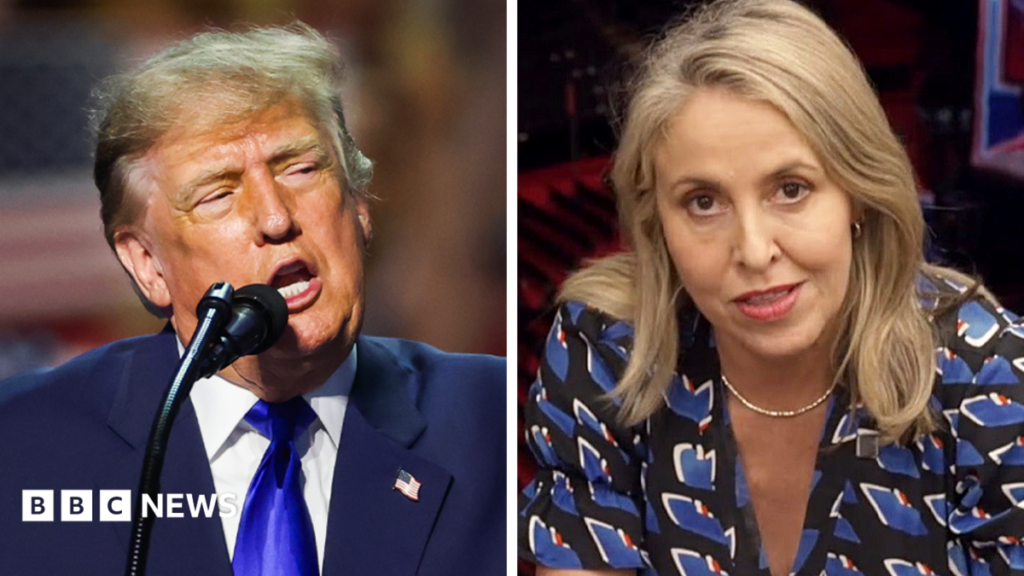
At a rally in Ohio on September 9, 2026, Trump declared that every American would receive a $5,000 payment if the Republican Party secured a majority in the upcoming midterm elections. He framed the promise as a "tax credit" that would be automatically applied to each taxpayer’s return, rather than a direct cash handout.
According to the Trump campaign’s official website, the credit would be funded through a reallocation of the federal budget, targeting "unspent defense appropriations" and "efficiencies" in existing programs. No detailed legislation has been drafted, and the proposal currently exists only as a campaign talking point.
The pledge was immediately paired with a promise to cut income‑tax rates and increase funding for infrastructure, creating a broader narrative that the GOP would deliver a "financial reset" for ordinary Americans. Critics argue that the timing—just weeks before the midterms—suggests the pledge is intended more as a voter inducement than a genuine fiscal policy.
Legal hurdles: can the pledge survive a court challenge?
Legal experts warn that the $5,000 promise could run afoul of the Federal Election Campaign Act, which prohibits offering anything of value to influence a person's vote. Professor Elena Martinez of Georgetown Law notes that "a blanket payment to all citizens, contingent on a party's electoral success, fits the textbook definition of a vote‑buying scheme."
State laws add another layer of complexity. Over 30 states have statutes that specifically outlaw cash or in‑kind incentives tied to voting outcomes. In Florida, for example, the 2023 "Voter Inducement Act" makes it a felony to promise monetary benefits in exchange for a vote, a law that could be invoked if the pledge is deemed to be a direct incentive.
Potential plaintiffs include civil‑rights groups such as the NAACP Legal Defense Fund, which has previously sued over similar inducement proposals. If a federal court issues an injunction before the November vote, the GOP would have to either retract the promise or re‑package it as a standard tax credit not linked to election results.
Political calculus: why the pledge matters to the GOP
Trump's pledge arrives at a moment when the Republican Party is fighting to regain control of the House of Representatives after a narrow Democratic majority in the 2024 cycle. Polls show that economic anxiety remains a decisive factor for swing voters in key battleground states like Pennsylvania, Michigan, and Arizona.
By targeting a universal payment, Trump aims to sidestep demographic divides that have traditionally hampered GOP outreach to minorities. African‑American and Latino voters, who turned out in higher numbers for Democrats in 2024, may be more receptive to a concrete financial promise than to abstract policy rhetoric.
The pledge also serves an internal party purpose: it reinforces Trump's dominance over the GOP narrative and forces other Republican candidates to either adopt the same language or risk appearing out‑of‑touch. Campaign finance analysts estimate that the promise could boost small‑donor contributions by up to 12% in the weeks leading up to the midterms, according to a report by the Center for Responsive Politics.
Implications for Africa, the diaspora, and U.S. foreign policy
While the pledge is a domestic U.S. issue, its ripple effects could be felt across the African continent and among the African diaspora in America. A Republican‑led Congress is likely to pursue a tougher stance on foreign aid, potentially reshaping the $3.5 billion annual U.S. assistance package for Sub‑Saharan Africa.
Diaspora organisations such as the African Union Diaspora Council have warned that a focus on domestic cash giveaways could divert political attention from pressing matters like trade agreements, climate financing, and conflict resolution in the Sahel. "When the U.S. government prioritises handouts to its own citizens over strategic partnerships, African partners risk being sidelined," a senior official from the council told Reuters on September 10.
On the other hand, a stronger GOP could accelerate the passage of the Africa Growth and Opportunity Act (AGOA) renewal, which many African business leaders view as a lifeline for export markets. The Act’s future, however, is contingent on congressional approval, and a $5,000 pledge could become a bargaining chip in negotiations over trade incentives.
What’s next: court battles, congressional moves and campaign strategy
Legal challenges are expected to be filed within days, with the first hearing likely to take place in a federal district court in Washington, D.C. If an injunction is granted, the GOP will need to either withdraw the pledge or re‑brand it as a non‑contingent tax credit, a maneuver that could dilute its political impact.
Congressional leaders from both parties have already signalled their intent to address the issue. Senate Majority Leader Chuck Schumer (D‑NY) announced a bipartisan hearing on "Election Integrity and Voter Incentives" for early October, while House Republican Whip Tom Emmer (R‑MN) defended the pledge as a legitimate policy proposal, citing the Constitution’s authority over taxation.
Regardless of the legal outcome, the pledge is reshaping campaign tactics. Democrats are pivoting to a counter‑narrative that frames the $5,000 promise as an unethical attempt to buy votes, while some Republican governors are quietly testing similar ideas at the state level. The coming weeks will reveal whether the promise becomes a footnote in election history or a catalyst for a new era of voter‑targeted fiscal policy.
Quick Answers
Is Donald Trump's $5,000 payment promise legal under U.S. election law?
Most legal scholars say it likely violates federal and many state statutes that ban offering money to influence a vote, and courts are expected to rule on its legality before the November 2026 midterms.
How could the $5,000 pledge affect U.S. aid to Africa?
A Republican‑controlled Congress may tighten foreign‑aid budgets, potentially reducing the $3.5 billion annual assistance to Sub‑Saharan Africa, though the pledge could also be used to negotiate trade benefits like AGOA renewal.
What are the possible outcomes if a court blocks the pledge?
If blocked, the GOP would need to reframe the promise as a standard tax credit not tied to election results, which could lessen its motivational impact on voters.
Source: www.bbc.co.uk




💬 Comments 0