Trump pushes to split MMR vaccine in 2026, sparking expert backlash and African health concerns
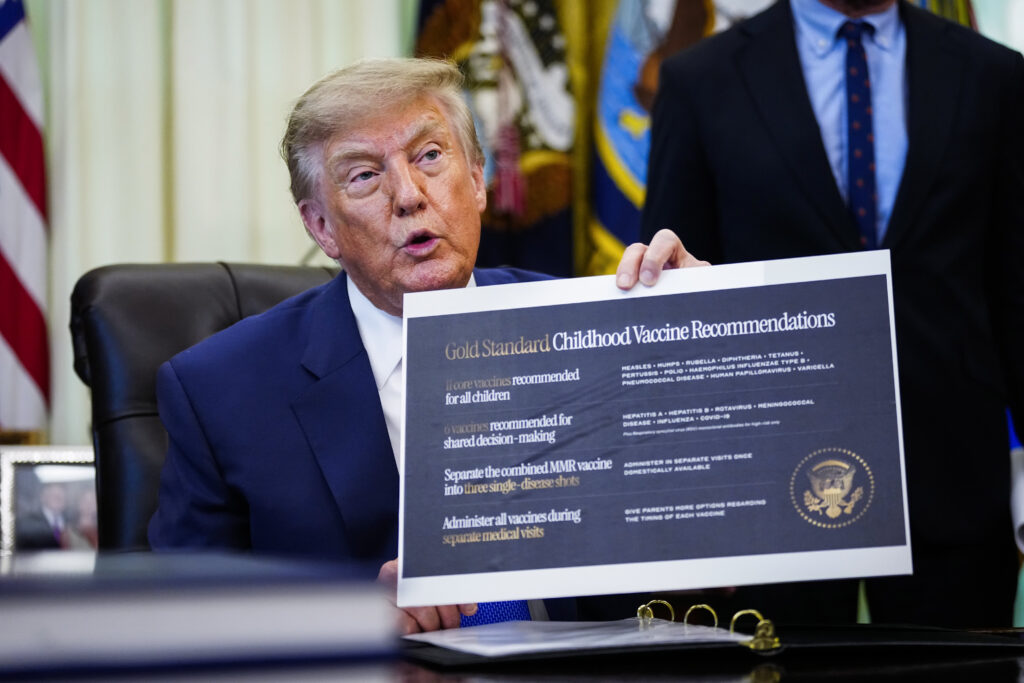
What the proposal entails and why it matters now
The timing is notable. 2026 marks the 30th anniversary of the global measles resurgence that prompted the World Health Organization to launch a massive vaccination drive after the disease was declared eliminated in many high‑income nations in the early 2000s. The United States recorded a modest uptick in measles cases last year, prompting renewed vigilance. A high‑profile political figure calling for a change in the vaccine’s format could undermine those gains, especially if it fuels further hesitancy among already skeptical groups.
The political and misinformation currents behind the split‑vaccine call
The former president’s broader agenda of questioning established institutions—particularly the CDC and FDA—feeds into a narrative that the government is withholding “choice” from citizens. By framing the split‑vaccine idea as a matter of personal liberty, the proposal taps into longstanding American libertarian strains, making it harder for health officials to counter with purely scientific arguments. The political calculus is clear: any stance that appears to defend the status quo can be portrayed as an attack on individual freedom, a potent rallying cry for a base that values autonomy over collective health measures.
Why the scientific community says the split is a non‑starter
Moreover, the logistics of administering three separate shots instead of one increase the risk of missed doses, especially in low‑resource settings. The World Health Organization’s Immunization Programme notes that each additional injection raises the chance of drop‑out during a multi‑dose schedule, potentially leaving children partially protected. In the United States, where vaccination compliance already hovers around 92% for MMR, a policy shift could erode that figure, creating pockets of vulnerability that measles—an extremely contagious virus—can exploit.
The knock‑on effects for Africa and the diaspora community
The diaspora angle is also significant. Millions of Nigerians, Kenyans and South Africans live in the United States, where children often receive their routine immunisations. If American paediatricians begin offering separate measles, mumps and rubella shots, parents may face confusion about scheduling and cost, potentially delaying full immunisation for their children. This could reverberate back home when families travel across borders for visits or school, increasing the risk of cross‑continental outbreaks. Past incidents, such as the 2019 measles surge linked to travelers from Europe, illustrate how gaps in one region can quickly become a global concern.
What could happen next – policy, legal and public‑health responses
Public‑health agencies are already preparing counter‑messaging. The CDC’s Immunization Division plans to release a series of infographics emphasizing the safety and efficacy of the combined vaccine, targeting both healthcare providers and parents. Meanwhile, African health ministries are monitoring the U.S. discourse closely, with the African Centres for Disease Control urging member states to reaffirm their commitment to the combined MMR schedule in upcoming regional meetings. The coming weeks will likely see a clash between political rhetoric and scientific consensus, with the outcomes influencing not only American vaccination rates but also global disease‑prevention strategies.
Quick Answers
Will the United States actually split the MMR vaccine into three shots?
No, health authorities say there is no plan to change the combined MMR formulation, and experts warn that splitting it would have no scientific benefit.
How could a U.S. split‑vaccine proposal affect African vaccination programmes?
If the U.S. altered its vaccine schedule, it could disrupt global supply chains and raise costs for the combined MMR doses that many African countries rely on through donor programmes.
What are the main risks of administering measles, mumps and rubella vaccines separately?
Separate shots increase the chance of missed doses, add logistical complexity, and have not been shown to improve immunity compared with the single combined vaccine.
Source: www.cnbc.com



💬 Comments 0